Showing posts with label Working from home Tips. Show all posts
Showing posts with label Working from home Tips. Show all posts
Monday, 19 January 2015

Friday, 16 January 2015
Have a Home Based Online Business and 5 Reasons Why Your Family Loves It
Ever since I started working from home my family live has changed dramatically, in a positive way. There are so many small and less important things that can be done while working from home which is just to much to mention. I will keep it simple and share the 5 benefits that had the most impact on my work-life balance.
1. Drop off & Pick up kids from school myself
The smile my kids gave me when they realized mommy was going to do the school routine on a daily basis is priceless! Other then that it's nice that teachers know how mommy actually looks like. Not to mention the amount of activities I don't miss anymore, because the relevant letter was lost somewhere.
2. Not stressing out because one kid is sick
Either hearing the phone ring to pick one up at school or just keep him/her at home all day isn't a problem. It's even quite nice to have some cuddle time with just one of them. Being sick also means a lot of sleep, so after a great cuddle and some mommy-time it's bedtime. I can still do my work and know my sick kid is well taken care of.
3. The cost of Childcare isn't a burden
We as a family are Dutch and only live in the UK for about 2 years. This means we don't have grannies nearby who we can count on to take the kids of our hands for a day per week or so. To have 3 kids in breakfast club and after school club for 5 days a week has a financial impact. Not to mention these costs in the holidays and the list of inset days. We definitely noticed the difference at the end of the month!
4. When daddy comes home we instantly have family time
The kids love to help mommy cook and as soon as dad walks in, it's dinner and really family time to chat or play all together.
5. Mommy just isn't stressed anymore
While working away from home, in an office, I needed to behave like it. Behaving like an employee is exhausting! I can't say, dress or do what's really me. This isn't even the real problem, but by the time I got home I was so tired that I would get stressed out by each and everything my kids or partner would say or do. That wasn't fun for them either. Now I can really listen to school stories, my partner's work issues and be comfortable telling mine....without getting stessed!
I understand I am in a privileged situation, but you can also have a great work life balance. For more information
Please share your comments or questions I love to hear them!
Thursday, 18 December 2014
Best Affiliate Programs 2015 | Adam Chats About Top Affiliate Products
How do you feel about promoting High ticket Affiliate Programs?
Tuesday, 16 December 2014
How To Create Information Products That Sell Themselves
You want to make money online, right? Start by realizing that the Internet is the way to go in terms of creating, marketing and selling merchandise, i.e. information products.
The Internet has become the place where consumers prefer to purchase things. If you want a piece of that multi-billion-dollar-a-year business, then you need to have an online product that people will want to buy. You can certainly market and sell products manufactured by other companies and individuals (affiliate marketing), but when you produce your own information products, you earn the largest profit margin.
Once you understand the basic fundamentals, you will be able to determine what information product will be ideal for you to focus on. Creating your own product is fairly straightforward and don’t cost a tremendous amount on money to produce – it’s just information in product form…
Make Sure You’re Information Products Offer Both Quality And Value
If you want your product to make an impact, you will want to focus on quality. Just as in the world of brick and mortar stores, merchandise that is made with cheaper materials tend to detract from the quality. The manufacturer will be able to charge less for it, which attracts consumers looking to save money, but it will not earn a positive reputation.
When it comes to information products created for the Internet, quality is measured differently. They can include e-books, videos, music, applications, games, and other downloadable items. Generally, when a consumer makes a purchase, they can have them downloaded to their computer within minutes. That the huge advantage of this type of product – it’s available immediately.
As a result, quality will be determined by the content and composition of the information. If you take time to produce a quality product with polished content, an attractive cover or image, and something people will find useful, then you will tend to find more success with it than with something that is just thrown together.
Deciding On What Information Product To Create
You may have some great ideas to market online, but you’re biased. Each of us thinks that we have the best ideas and that all it will take is investing in it with time, effort, and money, and people will be flocking to buy it. The problem with this mentality is that innate bias.
We tend to become too excited about certain ideas we have that we believe are winners. It’s important to get some opinions from people who won’t have a vested interest in the idea. Friends and family can sometimes be ideal to ask, but it will be important for you to make sure they know you will want their honest opinion.
If your idea is considered unique or ideal, then begin to research anything that may be similar already on the Web. You may think that it’s unique, but other people may already have something similar out there. That doesn’t mean you have to abandon your idea though; instead, determine how your idea is different and better than the others.
The Power Of Online Information Products
Products that are specifically designed for sale online are unique in that they can be downloaded by the consumer as soon as their transaction is complete. That means that marketing will be as important as the product itself. When you market your product, you will want to speak directly to a need your target audience has and how what you are offering fills that need.
Blogging is a great way to promote your information product. Knowing how to start a blog or becoming involved with web hosting is essential to online marketing. Keep these thoughts in mind as you move forward with your idea.
Know The Market
It is critical that you know the market you will be targeting. What age range will be most interested in it? Will it be men, women, or both?
If you create something that would be perfect for middle-aged professional women, but you focus on young, college-aged men, then your merchandise will not sell. Even if you realize that you targeted the wrong audience, make adjustments to the product and your marketing campaign; don’t simply abandon it. The great thing about most things created for Internet sale is that they can be altered without a tremendous amount of expense or effort.
As mentioned, marketing is as important to the success of your product as quality. Before you put together this incredible information product that is going to sell like crazy, you should think about marketing. If you promise something of value to the reader, the marketing will become much easier.
Develop a balance in which the marketing complements the product. Testimonials are a great way to show prospective buyers that what you’re offering is worth the investment. If you don’t have customers yet, then consider giving some copies away in exchange for those valued testimonials.
Solve A Problem
As noted earlier, anything marketed for consumers needs to solve a problem. A novel solves the problem of quiet entertainment. An e-book on how to become a successful affiliate marketer solves the problem that inexperienced professionals may have.
You should conduct market research to determine precisely how to solve that problem for the consumer. See if there are other products similar to yours that were successful as well as any that weren’t successful. There are often great lessons to be learned from both.
Creating a product that you intend to sell online demands a great deal of research on the market before it is actually created. An adage by Benjamin Franklin states that, ‘Success is 1% inspiration and 99% perspiration.’ That idea you have may be incredible, but you still need to do a serious amount of work before you will achieve success with it.
You can get rich solving other people’s problems!
Source: http://blogsuccessjournal.com/make-money-online/information-products/how-to-create-information-products-that-sell-themselves/
Monday, 15 December 2014
Home Based Business Ideas Using The Internet
Let’s quickly go over 5 legitimate online home based business ideas that you can use to make money from home using nothing but the internet.
We will also see how to cleverly integrate a number of the best online home business ideas together into a powerful money making system, suitable for any newbie.
1. Writing Articles – I first started out in my home business by providing an article writing service to other marketers. I am a quick writer so was able to charge low prices for simple articles for website content and still earn a respectable hourly wage at the same time. There is a high demand for article writers out there right now, since more content equals more traffic and sales for websites.
2. Paid Surveys – Companies are always on the lookout for people to fill in surveys for them. This is either for market research purposes or so that they can capture contact information of people who fill out these surveys for future promotions. Either way, you can earn regular money from home on the internet if you consistently fill out these suveys each and every day.
3. Affilate Marketing – This home based business idea is now moving away from doing work from home jobs for others and instead becoming your own boss as an online entrepreneur. Affiliate marketing is one of the most newbie friendly ways to make money from home because you simply send people to existing proven product pages and earn commissions when sales are made based on your recommendations. You don’t need to handle orders or deal with customer support issues directly.
4. Network Marketing and MLM – In the home based business industry, the MLM and network marketing business models are very popular. This is largely due to the fact that of the leverage gained from being part of a team. Instead of only making money when you make your own sales, with online network marketing you also make money when your team members make sales. It is about leverage the work of others for a predictable monthly residual income.
5. Selling Information Products Online – Instead of promoting other peoples products with affiliate marketing, it is worth looking into creating and selling your own information products. An information product can be an ebook, audio or video series. It is simply your expertise converted into a format that others can follow in a step by step fashion in order to learn a new skill and follow a process to generate results for themselves in whatever it is that you are teaching. Infromation marketing is very popular because you just create the product once and sell it over and over again. You can either get other affiliate marketers to sell your products for you.
One of the best home based business ideas that many beginners see success with involves taking advantage of a “business in a box” that lets you pre-designed affiliate products as part of a professional sales funnel.
Source: http://recomp-project.eu/?p=78
Tuesday, 9 December 2014
Surviving School Holidays When You Work From Home
Working from home is great in terms of flexibility, and once your little ones are at school, it can be a fantastic alternative to having to juggle childcare arrangements as well as your work load.
Of course that’s all well and good until the holidays roll round! Even the most organised work at home parent can be forgiven for a slight groan at the thought of entertaining the kids full time while still trying to keep their work life in order too. Don’t panic though, it can be done, and here are some top tips to help:
Plan Ahead! The more work that you can get off your plate ahead of the holidays, the better! Anything that can be done ahead of time, scheduled in advance or even postponed until the kids are back at school will make life easier. Pulling a few late nights before the holidays might not be fun at the time, but they’ll be worth the effort in the long run!
Prioritise: Be realistic about what really has to be done, and what can probably wait. Knowing that the important tasks are taken care of will help you take things easier while the kids are off.
Schedule time to work: If possible, schedule times throughout the holidays that you’ll be working – whether that’s an hour a day or a couple of days a week, and stick to them! Don’t be tempted to ‘pick at’ bits of work outside those hours – give yourself a break and enjoy the time with your family.
Ask for Help! See if a family member is free to take your tots out for a day – it’s amazing how much you can achieve if you know you have a dedicated block of uninterrupted time to use! Grandparents love to take the kids out, or why not come to an arrangement with your child’s best friend, where you each take all the kids for a day so that the other can get on with everything else?
Get the kids involved! Children love to be treated like grownups, so let them take on some new responsibilities during the holidays – for example, they could set the table for dinner while you take ten minutes to check your emails.
Have a back-up plan: Those wails of ‘I’m bored!’ can be an inevitable part of the holidays, so stock up on a few ‘emergency activities’ for the times you need to keep your little ones occupied without giving them your undivided attention – a jigsaw puzzle, a sticker book, even just good old fashioned colouring, can all provide you with a precious 20 minute window if something urgent crops up.
Outsource: Handing the reigns to someone else for a few days might sound scary, but so long as you use an experienced company, you can be confident your business will be in safe hands. Social Sparkle offer a wide range of support to small businesses – from keeping your Facebook page updated to adding content to your blog.
What are your top tips for working from home when the kids are on holiday?
Source: http://www.mumpreneursnetworkingclub.co.uk/articles/20140403
Friday, 28 November 2014
7 Parenting Tips for Working from Home with Young Children

Gentle parenting is very much about being in-sync with your child’s needs. Being tied to an inflexible schedule will only cause stress and conflict as your child’s needs evolve from day to day, week to week, month to month, and year to year. Children do, however, enjoy the comfort and familiarity of a regular routine, and knowing what to expect helps them to make transitions throughout the day. So, instead of making a minute to minute schedule, try working with your child to establish a routine that’s flexible enough to adjust to meet their fluctuating needs, but builds into your day the time you need to devote to your work. For example, a routine could look something like this:
- Morning cuddles, breakfast, playtime with mommy
- Playtime while mommy works
- Snack and storytime with mommy
- Play while mommy works
- Lunch and outside playtime with mommy
- Naptime while mommy works
- Playtime with mommy
- Playtime while mommy works
- Help mommy with dinner
- Dinnertime
- Help mommy clean up after dinner
- Playtime while mommy works
- Evening snack
- Bathtime, bedtime story, cuddles, night-night time
Notice that there are no time limits, only a loose plan for the day that you can adjust if your little one is sick or teething or just needs some extra mommy time during the day. A younger baby will need more naps during the day and can be worn in a baby carrier for naps and/or in place of playtime, and some toddlers and preschoolers will outgrow their need for naps earlier than others, and some will need more outside time, etc. so you’ll want to come up with a routine that accommodates your child’s age, sleep needs, and temperament. Also, of course, if your spouse or a trusted family member or friend is available to help, be sure to include them in your routine.
2. Children love the novelty value of new toys.
So get a box for each of your working days of the week. Label each box with one day of the week and place a set of toys in them that you only bring out on that day. Remember to think outside the box (lol) and don’t only choose store-bought toys. One box could be full of paper towel and toilet paper tubes and various sizes of bouncy balls and hot wheels, etc. so your little one can make tunnels and chutes and all sorts of inventions. Another box could have kitchen utensils and bowls and pots and pans. Don’t be afraid of a little mess, either! Children are washable, and messy play can keep them happily engaged for long stretches of time, so in one box you could have a plastic tablecloth from the dollar store or even a little blow-up wading pool, some paintbrushes, and shaving cream. Just put down the tablecloth or blow up the pool and add a touch of different colors of food coloring to a few small bowls of shaving cream let your little Picasso go to town! The trick is to be creative and choose things that are out of the ordinary that will engage your child’s imagination, not just keep them busy.
3. For older preschoolers or early elementary ages.
An independent project is an excellent idea to help them stay happily engaged while you’re working. During your work periods, provide your child with an ongoing project that they’re interested in and can work on independently. It can be a paint-by-number project, a jigsaw puzzle, a simple model car, a jewelry making set, or any number of other things. Since time is a hard concept for young children, setting a timer for your work periods and having a little sticker chart on the fridge for you and your child to ‘clock in’ and ‘clock out’ of work might be a fun, helpful part of your routine, as well.
4. Meal planning is a huge, huge help in freeing up time and mental energy.
Take the time to write out a list of every meal you know how to make that your family likes, then break each of those meals down into their ingredients. Save the list on your laptop, and then twice a month simply cut and paste two weeks of meals into a Word doc. Then print it out, cross off any ingredients you already have on hand, and ‘voila’ you have a shopping list and menu for two weeks done in one shot!
5. Simplify, simplify, simplify.
Be realistic about your commitments and expectations for yourself. Have fruit and cheese for breakfast most mornings instead of eggs and pancakes and sausage. It’s healthier, faster, and there’s less to cleanup! Resign from any pre-working-at-home commitments you can such as directing your church’s Vacation Bible School or doing the book work for your local community center. No one expects you to be able to do everything, and someone else can take on those tasks while you’re doing double duty as a work-and-stay-at-home-mom. And, once you’ve cleared up your commitments, avoid the temptation to fill up your time with playgroups and playdates and mommy-and-me classes. Your little ones need you, not activities.
6. Don’t be afraid to go mobile.
Find a local park that is suitable for your child’s age and temperament (i.e. Don’t go to a park with a lake if your little one is a runner, and don’t choose a playground with only big kid slides and jungle gyms if you’ve got a toddler.). Once you’ve found a park that’s a good fit, take your laptop or iPhone and answer emails or return phone calls or do other simple tasks that you can manage while swinging your little one in a baby swing or watching your toddler dig in the sand. Make sure you take the time to play with them while you’re there, too, and don’t worry if you get a few judgmental looks from other parents. They don’t know your life, but you know you’re doing the best you can to meet your child’s needs while doing what you need to do for work, so take comfort in that knowledge.
7. Don’t forget to take care of yourself!
We can get so caught up in meeting our family’s needs at times that we forget to take care of our own needs. Make sure you include a bit of downtime in your routine each day to simply be still and have a cup of coffee or read the newspaper or simply stare out the window and daydream for a few minutes. Take the time on a regular basis to do your nails, go have your hair done, and make a lunch date with a friend. Even if you bring your little one with you, you’ll still be out and about in a non-working environment for a bit and actually get to feel like an adult. If you’ve got a teething baby or a sick child and aren’t getting much sleep at night, take a nap during the day when your little one’s asleep instead of working during their nap. You may get a bit less work done, but you’ll enjoy your life and your family more, and isn’t that really the point of it all anyway?
By: L.R.Knost
Source: http://www.littleheartsbooks.com/2013/03/29/7-parenting-tips-working-from-home-with-young-children/
Wednesday, 19 November 2014
Top 10 Tips for Blogging
Blogging is a great tool for writing, sharing news and photos or art and just generally reaching out to the nameless ranks of people combing the internet every day in search of news and entertainment. TopTenREVIEWS have reviewed the best of the best blog software programs in the hope of showing you just how fun and easy creating a blog can be.
The hard part for bloggers seems to be:
10. Consistency
Your readers and search engines love consistency. If you post three times a week, every week, this is considered the bare minimum for attracting and maintaining a readership. There is such a thing as too much blogging, though. Posting once a day is considered normal, meaning you’re not living in a dark cave staring at the glowing rectangle all day every day. But every post you make is a new page to be indexed by the search engines, so after one year you will have more than 300 pages in the web with your name on it!
9. Originality
With the ever-growing legions of bloggers out there, internet devotees are always on the lookout for the next great, original blog concept. One blogger might be devoted to showcasing photos of the rooftops of St. Petersburg. Many blogs are devoted to fashion and celebrity gossip, but there aren’t that many documenting people dressed in the gothic style during the hot days of summer.
8. Personality
Whether you create a web persona for the purpose of blogging or you plan to put your real self out there, personality is essential to a good blog read. This gift comes naturally to some bloggers and not at all to others. Whichever you are, your writings will reveal this personality to the world. A lot of bloggers give up fast when they receive negative feedback that is taken personally, but keep in mind that all writing media is subjected to waves of rejection. Don’t give up – there are mean, anonymous people out there surfing the web leaving rude, baseless comments, but there are also plenty more people with constructive comments to offer.
7. Brevity
Be brief in your blog posts. Break up text with cuts, subheadings, bullet lists, photos – people reading on the web tend to scan for anything that slows down or catches their eye. If you want to keep your readers reading, be succinct!
6. Diversity
Multi-media is almost a must these days. Text, video, photo, audio – use all of it in your blog to create well-written posts that are augmented with images or other media. As long as you’re on the way to becoming a blog superstar, might as well go for those YouTube views as well. Uploading your video to YouTube is a great example of how to drive traffic back to your site, as well.
5. Social networking
Use Facebook, Twitter, MySpace, whatever your social network of choice is to drive traffic to your blog, alert your friends you have a new post.
4. Collaboration
Use online relationships to collaborate on blog posts and expand your readership – encourage comments, comment on other people’s blogs, link freely and share traffic.
3. Promotion
Commenting on other blogs and getting your blog noticed joins up with social networking here. If you are promoting a product on your blog pay attention to other bloggers promoting a similar product. Use your best judgment to decide what works and what doesn’t. But please, no spamming – it is discourteous, not cool, other users will not take kindly and search engines will penalize you (remove your pages from the index).
2. Other media
Why limit yourself to just a blog? Podcasts are a great example of new media working with blogs to make them even more up-to-date and interesting – your readers will enjoy hearing your actual voice and it will heighten their reading of your content in the future. Check out TypePad blog software for integrated podcasting capability.
1. Fun
The most important part of blogging is having fun and loving your blog. If you choose to blog about something you have a passion for that will come through across the vast and nebulous internet. Additionally, the blog will be sustainable for you because you care about it.
Source: http://blog-software-review.toptenreviews.com/top-10-tips-for-blogging.html
Monday, 10 November 2014
#MOMtivationMonday: 6 Ways For Work-At-Home Moms To Stay Motivated
Working from home is often touted as an optimal solution for new parents seeking to balance their work and family lives. However, I’m learning that working from home is a double-edged sword. With my son just shy of his first birthday, I recently returned to work on a part-time basis outside of the home. The rest of the time, I work from home and he stays with me.
Juggling work demands with our kids’ needs can be a struggle. It’s hard to stay motivated and be productive with work when you’re managing a household, all the while making sure your kids stay out of trouble while you try to make a call, book an appointment or write an article; and even if your kids are in school or daycare, it’s easy to get distracted (or, I admit, lazy) at home, procrastinate and let your motivation wane.
Fortunately, though, there are steps that can be taken to stay motivated and focused when working from home. Here are 6 things that I’ve found helpful:
1. Start Your Day By Doing Something For Yourself.
Although no one day will be the same with a baby or kids on board, do your best to have a morning routine, starting with something for you. Whether it’s working out, reading, taking a bath or going for a brisk morning walk before your kids wake up, do something that you enjoy doing to clear your mind and better prepare for a productive work day. This is your ‘me’ time. When you start your day on the right foot and on a positive note, everything that follows is more likely to fall into place.
2. Ditch the Jammies!
This may seem like a silly and odd thing to say, but there’s something about taking a shower and getting dressed in the morning that resets your brain. When the home and work setting is the same, lines are blurred, which makes it harder to switch your mind from home to work mode. Who wouldn’t love to stay in comfortable PJs and slippers all day? For me, getting dressed psychologically marks the start of a business day.
3. Remember That You Do Have a Full-Time Job.
When people asked me if I worked when my maternity leave was over, I found myself stumbling over my words a bit. “Yes, I work, but I work part-time, but also from home, and I’m also a stay-at-home mom, so… no. I mean sort of, actually, yes.” If anything, I think that working from home, especially if you have kids home with you, is the equivalent of 2 jobs. I often feel more tired when I work from home and have my son with me than when I work outside of the home, which is something many people don’t understand.
4. Get Out of the House Frequently.
When I’m home for days on end or long stretches of time, I tend to go stir-crazy. Like a deflated balloon, I start losing motivation and inspiration. When you reach a mental block and your productivity starts going down the drain, a good way to recharge your batteries is to get out of the house. Take a lunch break and go for a walk. If you work from home with your kids, you have an even bigger reason to get out of the house for a bit; otherwise they’ll likely be bouncing off the walls and preventing you from doing any work. Some fresh air and a change of scenery can do a world of good and give you the mental boost you need to tackle the rest of the day.
5. Make the Most Out of Your Work Time.
It’s so easy to get distracted with other things when you’re working from home, whether it’s household chores, personal phone calls, TV etc. Don’t let your own distractions eat up the precious work time you do have – because once your kids are back from school or daycare, it’s hard to get any real work done. Once you break your focus and chain of concentration, it’s easy to lose your motivation. If you work from home with your kids, make the most out of nap time or quiet time and avoid veering off track during those periods.
6. Set an End Time For Work.
When you have a 9-5 job outside of the home, it’s more obvious when it’s quitting time. One of the challenges of working from home is knowing when to stop. At home, you’re always surrounded by tasks that could or should be done. Try to end your work by a certain time and when it’s that time, shut down your computer, turn off your cellphone and change clothes. Again, this cues your brain to switch back from work to home mode. Personally, having a reasonable time in mind to ‘end the day’ motivates me to be a productive as possible during the day, so that I feel less guilty or stressed about leaving things undone at the end of the day and I can enjoy playing with my little man and unwind a little.
Although there’s no foolproof or one-size-fits-all method to avoid motivation slumps when you work from home, the above tricks have helped me tremendously. You ‘ll eventually come up with your own techniques to keep yourself motivated. No one knows you better than you know yourself. It’s not easy, but it’s definitely doable.
Do you have a hard time keeping focused and staying motivated as a work-at-home mom?
How do you keep yourself stimulated and productive?
Source: http://miastylemama.com/momtivationmonday-6-ways-for-work-at-home-moms-to-stay-motivated/
Saturday, 8 November 2014
Work at Home Mom: How I Get a Week Of Work Done in An Hour
How do you manage your work-life balance?
Thursday, 6 November 2014
5 Tips For Work At Home Moms

Before my husband and I embarked on our journey to try to get pregnant, we did all we could to make sure things were “just right.” (You know the thinking I’m talking about, don’t you? The money, the car, the house, all that in order and straight as an arrow? That. I guess some people call it getting your “duck in a row.”) I switched to a school district closer to home that paid more, we bought a larger SUV, I cut back my Dr Pepper consumption, and drank a little more water. We were prepared. (So I thought).
What I always knew in the back of my mind, though, was that I really wanted to stay at home with our child. I know that’s a battle most moms go through: working and supporting the family finances or being home with a new baby. Throughout my entire pregnancy, I looked for jobs that would provide more flexibility than being in a kindergarten classroom all day away from our son. With every lead, a door closed. Every opportunity turned into a dead end. I was at the end of the rope; I was frustrated, tired, and disappointed.
I was due October 2, 2010, and in August, very much to my dismay, I headed back to work to set up my new classroom (our district re-aligned, and I was one who got moved). I got things set up for the few weeks I’d be there before the long-term substitute came in for my maternity leave.
Then a funny thing happened. My son arrived, and a door flew wide open. I had an opportunity to work from home for a friend’s small business. We crunched some numbers, looked at our budget, and made the leap. I was going to be able to stay home with my son, and I was over the moon! These days, many opportunities are available for work from home income for parents wanting to go that route (both moms and dads).
Now that I had this new gig, I needed a plan in place so that work and snuggles could exist in perfect harmony. Of course, my system was different than it is now with a preschooler, but the basics are the same. It’s not always easy, but it IS possible (and rewarding, and worth it) to work from home and have little ones running around at the same time. Working from home is not for everyone, but here are some of my tips to help work-at-home-mamas or mamas who may be interested in tackling a work-at-home gig.
Pick a time to work. For me, it is easiest to work when everyone is sleeping. No, I don’t mean naptime. That’s my time to recharge before the boy is back up and running. I mean nighttime. I’m always the last one up anyway, and this lets me use my time productively. I know lots of moms who use naptime to work, and that’s totally fine, too. The important part is to pick a time that works for you, and use it to your advantage to get the bulk of your work done.
Organize your time. Use a calendar or list to help you stay on track with what’s important each day. Since I like to work at night, sometimes I have issues that need to be handled during business hours that have carried over. When I know what I have to do, it’s a lot easier to get it completed. As moms, we talk a lot about keeping our families on a schedule, and it’s just as important to keep ourselves on one! I use a combination of things to keep my time organized: the Calendar app on my phone, a paper planner that allows met to allot specific amounts of time to each task, and Notability on my iPad to sync notes from iPad to iPhone after meetings.
Include your children (when possible). While this isn’t always a possibility, it has really helped around our house. My son loves to use my “work papers” to “do work” of his own. He’ll usually pull his desk up next to mine and get to it. Even if the task you give them doesn’t actually have to do with your work, including them lets them be part of it, rather than something that is taking time away from them.
Go mobile. Honestly, this is my lifesaver a lot of times. I can do a good percentage of my work from my iPhone or iPad, so I am able to go and do with my son without fear that work will come up outside of my “scheduled” work time. If something comes up that I am not able to accomplish while I’m out, I use Notability on the iPad or just send myself a quick email to remind me to take care of it when we’re home. You could do the same with your phone or plain ol’ paper and pen. It’s all about finding what works best for you and your family.
Stay Sane. Y’all, this is so important. I mentioned above that I use naptime for recharging while my son sleeps. This is a huge part of my day. I can tell a huge difference in the days I work through naptime and the days I use it to recharge (I’m sure my husband would agree). When working from home, it is easy to make all the time seem like work time if you’re not careful. I had a really hard time with this at first. Setting boundaries—and keeping them—will allow for the best work-at-home experience. Prioritize date night, quality time with your kids, and taking care of yourself! When you’re off the clock, be present and enjoy!
Are some days harder than others? Absolutely. Is it worth it to be home with my boy? You betcha! I wouldn’t trade it for the world, and I’m so glad we’ve been able to find a balance between work and home life that is perfect for us! Are you a work-at-home mom? Thinking about becoming one? What are you best tips and tricks?
Source: http://momquery.com/5-tips-work-home-moms/
By Jolie Gray
Wednesday, 5 November 2014
6 Home-Based Businesses You Can Start Today, Online
The Internet has paved the way for effortless communication, so it’s no wonder more and more entrepreneurs are turning to home-based businesses. What was once perceived as working from the couch and wearing pajamas while fulfilling customer orders has evolved to some pretty lucrative small business ventures.
With a household headquarters in mind, here are 6 examples of some of popular and successful home-based businesses you can start in a neighborhood near you.

Professional Blogger
Everyone’s favorite form of keeping an online diary is also a great way to make money from the comfort of your own home. Blogging from home is growing in popularity not only because there are practically zero startup costs, but also because it’s a great way of turning self-expression into profit. Before you quit your day job, it’s important to remember that financial success with blogging does not happen over night. It takes discipline in many online arenas including self-promotion, content creation, and SEO. But whether you blog for yourself or guest blog for others, blogging from home can translate into a steady (and sometimes lucrative) income.
Online Retailer
The number one go-to source for consumers looking to buy something is the Internet. So, why not take advantage of the Internet-as-a-storefront mentality and sell something online? There are plenty of online businesses to start, so pick a market and run with it. From services to products, as long as there’s a need for what you want to sell, you’ll be in business. For instance, if you’re a website or graphic designer, sell your services to those in need of design help. Or if you collect antiques, source products on eBay and turn your passion into an income. Just keep in mind that customer service is just as important online as it is in person.
Tax Accountant
When tax season rolls around, millions of people turn to accountants for filing help. This spells opportunity for those with a background in accounting. Whether you’re a certified public accountant or you’re great at running numbers for friends and family, starting a home-based accounting business can be a real income-maker. Tax accountants aren’t the only accountants out there. Entrepreneurs are always in need of small business accountants and internal auditors. As long as you have experience, freelance accounting allows you to enjoy working from your home or even in a telecommuting capacity.
Artisan
Whether you’re a painter, woodworker, or any creative type in between, selling your crafts online is a great way to turn your skills into a steady income. Besides, consumers are always looking for unique gift ideas, especially during the holiday season. There are plenty of ways to sell your crafts online from creating an independent website to joining art-inspired sites like Etsy. Likewise, social media is a creative’s best friend when it comes to spreading the word about arts and crafts, so get social with your selling tactics.
Photographer
A picture says a thousand words and starting a home-based photography business is the perfect way to turn every shot into income. As long as you have an eye for photography and adequate equipment, you can start your own wedding or all-occasion photography business from the comfort of your own home. If catching magical moments on camera isn’t really your thing or you’re more of a straightforward photographer, websites are always in need of stock photos. Submitting stock photos of just about anything to websites can garner a steady income.
Freelance Writer
If you’ve ever heard the saying that content is king — it’s probably because websites, online products, landing pages, and blogs are always in need of good copy. With some solid writing skills and a good at-home work ethic, you can become a freelance copywriter in no time without even leaving the house. There are millions of writing options to choose from, so freelance copywriting gives you the opportunity to learn new things or write about topics you already know. From how-to articles to technical pieces to family topics, freelance writing is a never-ending opportunity.
With the right skills and passion, the occupations above are a great way to make your home-based business dreams come true. Do you run a home-based business? Please feel free to share your experiences with us in the comments below.
Source
With a household headquarters in mind, here are 6 examples of some of popular and successful home-based businesses you can start in a neighborhood near you.
Photo: Maison Scotch
Professional Blogger
Everyone’s favorite form of keeping an online diary is also a great way to make money from the comfort of your own home. Blogging from home is growing in popularity not only because there are practically zero startup costs, but also because it’s a great way of turning self-expression into profit. Before you quit your day job, it’s important to remember that financial success with blogging does not happen over night. It takes discipline in many online arenas including self-promotion, content creation, and SEO. But whether you blog for yourself or guest blog for others, blogging from home can translate into a steady (and sometimes lucrative) income.
Online Retailer
The number one go-to source for consumers looking to buy something is the Internet. So, why not take advantage of the Internet-as-a-storefront mentality and sell something online? There are plenty of online businesses to start, so pick a market and run with it. From services to products, as long as there’s a need for what you want to sell, you’ll be in business. For instance, if you’re a website or graphic designer, sell your services to those in need of design help. Or if you collect antiques, source products on eBay and turn your passion into an income. Just keep in mind that customer service is just as important online as it is in person.
Tax Accountant
When tax season rolls around, millions of people turn to accountants for filing help. This spells opportunity for those with a background in accounting. Whether you’re a certified public accountant or you’re great at running numbers for friends and family, starting a home-based accounting business can be a real income-maker. Tax accountants aren’t the only accountants out there. Entrepreneurs are always in need of small business accountants and internal auditors. As long as you have experience, freelance accounting allows you to enjoy working from your home or even in a telecommuting capacity.
Artisan
Whether you’re a painter, woodworker, or any creative type in between, selling your crafts online is a great way to turn your skills into a steady income. Besides, consumers are always looking for unique gift ideas, especially during the holiday season. There are plenty of ways to sell your crafts online from creating an independent website to joining art-inspired sites like Etsy. Likewise, social media is a creative’s best friend when it comes to spreading the word about arts and crafts, so get social with your selling tactics.
Photographer
A picture says a thousand words and starting a home-based photography business is the perfect way to turn every shot into income. As long as you have an eye for photography and adequate equipment, you can start your own wedding or all-occasion photography business from the comfort of your own home. If catching magical moments on camera isn’t really your thing or you’re more of a straightforward photographer, websites are always in need of stock photos. Submitting stock photos of just about anything to websites can garner a steady income.
Freelance Writer
If you’ve ever heard the saying that content is king — it’s probably because websites, online products, landing pages, and blogs are always in need of good copy. With some solid writing skills and a good at-home work ethic, you can become a freelance copywriter in no time without even leaving the house. There are millions of writing options to choose from, so freelance copywriting gives you the opportunity to learn new things or write about topics you already know. From how-to articles to technical pieces to family topics, freelance writing is a never-ending opportunity.
With the right skills and passion, the occupations above are a great way to make your home-based business dreams come true. Do you run a home-based business? Please feel free to share your experiences with us in the comments below.
Source
Wednesday, 22 October 2014
Make Money Blogging: 20 Lessons Going from 0 to $100,000 per Month
By Jon Morrow
You know everyone thinks we’re fools, right?
To most of the world, blogging is a joke.
It isn’t a career. It isn’t a way to make money. It isn’t a tool for changing the world.
It’s a hobby, a diversion, a fad that’ll come and go. Sure, you can start a blog, but don’t count on it to take you anywhere. That’s just silly.
Try telling your family or friends or coworkers you want to quit your job and make money blogging. They’ll smile politely and ask, “Does anybody really make money from that?”
Yes, they want you to have dreams. Yes, they want you to chase them. Yes, they want you to succeed.
But they also want you to be “realistic.”
If you really want to improve your life, you should get an advanced degree, write a book, or even start your own business, not hang all your hopes and dreams on some stupid little blog. There’s no money in it.
Or is there?
I’m hesitant to say this, but…
This Blog Makes $100,000 per Month
In January and February, we cleared over $100,000 per month in sales. The verdict is still out on March, but if we didn’t make it, we should be close enough.
How?
Well, I’ll tell you. Not because I want to brag (well, maybe a little), but because most of the advice out there about monetizing your blog is complete crap.
For instance, do you see any ads on this site?
No? How about e-books for sale?
None of those either, huh? In fact, you might be hard-pressed to find anything for sale at all.
There’s a reason why.
Over the past six years, I’ve had the good fortune to work with some of the smartest bloggers on the planet. I worked with Brian Clark as he built Copyblogger to a multimillion dollar brand. Neil Patel and Hiten Shah also hired me to help them launch the KISSmetrics blog, and while they’re not big on publishing revenue numbers, they did recently close a $7 million venture capital round.
Combined, I wouldn’t be surprised if both blogs have earned more than $50 million. In comparison, the $100,000 per month I’ve managed to generate is a pittance.
But everyone has to start somewhere, right?
The reason this blog has made so much money so fast is I learned from the best, and then when I left, I kept learning. Every day, I crunch numbers, read books, talk to experts, and spend at least 30 minutes in silence, staring into the distance, doing nothing but thinking.
It’s paid off. If you’ll take some of these lessons to heart, it’ll pay off for you too.
Because here’s the thing:
You’re Not a Fool. You Can Make Money Blogging.
So, you want to make a living teaching other people what you know? Nothing wrong with that.
Professors do it. So do public speakers and best-selling authors.
Hell, consulting is a $415 billion industry, and what are all those consultants doing?
Getting paid to teach.
Blogging is no different. It’s just the same old models with some rocket fuel thrown in, courtesy of social media.
In fact, we might as well call that the first lesson:
Lesson #1: You’re Not Just a Blogger
You’re an expert, a teacher, a mentor, maybe even an entrepreneur. Your blog is simply a launchpad for all those things.
Look around, and you’ll find nearly all “bloggers” who make a decent income have books, courses, a side career as a keynote speaker, or even software. That’s how they make money. Their blog is just the “freebie” they give away to attract customers or clients.
Lesson #2: Don’t Sell Advertising
Selling ads is attractive, because it’s passive income, but you can usually make 3-10X more money using the same “ad space” to sell your own products and services or even promote an affiliate product.
Pat Flynn, for example, makes about $50,000 a month in commissions from promoting Bluehost.
Here at BBT, we mostly promote our own products, but we’re also in the process of creating affiliate sales funnels for LeadPages and Stablehost, both of which offer hefty commissions (and are great products too!)
Lesson #3: Build the Funnel in Reverse
We’ve all experienced sales funnels.
A company entices you with a freebie, then they offer you something cheap but irresistible, and then they gradually sweet talk you into buying more and more expensive stuff. It’s a tried and true marketing tactic, and you should absolutely build a sales funnel for your blog.
What you might not know is you should build it in reverse.
A lot of bloggers launch a cheap e-book as their first product, and then they get frustrated when they don’t make much money. Here’s why: the real profit is at the end of the funnel, not the beginning.
Selling e-books is fine and dandy if you have half a dozen more expensive products to offer your customer afterwards, but it’s downright silly if you don’t. You’re much better off creating and selling the expensive product first, and then gradually create cheaper and cheaper products.
When you do have some less expensive products to sell, you can offer those to new people first, safe in the knowledge that you have something more profitable up your sleeve to sell them later.
Here at BBT, our products cost $9,997, $997, and $591. We’re working our way down the funnel in reverse, releasing the most expensive products first and then gradually getting cheaper and cheaper. It’s been much, much more profitable this way.
Lesson #4: There’s No Such Thing As a “Cheap” Market
“But Jon,” I can hear you spluttering. “I can’t sell a $10,000 product! My customers don’t have that much money.”
My response: you’re 98% right. Unless you’re selling exclusively to multimillionaires, the vast majority of your customer base won’t be able to afford premium products, but what’s interesting is it doesn’t matter. Often times, you can make more money selling to the 2% than you can to the entire 98% combined.
For instance, our $10,000 product is a year-long coaching program for writers – a group that’s not exactly known for their wealth, but I always fill all 10 spots within minutes of opening the program. Here’s why: I notify 40,000 writers about it. 2% of 40,000 is 800 people who might possibly buy a product in that price range. By only accepting 10, I’m creating a situation of extreme scarcity.
You can do the same thing, even if your list is much smaller. If you have 100 subscribers, chances are two of them might be willing to buy premium products or services from you, and those two will often pay you more money than the other 98 combined.
Lesson #5: By Charging Premium Prices, You Can Offer Premium Service
Feel guilty about charging that much money? You shouldn’t.
By charging premium prices, you can offer premium service, doing everything possible to help your customers get results. For example, with my coaching program, I get on the phone with students every week, review their homework, answer their questions, look at their blog, and guide them through every step of the process.
Could I put that same information in a $7 e-book? Sure, but I couldn’t give anyone one-on-one help at that price, and that’s what people who buy premium products and services are paying for.
Lesson #6: Deliberately Delay the Sale
Another big shift in thinking: rather than trying to push everyone to buy your products upfront, smart bloggers delay the sale.
I first heard this idea from Rand Fishkin over at Moz. They offer their blog readers a free trial to their Analytics and SEO software, but after studying the behavior of their customers, they noticed something interesting: people who read several blog posts before signing up for a free trial stayed customers for two or three times longer than people who didn’t.
I’ve noticed the same thing with our customers. Instead of immediately clobbering readers with sales pitches, it’s much better to give them some content first and build trust before you begin talking about your products and services. Yes, you’ll make less money in the short term, but the long-term profits go through the roof.
Lesson #7: You Are the Bottleneck
Without a doubt, time is our biggest problem as bloggers. Not only are we expected to publish a continuous stream of content on our blogs, but we also have to deal with technical issues, read books and articles about our field, create new products to sell, answer questions from readers… the list goes on and on. The further into it you go, the more clear it becomes that you can’t do everything.
So, what’s the answer?
Believe it or not, I found answers from studying manufacturing processes. If one machine is working slower than others in a plant, it can literally cost the company tens of thousands of dollars per hour. To make sure it never happens, smart plant managers are willing to spend any amount of money to eliminate bottlenecks. They have an unlimited budget, because the cost of eliminating the bottleneck never comes anywhere close to the cost of the bottleneck itself.
The same is true for us, except the solutions are often different. Instead of buying a new machine, for example, we might purchase a new type of software that automates some of our business, or we might hire a virtual assistant or programmer. It can be expensive, yes, but it’s worthwhile if it saves you enough time, because then you can dedicate that time to higher value activities.
Lesson #8: Measure The Value of Everything You Do
What are those higher value activities, exactly?
Well, it depends on your goal. If your goal is to increase traffic, for example, start measuring the visitors per hour invested. Let’s say you invest three hours in writing a post, and it brings you 100 visitors, and you invest five hours in writing a guest post that brings you 500 visitors. The first activity has an hourly rate of 33 visitors per hour. The second activity has an hourly rate of 100 visitors per hour. Guest posting, therefore, is a better use of your time than writing content on your own blog.
Granted, it’s a short-term perspective, not taking into account long-term gains, but it’s still extremely useful to start measuring your time this way. Not just for traffic, but also for subscriber growth and revenue.
Lesson #9: In the Beginning, Creating Content for Your Own Blog Is Silly
I tried to sneak this one under lesson #8, but I think it’s important enough to get its own number, even if it does get me labeled a heretic and burned at the stake. Because here’s the deal:
In the beginning, your blog is like an empty classroom. Standing in front and giving a lecture is silly, because sure, it might make you feel important, but there’s nobody listening. You’re all alone, and you can come up with the smartest, most entertaining lecture in the history of mankind, but it won’t matter, because no one else heard it.
When you first start out, writing content for your own blog is one of the least efficient ways of building your audience. You’re far better off serving a little time as a “guest lecturer” first. In other words, write guest posts for someone else’s audience, impress the hell out of them, and siphon off a portion of their readership for your own.
That’s what we did here at BBT, and it resulted in the most successful blog launch in history: 13,000 email subscribers in 60 days, before I even wrote a single blog post. We had nothing but a coming soon page and an invitation to join our email list. Sounds strange, but I can promise you it’s vastly more efficient.
You don’t have to wait until you get to 13,000 subscribers to start, but I’d advise accumulating at least a few hundred. That way, you have an audience to share your content when you start publishing posts.
Lesson #10: Don’t Waste Time on Facebook, Twitter, Google+, etc.
Here’s another shocker: you know your dream of building up a huge following on Facebook or Twitter and then using it to promote your blog? Well, it’s a dumb idea. Out of everything we’ve tested, building our own social media accounts produced the lowest visitor per hour figure. In other words, it’s quite possibly the worst way you can spend your time.
Does that mean having followers in those places is useless?
No. Facebook is nice because you can advertise to your followers. Google+ can help boost your search engine rankings. Even with those benefits though, it shouldn’t be near the top of your list for things to do. In my opinion, you shouldn’t think about them at all until you hit 10,000 subscribers, and then outsource the management of them to someone else. You can use your time more efficiently in other places, such as:
Lesson #11: Webinars Kick Butt
If you’ve been on our list for long, you know that we do a lot of webinars. Here’s why: on average, each webinar generates $40,000 per hour invested. It’s by far the most profitable thing I do. Nothing else even comes close. If you’re wondering how on earth we make that much money, all you have to do is attend one of our webinars to find out. Everything we do is on display, and you can study it, free of charge.
Interestingly, webinars are also the most effective way to build our subscriber base. When doing webinars for other people, we average 500 new email subscribers per hour invested. It’s not uncommon to gain 1,000-2,000 email subscribers from a single webinar. If we’re promoting a product, we usually make at least $10,000 too.
Translation: webinars kick butt.
Lesson #12: Longer Content Gets More Traffic
You know what else works? Long content.
It might seem strange, but on average, longer content gets much more traffic than shorter content. Not just for us, but for our students too, regardless of the niche, and here’s a post where SEO expert Neil Patel came to the same conclusion. The sweet spot seems to be about 2,000–3,000 words per post. That’s why posts here on BBT are much longer than your average blog.
Granted, content of that length also takes longer to produce, but if you measure the visitors per hour invested, longer content still wins by a mile. Assuming you’re promoting it, of course.
Lesson #13: Promote The Crap Out of Your Content
The problem is almost no one promotes their content enough. And by “promotion,” I’m not talking about sharing your own posts on Twitter and Facebook. I’m talking about blogger outreach – the process of building relationships with influencers and asking them to share your work.
At a minimum, you should spend just as much time on outreach as you do creating your own content. So, if you’re spending 10 hours a week writing blog posts, you should be spending 10 hours a week on outreach too.
Can’t do that? Then scale back how much content you’re creating. Spend five hours on writing blog posts and five hours on outreach. You’ll get better results.
Lesson #14: Ignore SEO for the First Year
Let’s get one thing straight: I’m not against SEO. Far from it. We now get tons of traffic from Google. I just think most bloggers focus on it way too early.
Again, it all comes down to time. When your blog is new, the most efficient uses of your time fall into three broad categories: building relationships with influencers (including guest blogging), creating content worth linking to, and selling your products and services. If you do those three things well, not only will your blog gain traffic and prominence, but you’ll also start getting search traffic without doing anything.
And then you can focus on other things that matter more, such as…
Lesson #15: Your Email List Is More Important Than Anything Else
In analytics, there is a principle called “the one metric that matters” (OMTM). The idea is that you find a single number that accurately predicts the success or failure of your project.
In the case of blogging, that number is the size of your email list. (Not RSS, mind you – it’s dying a slow but certain death.) In my experience, your email list is the most accurate predictor of how much money you’ll make.
Here at BBT, we make about three dollars per subscriber per month – an impressive feat, due mostly to our skill with marketing. The number isn’t important, though. The point is that I can accurately predict our sales based on the number of subscribers. So can you.
If you’re new to this, I would strive for one dollar per subscriber per month in sales. In other words, an email list of 1,000 subscribers should result in at least $1,000 per month in sales, 10,000 subscribers would result in $10,000 per month in sales, and so on.
The more subscribers you get, the more money you make. Granted, your relationship with your subscribers and the quality of your products or services and dozens of other factors still matter, but to drive revenue, focus on email list growth. To make money blogging, it’s absolutely essential.
Lesson #16: Start Selling from Day One
How long should you wait before you begin selling? 1,000 subscribers? 10,000 subscribers? More?
Nope. Start selling from day one. Here’s why:
One of the biggest factors affecting the speed of your growth is who you can hire to help you. Because you’re the bottleneck, remember? So you want to hire a virtual assistant and someone to handle all of the technical details as soon as you possibly can, but of course, that requires money. Hence the need to start selling immediately.
Now, a caveat: don’t turn your blog into a gigantic sales pitch. Nobody likes that. You should, however, be offering something your audience wants and needs. Don’t push them on it, but do make it available, and do remind them from time to time that they can purchase it.
Lesson #17: Your Product Ideas Suck
You probably have all kinds of ideas for things you can sell, right? E-books, courses, maybe an iPhone app? Or a service?
Well, here’s the bad news:
More than likely, your ideas for products suck. The good news is you’re not alone in this position. Everyone’s ideas for products suck, including mine. Here’s why:
We all tend to create products we can see people need, but they’re not aware of it yet. We think if we show them the magnitude of their problem we can convince them to buy our product or service to solve it.
If you’re Steve Jobs, you can do that, but I have more bad news for you: you’re not Steve Jobs. You’re a beginning marketer, and as a beginner, you should only be selling products that solve problems your customer already knows they have. If you have to convince them the problem exists, you’ve already lost the battle.
Lesson #18: Surveys Are Dangerous
So, how do you find what problems exist in the mind of your customer? Traditionally, the answer is a survey, but I’ll warn you: surveys are dangerous. Ask the wrong question, and you’ll get an extremely misleading answer. Use that answer to guide your venture, and you can waste years of your life, not to mention possibly going bankrupt.
If you’re a beginner, I recommend asking one and only one question: “what’s your biggest frustration with <topic> right now?” So, in my case, it would be “what’s your biggest frustration with blogging right now?” That’s it. Nothing more. Look for patterns in the answers you receive, and you’ll learn a ton about what products or services you need to create.
Lesson #19: Start with Services, Then Expand into Products
Once you find a common problem, start offering a service where you solve the problem for your audience. The reason is simple: you can start offering the service immediately. You don’t have to create a product first. You’ll also learn more about the problem as you attempt to solve it yourself.
When I started, for example, I worked as a blog traffic specialist. I was contracted with a few different advertising agencies, and every time they wanted to increase the traffic for a client’s blog, they called me. I didn’t just advise them. I did the work myself, redesigning the site, creating the content, everything.
It taught me a ton about what worked and what didn’t. It was also immediate revenue. The first month I offered my services, I made something like $5,000.
After working for more than a year as a traffic specialist, I felt I really understood the problem and how to solve it, so I created my first product: a course located at guestblogging.com. The first month, it generated something like $30,000 in sales, and now it brings in more than $250,000 per year.
It’s a wonderful product, but here’s the thing: I don’t think I could’ve created it if I hadn’t worked as a service provider first. I wouldn’t have had the knowledge or the money. Keep that in mind when you’re deciding what to offer first.
Lesson #20: Teach Others What You Learned
Now, we come to the reason for this post.
Why on earth would the CEO of the company (me) work for hours to write a post like this, sharing all our secrets? It’s closing in on 4,000 words, for God sakes!
Simple:
It’s my responsibility. If people are ever going to respect blogging as a legitimate business model, those of us who are successful have to speak up and share what we’ve learned. None of us works in a vacuum. The only way we can advance our field as a whole is to collectively share what we’ve learned.
And it is a field. There are thousands of people around the world making a living from blogging. The problem is, there’s not a repository, a central community where we can all talk and learn from each other. Over the next few months, that’s something we’re going to change.
In the meantime, could you do me a favor?
Share this post. Not just so it’ll get me traffic, but so other people can see that you really can earn a legitimate income from blogging. Maybe reading this will even help them do it.
After all, isn’t that what we’re here to do? Help people?
In the end, that’s what I love most about blogging: every article we publish, every course we create, every coaching call we do can change somebody’s life. Maybe not always in a big way, but we touch thousands upon thousands of people, and we make their lives just a little bit better. We inform them, we inspire them, we give them the roadmap for achieving their dreams.
And the best part?
We get paid for it. It’s our job.
I just wish more people knew it was a viable career. Let’s change that, shall we?
Source
Thursday, 16 October 2014
Golden Rules of Goal Setting
Five Rules to Set Yourself Up for Success
Have you thought about what you want to be doing in five years' time?
Are you clear about what your main objective at work is at the moment?
Do you know what you want to have achieved by the end of today?
If you want to succeed, you need to set goals. Without goals you lack focus and direction.
Goal setting not only allows you to take control of your life's direction; it also provides you a benchmark for determining whether you are actually succeeding. Think about it: Having a million dollars in the bank is only proof of success if one of your goals is to amass riches. If your goal is to practice acts of charity, then keeping the money for yourself is suddenly contrary to how you would define success.
To accomplish your goals, however, you need to know how to set them. You can't simply say, "I want" and expect it to happen. Goal setting is a process that starts with careful consideration of what you want to achieve, and ends with a lot of hard work to actually do it. In between there are some very well defined steps that transcend the specifics of each goal. Knowing these steps will allow you to formulate goals that you can accomplish.
Here are our five golden rules of goal setting:
The Five Golden Rules
1. Set Goals that Motivate You
When you set goals for yourself, it is important that they motivate you: this means making sure that they are important to you, and that there is value in achieving them. If you have little interest in the outcome, or they are irrelevant given the larger picture, then the chances of you putting in the work to make them happen are slim. Motivation is key to achieving goals.
Set goals that relate to the high priorities in your life. Without this type of focus, you can end up with far too many goals, leaving you too little time to devote to each one. Goal achievement requires commitment, so to maximize the likelihood of success, you need to feel a sense of urgency and have an "I must do this" attitude. When you don't have this, you risk putting off what you need to do to make the goal a reality. This in turn leaves you feeling disappointed and frustrated with yourself, both of which are de-motivating. And you can end up in a very destructive "I can't do anything or be successful at anything" frame of mind.
Tip:
To make sure your goal is motivating, write down why it's valuable and important to you. Ask yourself, "If I were to share my goal with others, what would I tell them to convince them it was a worthwhile goal?" You can use this motivating value statement to help you if you start to doubt yourself or lose confidence in your ability to actually make the goal happen.
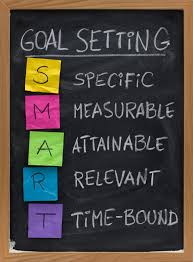
2. Set SMART Goals
You have probably heard of "SMART goals" already. But do you always apply the rule? The simple fact is that for goals to be powerful, they should be designed to be SMART. There are many variations of what SMART stands for, but the essence is this – goals should be:
Set Specific Goals
Your goal must be clear and well defined. Vague or generalized goals are unhelpful because they don't provide sufficient direction. Remember, you need goals to show you the way. Make it as easy as you can to get where you want to go by defining precisely where you want to end up.
Set Measurable Goals
Include precise amounts, dates, and so on in your goals so you can measure your degree of success. If your goal is simply defined as "To reduce expenses" how will you know when you have been successful? In one month's time if you have a 1 percent reduction or in two years' time when you have a 10 percent reduction? Without a way to measure your success you miss out on the celebration that comes with knowing you have actually achieved something.
Set Attainable Goals
Make sure that it's possible to achieve the goals you set. If you set a goal that you have no hope of achieving, you will only demoralize yourself and erode your confidence.
However, resist the urge to set goals that are too easy. Accomplishing a goal that you didn't have to work hard for can be anticlimactic at best, and can also make you fear setting future goals that carry a risk of non-achievement. By setting realistic yet challenging goals, you hit the balance you need. These are the types of goals that require you to "raise the bar" and they bring the greatest personal satisfaction.
Set Relevant Goals
Goals should be relevant to the direction you want your life and career to take. By keeping goals aligned with this, you'll develop the focus you need to get ahead and do what you want. Set widely scattered and inconsistent goals, and you'll fritter your time – and your life – away.
Set Time-Bound Goals
You goals must have a deadline. Again, this means that you know when you can celebrate success. When you are working on a deadline, your sense of urgency increases and achievement will come that much quicker.
3. Set Goals in Writing
The physical act of writing down a goal makes it real and tangible. You have no excuse for forgetting about it. As you write, use the word "will" instead of "would like to" or "might." For example, "I will reduce my operating expenses by 10 percent this year," not "I would like to reduce my operating expenses by 10 percent this year." The first goal statement has power and you can "see" yourself reducing expenses, the second lacks passion and gives you an excuse if you get sidetracked.
Tip 1:
Frame your goal statement positively. If you want to improve your retention rates say, "I will hold on to all existing employees for the next quarter" rather than "I will reduce employee turnover." The first one is motivating; the second one still has a get-out clause "allowing" you to succeed even if some employees leave.
Tip 2:
If you use a To-Do List , make yourself a To-Do List template that has your goals at the top of it. If you use an Action Program , then your goals should be at the top of your Project Catalog.
Post your goals in visible places to remind yourself every day of what it is you intend to do. Put them on your walls, desk, computer monitor, bathroom mirror or refrigerator as a constant reminder.
4. Make an Action Plan
This step is often missed in the process of goal setting. You get so focused on the outcome that you forget to plan all of the steps that are needed along the way. By writing out the individual steps, and then crossing each one off as you complete it, you'll realize that you are making progress towards your ultimate goal. This is especially important if your goal is big and demanding, or long-term. Read our article on Action Plans for more on how to do this.
5. Stick With It!
Remember, goal setting is an ongoing activity not just a means to an end. Build in reminders to keep yourself on track, and make regular time-slots available to review your goals. Your end destination may remain quite similar over the long term, but the action plan you set for yourself along the way can change significantly. Make sure the relevance, value, and necessity remain high.
Key Points
Goal setting is much more than simply saying you want something to happen. Unless you clearly define exactly what you want and understand why you want it the first place, your odds of success are considerably reduced. By following the Five Golden Rules of Goal Setting you can set goals with confidence and enjoy the satisfaction that comes along with knowing you achieved what you set out to do.
So, what will you decide to accomplish today?
Source: http://www.mindtools.com/pages/article/newHTE_90.htm
Source:http://crossfitcphs.files.wordpress.com/2011/08/smart_goals1.jpg
Have you thought about what you want to be doing in five years' time?
Are you clear about what your main objective at work is at the moment?
Do you know what you want to have achieved by the end of today?
If you want to succeed, you need to set goals. Without goals you lack focus and direction.
Goal setting not only allows you to take control of your life's direction; it also provides you a benchmark for determining whether you are actually succeeding. Think about it: Having a million dollars in the bank is only proof of success if one of your goals is to amass riches. If your goal is to practice acts of charity, then keeping the money for yourself is suddenly contrary to how you would define success.
To accomplish your goals, however, you need to know how to set them. You can't simply say, "I want" and expect it to happen. Goal setting is a process that starts with careful consideration of what you want to achieve, and ends with a lot of hard work to actually do it. In between there are some very well defined steps that transcend the specifics of each goal. Knowing these steps will allow you to formulate goals that you can accomplish.
Here are our five golden rules of goal setting:
The Five Golden Rules
1. Set Goals that Motivate You
When you set goals for yourself, it is important that they motivate you: this means making sure that they are important to you, and that there is value in achieving them. If you have little interest in the outcome, or they are irrelevant given the larger picture, then the chances of you putting in the work to make them happen are slim. Motivation is key to achieving goals.
Set goals that relate to the high priorities in your life. Without this type of focus, you can end up with far too many goals, leaving you too little time to devote to each one. Goal achievement requires commitment, so to maximize the likelihood of success, you need to feel a sense of urgency and have an "I must do this" attitude. When you don't have this, you risk putting off what you need to do to make the goal a reality. This in turn leaves you feeling disappointed and frustrated with yourself, both of which are de-motivating. And you can end up in a very destructive "I can't do anything or be successful at anything" frame of mind.
Tip:
To make sure your goal is motivating, write down why it's valuable and important to you. Ask yourself, "If I were to share my goal with others, what would I tell them to convince them it was a worthwhile goal?" You can use this motivating value statement to help you if you start to doubt yourself or lose confidence in your ability to actually make the goal happen.
2. Set SMART Goals
You have probably heard of "SMART goals" already. But do you always apply the rule? The simple fact is that for goals to be powerful, they should be designed to be SMART. There are many variations of what SMART stands for, but the essence is this – goals should be:
- Specific
- Measurable
- Attainable
- Relevant
- Time Bound
Your goal must be clear and well defined. Vague or generalized goals are unhelpful because they don't provide sufficient direction. Remember, you need goals to show you the way. Make it as easy as you can to get where you want to go by defining precisely where you want to end up.
Set Measurable Goals
Include precise amounts, dates, and so on in your goals so you can measure your degree of success. If your goal is simply defined as "To reduce expenses" how will you know when you have been successful? In one month's time if you have a 1 percent reduction or in two years' time when you have a 10 percent reduction? Without a way to measure your success you miss out on the celebration that comes with knowing you have actually achieved something.
Set Attainable Goals
Make sure that it's possible to achieve the goals you set. If you set a goal that you have no hope of achieving, you will only demoralize yourself and erode your confidence.
However, resist the urge to set goals that are too easy. Accomplishing a goal that you didn't have to work hard for can be anticlimactic at best, and can also make you fear setting future goals that carry a risk of non-achievement. By setting realistic yet challenging goals, you hit the balance you need. These are the types of goals that require you to "raise the bar" and they bring the greatest personal satisfaction.
Set Relevant Goals
Goals should be relevant to the direction you want your life and career to take. By keeping goals aligned with this, you'll develop the focus you need to get ahead and do what you want. Set widely scattered and inconsistent goals, and you'll fritter your time – and your life – away.
Set Time-Bound Goals
You goals must have a deadline. Again, this means that you know when you can celebrate success. When you are working on a deadline, your sense of urgency increases and achievement will come that much quicker.
3. Set Goals in Writing
The physical act of writing down a goal makes it real and tangible. You have no excuse for forgetting about it. As you write, use the word "will" instead of "would like to" or "might." For example, "I will reduce my operating expenses by 10 percent this year," not "I would like to reduce my operating expenses by 10 percent this year." The first goal statement has power and you can "see" yourself reducing expenses, the second lacks passion and gives you an excuse if you get sidetracked.
Tip 1:
Frame your goal statement positively. If you want to improve your retention rates say, "I will hold on to all existing employees for the next quarter" rather than "I will reduce employee turnover." The first one is motivating; the second one still has a get-out clause "allowing" you to succeed even if some employees leave.
Tip 2:
If you use a To-Do List , make yourself a To-Do List template that has your goals at the top of it. If you use an Action Program , then your goals should be at the top of your Project Catalog.
Post your goals in visible places to remind yourself every day of what it is you intend to do. Put them on your walls, desk, computer monitor, bathroom mirror or refrigerator as a constant reminder.
4. Make an Action Plan
This step is often missed in the process of goal setting. You get so focused on the outcome that you forget to plan all of the steps that are needed along the way. By writing out the individual steps, and then crossing each one off as you complete it, you'll realize that you are making progress towards your ultimate goal. This is especially important if your goal is big and demanding, or long-term. Read our article on Action Plans for more on how to do this.
5. Stick With It!
Remember, goal setting is an ongoing activity not just a means to an end. Build in reminders to keep yourself on track, and make regular time-slots available to review your goals. Your end destination may remain quite similar over the long term, but the action plan you set for yourself along the way can change significantly. Make sure the relevance, value, and necessity remain high.
Key Points
Goal setting is much more than simply saying you want something to happen. Unless you clearly define exactly what you want and understand why you want it the first place, your odds of success are considerably reduced. By following the Five Golden Rules of Goal Setting you can set goals with confidence and enjoy the satisfaction that comes along with knowing you achieved what you set out to do.
So, what will you decide to accomplish today?
Source: http://www.mindtools.com/pages/article/newHTE_90.htm
Source:http://crossfitcphs.files.wordpress.com/2011/08/smart_goals1.jpg
Subscribe to:
Posts (Atom)