Showing posts with label Health. Show all posts

Monday, 17 August 2015

Exercise: 7 benefits of regular physical activity

You know exercise is good for you, but do you know how good? From boosting your mood to improving your sex life, find out how exercise can improve your life.


Take care of your Body, It's the only place you have to live-Quote-Jim Rohn


Want to feel better, have more energy and perhaps even live longer? Look no further than exercise. The health benefits of regular exercise and physical activity are hard to ignore. And the benefits of exercise are yours for the taking, regardless of your age, sex or physical ability. Need more convincing to exercise? Check out these seven ways exercise can improve your life.

No. 1: Exercise controls weight
Exercise can help prevent excess weight gain or help maintain weight loss. When you engage in physical activity, you burn calories. The more intense the activity, the more calories you burn. You don't need to set aside large chunks of time for exercise to reap weight-loss benefits. If you can't do an actual workout, get more active throughout the day in simple ways — by taking the stairs instead of the elevator or revving up your household chores.

No. 2: Exercise combats health conditions and diseases
Worried about heart disease? Hoping to prevent high blood pressure? No matter what your current weight, being active boosts high-density lipoprotein (HDL), or "good," cholesterol and decreases unhealthy triglycerides. This one-two punch keeps your blood flowing smoothly, which decreases your risk of cardiovascular diseases. In fact, regular physical activity can help you prevent or manage a wide range of health problems and concerns, including stroke, metabolic syndrome, type 2 diabetes, depression, certain types of cancer, arthritis and falls.

No. 3: Exercise improves mood
Need an emotional lift? Or need to blow off some steam after a stressful day? A workout at the gym or a brisk 30-minute walk can help. Physical activity stimulates various brain chemicals that may leave you feeling happier and more relaxed. You may also feel better about your appearance and yourself when you exercise regularly, which can boost your confidence and improve your self-esteem.

No. 4: Exercise boosts energy
Winded by grocery shopping or household chores? Regular physical activity can improve your muscle strength and boost your endurance. Exercise and physical activity deliver oxygen and nutrients to your tissues and help your cardiovascular system work more efficiently. And when your heart and lungs work more efficiently, you have more energy to go about your daily chores.

No. 5: Exercise promotes better sleep
Struggling to fall asleep? Or to stay asleep? Regular physical activity can help you fall asleep faster and deepen your sleep. Just don't exercise too close to bedtime, or you may be too energized to fall asleep.

No. 6: Exercise puts the spark back into your sex life
Do you feel too tired or too out of shape to enjoy physical intimacy? Regular physical activity can leave you feeling energized and looking better, which may have a positive effect on your sex life. But there's more to it than that. Regular physical activity can lead to enhanced arousal for women. And men who exercise regularly are less likely to have problems with erectile dysfunction than are men who don't exercise.

No. 7: Exercise can be fun
Exercise and physical activity can be a fun way to spend some time. It gives you a chance to unwind, enjoy the outdoors or simply engage in activities that make you happy. Physical activity can also help you connect with family or friends in a fun social setting. So, take a dance class, hit the hiking trails or join a soccer team. Find a physical activity you enjoy, and just do it. If you get bored, try something new.

The bottom line on exercise
Exercise and physical activity are a great way to feel better, gain health benefits and have fun. As a general goal, aim for at least 30 minutes of physical activity every day. If you want to lose weight or meet specific fitness goals, you may need to exercise more. Remember to check with your doctor before starting a new exercise program, especially if you haven't exercised for a long time, have chronic health problems, such as heart disease, diabetes or arthritis, or you have any concerns.

Source

Tuesday, 11 August 2015

7 Tips to get your Brain Energized in the Morning

Okay, it's Tuesday morning and you're brain is still just not awake... then maybe it's time to look at these 7 tips to get your brain awake and energized!

1. Get up straight away. I am also guilty of hitting the alarm and snooze a little longer, but your brain will not wake up and it's the recipe for a "lazy" day. So set you alarm and commit to get out immediately, for me it's useful to have the alarm lying on the other side of the room. 


Garfield waking up from al lot of clocks ticking


2. Drink water. By drinking a glass of water after you get up you will activate your metabolism and feel refreshed.

3. Natural light. Open the curtains make sure there is sunlight, the brighter the better. When we don't have natural light our brains stay in a "sleep" mode, on the other hand bright sunlight triggers serotonin and dopamine to be released in the body. These give us a happy feeling, which boosts our brains to activity.

4. Exercise. I was never fond of this one and I still have an issue with heavy exercise in the morning. Since, starting the day with a good walk with the dog has proven to give me a massive impact on my energy levels. The dog loves it too!

5. Breakfast. Don't skip this one, it's like they say "breakfast is the most important meal of the day"! You need nutrition to get your mental processes running. Try to eat healthy in the morning, like oatmeal with some fresh blue berries, yummy! 

6. Shower (cold). It's not really funny, but it's extremely useful to wake up your whole body including your brain! 

7. Talk to people. A simple morning chat about the weather or so will boost your brain to wake up and be energized. For being social your brain has to work and will get you out of your "sleep" mode.

Boost your brain energy and start trying these tips for yourself!

Thursday, 6 August 2015

Why Steve Jobs Took Long Walks and Why You should Too

Why Everyone From Beethoven, Goethe, Dickens, Darwin To Steve Jobs Took Long Walks and Why You Should Too

One day, when Marc Andreessen, the money man behind such tech giants as Facebook, Twitter, and Zynga, was out driving around his home in Palo Alto, California, he nearly hit a crazy old man crossing the street.

Looking back at the fool he had nearly run over he noticed the trademark blue jeans and black turtle neck. “Oh my god! I almost hit Steve Jobs!” he thought to himself.

It was Jobs that day, out on one of his many walks around the Palo Alto area, where Apple are based. Steve Jobs was famous in the area for his long walks, which he used for exercise, contemplation, problem solving, and even meetings. And Jobs was not alone. Through history the best minds have found that walking, whether a quick five minute jaunt, or a long four hour trek, has helped them compose, write, paint, and create.

Here are five reasons that walking is one of the best ways you can spend your time, and how it can help you think better, get more done, relate better, and live longer.

01. It will help make you more creative

All truly great thoughts are conceived by walking-Friedrich-Nietzsche-Quote
Though most people have always thought that their best ideas came when the were on the move, now there is scientific evidence to back them up. A 2014 study from Stanford University in the US has shown that people are much more creative when they are walking around as opposed to when they are sitting still. Marily Oppezzo and Daniel Schwartz, who both authored the paper, studied 176 college students as they completed certain creative thinking tasks.

In this study, the authors used an experiment known as Guilford’s Alternative Uses Task. As part of this, they participants were asked to list as many alternative uses for a common object as they can. For instance, a knife could be used to spread butter, to cut bread, to stab someone, or to flick peas. The answers were then scored on originality, number of ideas and detail.

In their study, Oppezzo and Schwartz got the students to perform this task in a few different variations. Either sitting indoors or sitting outdoors, or walking on a treadmill indoors, or walking outside.

They found that when people were walking, either on the treadmill or outdoors, they were 60% more creative than when sitting around.


To add to this, 81% of the participants saw an increase in creativity when they were walking.

What’s more, when the participants took a second test after walking, they were still more creative, showing the positive effects of walking continued even after they sat down again.

Though there is no further research into how exactly walking makes you more creative, it is likely that it helps to increase blood flow all around your body, including to the brain to stimulate creativity.

Another interesting finding from the study was that there was no difference between walking on a boring treadmill indoors, and being outside among the birds and the bees. This shows that it is not the environment or sensation that is making walkers more creative, but just the act of walking alone.

It wasn’t all good news for walking in the study though. The researchers also found that if you had to do focused thinking while walking, answering questions that required a single correct answer, the results were no better than when sitting.

This study should give you some evidence if you want to build walking into your daily and business life. A simple walk outside can aid your creative brain if you find yourself stuck at a desk and unable to elicit the next bright spark. Instead of sitting, waiting for inspiration to strike, head outside for five minutes and see if the extra blood flow can get the creative juices flowing.

02. It will help you stay healthy

Waling is a men's best medicine-Hippocrates-Quote
In a TED talk two years ago, Nilofer Merchant, a business innovator that pounds the same Silicon Valley streets as Andreessen does and Jobs did, advocated the virtues of meetings on the move. She had trouble fitting exercise into an already hectic day so started taking her meetings standing up.


In her TED talk she produced a startling statistic – we are on our butts for almost 10 hours of the day on average.

For many it will be many more as they sit at their desks for the working day and then head home to slump in front of the TV or computer. This is not good for us. Not only are our flabby behinds not built for sitting, but neither are our hearts.

Physical inactivity can lead to heart disease, diabetes, and a large number of cancers. It just doesn’t do us any good to sit around all day. Merchant describes sitting as the new smoking – something which we all do now that is slowly killing us, and that in 10, 20, 50 years time people will look back on as crazy.

In fact, walking is as close to a magic pill that we have. Just 30 minutes of walking each day is enough to dramatically reduce your risk of heart disease, colon cancer, breast cancer and dementia.

Though a good 30 minute walk each day would be best, if you do not have time then you can consider breaking it down into more manageable chunks. 10 minutes in the morning, at noon, and in the evening each will add up and help get your body used to a bit of exercise and like help your heart and brain out as well.

03. It will help you be more productive

If you’ve ever watched the TV show The West Wing you will have heard of the phrase “walk and talk”. In every single episode, the busy staffers of the presidential office were “just too busy, goddammit” to sit around and have meetings, so they would always be discussing, conniving, and gossiping on the move. Though this has become a cliché, something the cast now send up, it’s actually a brilliant idea.

Meetings on the move or walking meetings are very “in vogue” at the moment, particularly in Silicon Valley. The idea being that there is no reason really to hold a meeting over a big piece of wood, so why not take it outside and get some exercise at the same time. Nilofer Merchant says that walking meetings now account for 70% of her exercise during the week, and that they are far more productive than other types of meetings.

For one, there is little distraction. People leave their blackberry’s and smartphones in their pockets when out of a walking meeting, and obviously do not have one eye on their computer screen as can happen when you meet with someone in their office. Plus, you know that you are not going to be disturbed if you are out and about. Of course, this leads to problems for some people.


iPhone Separation Anxiety is real, and people do not like the idea about being away from their desks and electronic contact for any length of time.

Also, people do not know how to act or conduct themselves in such meetings. How do you take notes on the move, for instance? (hint: the same way you do when sitting down – with a pen and paper). Merchant says that, though people can feel awkward about such meetings, they soon see the benefits and are happy to go for walk and talks if you give them a heads up. They then can dress appropriately in sneakers instead of high heels.

Of course, the previously mentioned health and creativity benefits also make walking meetings far better than their sit-down cousins.

If you want to start having your meetings on the move, the best idea is to start with a colleague that also wants to get out and about. Arrange a walking meeting each week where you can discuss work issues together and brainstorm ideas. Then you can reach out to others to gauge interest. As Merchant says, give people warning that you are going mobile and you will probably not have any complaints, and probably a lot more ideas.

04. It’s a great way to communicate

Steve Jobs and Mark Zuckerberg both like first meetings with people to be on the move. This is because a walking conversation is so much more natural and distraction-free than most other types of meetings.

Part of this is because these type of meetings are not so great in that there are more than two people. Though you can get a group of people together for a mass walk and talk, it makes more sense for these meetings to be a one-on-one. The job interview for my first job in science was a walking meeting, as me and my soon-to-be boss walked through the streets of Lausanne, Switzerland discussing where we wanted neuroscience to be in 20 years time.


The naturalness of two people walking along in deep discussion and thought is definitely why these walking meetings are catching on.

You might find that if you are having difficulty communicating an idea to a colleague, then you both heading outside and taking the idea for a few laps around the local park helps immensely.

Again, it is likely that the increased blood flow helps you to come up with not only more creative ideas and solutions to problems, but also helps you express those ideas more fluently and helps you communicate with co-workers.

05. You will be following in the footsteps of giants

Steve Job's penchant for walks was revealed in the recent Walter Isaacson biography of the Man and the reason for walking’s recent renaissance within the tech elite, but he was hardly the first creative genius to discover that ideas flourish on the move.

Beethoven was an avid walker, taking short breaks to stretch his legs while working, and then spending his afternoons wandering around Vienna. He always took a pencil and paper with him to write down anything that struck him. You can see, or rather hear, the influence of these woodland walks in his symphonies, particularly his 6th Symphony, known as his Pastoral Symphony for its country and woodland elements.

Beethoven’s love of walking rubbed off on another genius of the time, Goethe. The composer and the poet meet in the resort town of Teplice on the Czech-German border and went for a walk and talk through the town. Perhaps, though, this is not the best example of a great walking meeting as, though Beethoven originally idolized Goethe, this was very much a case of never meet your idols. The two disliked each other and never met again. Though I hope Goethe continued his walks.

Another of history’s walking enthusiasts was Charles Dickens. Whether in London or at his country house in Kent he always took long walks. And when I say long, I mean long. Dickens could rack up 30 miles a day, or rather night, walking. He would walk whenever the mood took him and whenever he had something to think about, continuing around the streets of London or the country lanes of Kent until the issue was resolved in his head.

This may be a case of the cure is worse than the disease – walking 30 miles each day is unlikely to be very good for you or your joints. If 30 minutes is the minimum you are supposed to walk, then 30 miles is probably nearing the maximum. But it worked for Dickens, as he created some of his most remarkable and memorable characters when out walking, either through thought or through observing the city and people around him.

Another Victorian heavyweight that enjoyed a ramble around Kent was another Charles, Charles Darwin. Darwin had a gravel path installed at his home, not unlike a race track, that he would walk around each day as he thought about problems. The number of laps he did depended on the difficultly of the problem at hand. He would stack stones at the start of his walk and the knock them down one by one as he went round, describing the difficulty of the problem as a three, four, or five-flint problem.

Jobs’ walks around Silicon Valley have led to this being a particularly common trait among young tech leaders.

Mark Zuckerberg, the founder of Facebook, in particular is very fond of a walking meeting. If you are lucky enough to be being considered for a high up position at Facebook, don’t expect to be interviewed by Zuckerberg in his office. No, the man will take you on a tour of the campus, pointing out the different divisions and sounding you out about your experience and thoughts on the company. His piecè de résistance is to finish the walk and talk meeting on a promontory overlooking Silicon Valley and the other tech giants, telling you that he is bigger, better, and richer than all below, in true super-villain style. Presumably you get pushed off if you decline his offer.

Jack Dorsey, co-founder of Twitter and now heading up digital finance company Square, takes all new hires at Square for his ‘Gandhi walk’ on their first Friday. This is an epic walk through the streets of San Francisco to the Square offices while he espouses on the guiding principles behind Square.

If you are choosing to spend your afternoons rambling in the woods, or chose to take people out for a wander rather than meet in a stuffy office, you know you are in good company.

Take a walk today!
The conclusion is… walking is great. Not only will it make you more creative, it will help you get those ideas over to your colleagues better and allow you to fit more into your day. All while helping you not to die early. Fantastic.

So, why don’t we do it? Well, sometimes it’s cold outside, or raining, or we are feeling sluggish, or any other of a thousand reasons we have to not get up and out each day.

But if you start with just finding a few extra minutes each day for a walk, or try to move some part of your day, such as meetings outside, then you’ll find that walking is as natural as… walking. You’ll think more, do more, learn more, and live longer. Get walking!

By: Andrew Tate Source

Wednesday, 5 August 2015

Sitting is Bad for Your | Have Fun & Sit Less

You have probably heard by now, that sitting for longer periods is extremely bad for your body and mind. To understand why it's bad for you watch the video below. While you watch, stand up and give your sitting body a 5 minute BREAK.


Did you stand up during the video? If yes, well done!
No? Please do it now.

It's easy to say you should stand up, walk and sit less during the day, but you might work in an office and it's just easier to type while you sit down, right?
I know I'm sitting while typing this :-) Therefore a few simple tips to move a little more during the day.

Tips to sit less at work

  • If you use public transport to go to work, take alternative routes to walk the last part. You will see new things and move more.
  • You go by car to work? Park at the far end of the parking lot or even at the neighbours if that's okay. You will move a lot more each week, if done consistently.
  • Drink a lot of water (or even coffee or tea) and use small cups. Each refill means you get to move around.
  • Drinking means going to the toilet, use the one that's upstairs or further down the hall.
  • Need a quick answer? Walk to your colleague and ask, instead of another email.
  • Printing a document? Maybe there is one at the other end of the office instead of the one next to you?
  • Stand up to get a file from the filing cabinet, instead of turning around on your chair.
  • Go outside while having a lunch break, take your own food (cheaper and as healthy as you like) and walk around.
  • Stand up and walk around each time you are on the phone. Your colleagues will get used to it.
  • Automate a reminder to stand up at least every hour.
  • Find a filing cabinet high enough to put your laptop on and work while standing. This will sure have a few colleagues questioning the situation. On the other hand you can see if you can get a standing desk.

Tips to sit less at home

Maybe you are moving around at work quite a lot, but as soon as you get home you might sit down more than is good for you. A few other tips:

  • Watching tv? Stand up during each commercial, you can even prepare a list of things to do while commercials are on. Maybe you need to put the trash outside, get the post out of the mailbox or clean your cats litter?
  • Need to get some groceries, use a shopping bag on wheels and walk to the store.
  • Again, walk around while on the phone, use the toilet upstairs, drink little amounts and refill as much as you like.

I work from home
Some time ago I realized I was sitting quite a lot myself, always on the same chair at my office, at home. I simply do most of my work from home, therefore I walk about 10 meters to get into my office....

At some point I decided to challenge myself. I was not going to sit more then 8 hours a day for 30 days (including in front of the TV). After a quick calculation I realized I had to change some habits. The result: 

How you can use an ironing board to sit less
Alternative use of an ironing board
Do I need to explain that I did not have a standing desk or a cabinet high enough? 

Other then this I have changed some habits, like always run upstairs to the toilet, walk our dog even more (he loves it), and walk around while on the phone. 

I challenge you to commit yourself to do something like this too. Believe me it's fun to do, you need to use your creativity and it's for such a good cause: Your Health!

Let me know the results and if you have some other good ideas to sit less and move more, please share them!

Monday, 3 August 2015

5 Health Principles | Dr. Deepak Chopra

Dr. Deepak Chopra is an Indian-born American author and public speaker. He is an alternative medicine advocate and a promoter of popular forms of spirituality.

Chopra obtained a medical degree in India before emigrating in 1970 to the United States. As a physician he specialized in endocrinology and became Chief of Staff at the New England Memorial Hospital (NEMH). [1]

He states there are 5 principles that improve a healthier life. 

1. Get good and enough sleep


"Sleep is when our soul actually refreshes our Body"

2. Exercise


"My body is a projection of my consciousness"

3. Control (negative) emotions


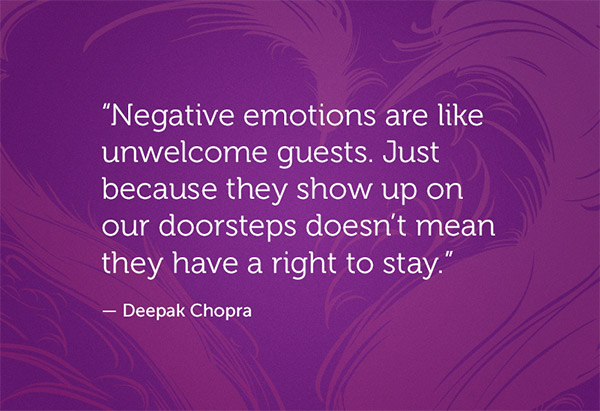
"Negative emotions are like unwelcome guests" Quote deepak Chopra

4. Meditate


"Meditation takes you beyond the mind's noisy chatter into the pure awareness that is the source of all your happiness, inspiration, and love"

5. Have a balanced diet


"If you find a better way to be happy than by overeating, your body will naturally return to it's balanced state"


So far these 5 health principles, but this is just in a nutshell, so please check some of his books like his most recent one: What Are You Hungry For?: The Chopra Solution to Permanent Weight Loss, Well-Being and Lightness of Soul


Anyway there is enough food for thought, but don't only think...Act!

[1] Wikipedia

Monday, 27 July 2015

5 Daily Rituals That Will Improve Your Health and Your Life

"The human soul can always use a new tradition. Sometimes we require them." 

~Pat Conroy~

I have daily rituals that help me think clear, improve my health and reduce stress. I'm betting that you have daily rituals too. The word ritual is usually associated to religious practices and ceremonies. But I promise that I'm not going to go there.

I'm more interested in the practical definition of ritual: A detailed method of procedure faithfully or regularly followed.

Daily rituals are powerful because over time they become deep-seeded habits. Do you wash your hands before you eat? Do you even have to think about it? You've probably practiced the ritual of washing your hands before you eat so many times that you now do it automatically with little thought. It is a habit.

The cool thing is that you can create new daily rituals and therefore new habits. You can also get rid of destructive rituals and habits.


A resource for you to check out is the book, The Power of Habit by Charles Duhigg. I've read the book and found it to be a useful tool for understanding and changing habits. Here's a video from Charles explaining how to break a habit.


You can also checkout this flowchart explaining how to break a habit and this flowchart explaining how to make a habit.

Establishing a new habit is the act of creating a new daily ritual that you practice over and over again. For better or worse, eventually you have a habit. Let's look at 5 Daily Rituals you can start today to create powerful habits that will lead to health, clean energy and reduced stress levels.

5 Daily Rituals for Health, Vitality and Longevity
1. How you start your day is a major influence on the rest of your day. One daily ritual that I've found increases my energy and helps wake me up is to drink a tall glass of cold water as soon as I wake up. 

I've found that drinking a glass of cold water first thing in the morning wakes up my mind, increases my energy, helps with digestion and ensures my body is getting all the benefits of drinking water.

Instead of running straight to the coffee pot in the morning to get a shot of caffeine have a glass of water. Soon you'll wake up reaching for your water glass without thinking about it and you'll be enjoying all the health benefits this new habit brings. I'm not suggesting you skip your coffee. Just make sure to have some fresh water first.

2. Another ritual to practice first thing in the morning is to show gratitude. I keep a gratitude list in my journal. Usually my journal is on my nightstand and I can grab it as I go out to the kitchen for my glass of water.

There's no set number of things you have to write down. All you need to do is write one thing in your journal that you're thankful for. It could be as simple as being thankful that you woke up today.

I used to believe that I could just think about things I'm grateful for and that would be good enough. But the truth is that there is something more significant about actually writing these things down.

I've not made this an actual habit, yet. I have to make a conscious effort to write my gratitude list every morning. But taking that time in the morning to concentrate on what I'm grateful and happy about puts me in a more productive state of mind for the rest of the day. I also find that I appreciate my life more and it helps me realize that I'm surrounded by abundance.


“Be thankful for what you have; you’ll end up having more. If you concentrate on what you don’t have, you will never, ever have enough.” 

~Oprah Winfrey~


Sorry to sound a little new age with this gratitude stuff but I believe that I have to tell my mind what to focus on or else it finds things on its own... and what it finds is not always good. A cool site to checkout is Gratitude Log which is coined as "The Happiest Place on the Internet."

3. Get outside in the afternoon for a walk and some Vitamin D. This might sound crazy but I think you would actually do your body, mind and spirit more good by skipping lunch and taking a walk outside with fresh air and sunshine.

Lunch is one of those meals during the day that I feel is more of a ritual then it is a necessity. Do you have to eat lunch? I'm not convinced that you do.

If I follow my regular schedule of eating a high protein and fat breakfast I find that I'm usually not hungry until late afternoon around 5 o'clock. If I'm staying hydrated by drinking plenty of water my energy levels actually improve as the day progresses and I might even make it until 6pm, or later, before I'm actually hungry.

I hear from a lot of people that they feel sluggish after lunch. They might even need a nap! This is especially true for people who eat the typical sub sandwich for lunch with a bag of chips and a cola on the side.

Lunch or no lunch one thing is certain, we sit too much. I also think that most of us don't get enough natural Vitamin D from sunlight. Usually you're inside eating lunch during the part of the day where you can get the most Vitamin D from the sun.

I encourage you to try a new daily ritual. Get outside at lunch time. Take a walk. If you want to eat something take an apple or a handful of nuts with you along with a water bottle. I promise you it will be the best lunch ever and you'll have more energy for the second half of your day.

Bonus points if you grab a friend and have fun talking as you take your walk. Of course, everyone is different so test it out and see if it's right for you.

4. Practice mastery in an endeavor outside your normal work and obligations. I've had the goal to learn to play guitar for a while. I've dabbled and picked up some chords but I haven't really dedicated myself to practicing a little each day.

When I was practicing on a regular basis I felt a calm and presence that is hard to come by during "normal" daily activities. I get this same type of feeling playing sports or going to the gym. It comes from having a clear mind and focusing on one objective.


Think about something you've wanted to learn and go do it. It's exciting to learn new things and to become good at them. To learn more about practising mastery I encourage you to read Mastery by George Leonard.


"How do you best move toward mastery? To put it simply, you practice diligently, but you practice primarily for the sake of the practice itself." 


~George Leonard~

5. Turn off your phone, computer, laptop, tablet and TV at least 90 minutes before bed. This is another ritual that has been hard for me but I'm persisting.

When I practice the no screens before bed ritual I find that my body naturally winds down and I get sleepy. If I'm on the computer or reading on my phone my mind starts going and I could stay up until 2 am. This leads to not getting enough quality sleep and the next day my energy and productivity suffers.

Instead of staring at a screen that two hours before bed you could practice mastery in your new subject from ritual number four. You could spend that time reading a new book or writing in your journal. It could be a great opportunity to spend time with your family and loved ones. The possibilities are endless.

Good sleep is so important to our overall health and well-being that it deserves serious attention. Here's a great article from Mark Sisson on how light can impact your sleep.

"Blue light regulates our secretion of melatonin, the sleep hormone. Exposed to blue light, we limit the production of melatonin, and we stay alert and awake; in the absence of blue light, melatonin production ramps up, and we get sleepy." Mark Sisson

Turn off those screens and immerse yourself in something "offline." Disconnect and let your mind wind down naturally. Sometimes deadlines and obligations get the best of us and we have to burn the midnight oil. But if you're able to make this ritual part of your normal day to day life it will pay dividends.

5.5. Here's a quick bonus ritual that you might want to try. Meditate or practice positive visualization for at least 5 minutes a day. It doesn't matter what part of the day you do this as long as you do it for at least five minutes every day.

I like to visualize the goals I have and picture what it will be like to achieve them. It's actually a lot of fun trying to see how bright and clear you can make the pictures in your mind. Take this five minutes and do some deep breathing as well.

Sometimes I find myself taking shallow breaths. This is especially true when I'm stressed out. Taking deep, mindful breaths can relieve stress, increase energy and boost your immune system. Check out this clip from NPR.

Going forward be mindful of the daily rituals that are part of your life. Have you consciously chosen these daily rituals? Do you have habits that have chosen you that you would like to change? It all starts with recognizing our current daily rituals and deciding which ones to keep and which ones to get rid of.

Make sure to share these ideas with your friends. Good ideas and good health are worth sharing.

Source

Friday, 3 July 2015

Tiny Habits

Behaviour scientist BJ Fogg explains a painless strategy to personal growth.


For years, I've aspired to achieve the same simple goal: Floss daily.

It seems so easy. But time and again, after being faithful for a few days, I fall off the flossing wagon. And each failed attempt makes me feel lousier about myself. After all, it’s just flossing! Then earlier this year, while surfing the Internet, I stumbled upon the social scientist who may have found the secrets of human motivation and behaviour.

Professor BJ Fogg, Ph.D., has spent close to two decades founding and directing the Persuasive Technology Lab at Stanford University, studying how human behaviour works. His expertise is in creating systems that change human behaviour—as he calls his work, Behaviour Design. In exploring a few shortcuts to creating positive behaviour, Fogg found a particular method that worked extremely well. He called it Tiny Habits. “I started doing it on my own, and decided to share it with friends and had no idea it would keep going and going,” Fogg says. “It is a way to change your behaviour without relying on willpower.”

Eventually, Fogg launched a week long Tiny Habits test program online, asking participants only to stick to the methods, and offer constructive feedback. The results have been ground breaking. Perform a quick search on Twitter and you’ll find hundreds of #tinyhabits testimonials, an underground stir that earned Fogg a platform at South by Southwest (SXSW) in Austin this year, to present his “life hack.”


Three Baby Steps

Fogg’s research has taught him that human behaviour is systematic. Each of our actions and decisions is fuelled by three components—motivation, ability and triggers. Our behaviour, particularly our habits, comes from an underlying motivation, the ability to complete the particular action and a stimulus that provokes the action.

For example, your morning alarm blares and you immediately turn it off and get out of bed—or you do after a couple rounds of hitting the snooze button. Getting up to start the day is your motivation, locating your alarm clock within arm’s reach creates your ability to fulfil it, and the loud, incessant beeps are the triggers, reminders to your instincts that the next action is to turn off the alarm.

The road to any desired behaviour—say, increasing productivity on the weekends, making more sales calls or eating healthier—can be jump-started with three baby steps:

1. Start small. “Pick a small step toward your goal—a step so tiny, you’ll think it’s ridiculous,” Fogg says. Because it’s radically easy, you’re more likely to actually complete the behaviour, regardless of how much or how little motivation you feel.

2. Find an anchor. Choose an existing routine in your life to act as a trigger for your new behaviour. Parking your car, brushing your teeth or taking a shower are all routines that can act as great anchors to trigger a new habit. “Whether you realize it or not, you have all sorts of routines,” Fogg says. “I call these anchors that you can connect to your tiny behaviour. The key is to pick which routine is the right trigger for your small, simple behaviour.”

The blueprint for your new behaviour should complete the following sentence: After I (routine), I will (tiny behaviour).


“I've created all these tiny habits in my life, from really practical to kind of crazy,” Fogg says. “One practical habit is, as soon as the phone rings, I put on my headset and I start walking. This has grown to lifting kettlebells or doing little one-leg squats while I'm on the phone. The desired behaviour is to be active and working out in these small ways. I'm on the phone two to three hours a day, and now it’s a habit that I probably can’t stop. When I take calls, I'm up and walking around.”

Another habit Fogg has introduced into his life—one that might be considered crazy—is meant to build his upper-body strength. “After I pee, I do push-ups,” Fogg says with a big laugh. “And then I promptly wash my hands. I mostly work from home—I wouldn't do it in a public restroom.”

In the beginning, Fogg would do only two push-ups after using the restroom. Because doing two push-ups was almost effortless, it quickly became a habit for Fogg to hit the floor right after using the restroom. Once two push-ups became too easy, he started doing five. When doing five became really easy, Fogg increased it to eight. Eight push-ups became habitual, and soon he was doing 12 to 15 push-ups every time. Now he effortlessly incorporates north of 100 push-ups into his daily routine.

He’s since transitioned into lifting kettlebells. “My arms have gotten so much stronger,” Fogg says. “Since I focused on these Tiny Habits, I've lost 25 pounds and am back to my college weight. And frankly, it has not been hard. It’s a lot of little teeny things. I'm drinking more water, I'm doing push-ups, and just little by little as you do these things, you start seeing progress.”

Part of good behaviour design is evaluating which existing routines to use as anchors for new habits. Because the average adult uses the restroom seven times a day, it was the perfect anchor for Fogg’s habit of doing push-ups.

Fogg advises that someone like me, who aspires to floss every day, anchor the new habit to its natural trigger, teeth-brushing. Like a seed flourishing under favourable conditions, if you plant your new behaviour in the right spot, it’ll naturally grow without further coaxing. “If you try to start a habit and it hurts, you’re making it too hard. It has to be something that’s not a big deal, where you just think, Oh, it’s just two curls with the kettlebells. And after it’s over, be happy that you did it when you had planned to do it.”

3. Celebrate immediately. In building a habit, it helps to reward yourself in positive ways that are as small as your tiny behaviours themselves—give yourself a thumbs-up, a smile in the mirror, or tell yourself good job! “Notice how often athletes celebrate and when they do it—immediately,” Fogg says.

Not only do small celebrations reinforce desired behaviour, but they design for what Fogg calls “tiny thrills.”

“Our brains are very bad at distinguishing between I did this huge thing and I'm feeling awesome about it and I did this tiny thing and I'm still feeling awesome about it,” Fogg says. “Somehow in our heads we exaggerate, which is a good thing. That’s part of the hack—building success momentum, allowing yourself to feel successful, allowing that success to be larger than it rationally should be, then growing and leveraging that attitude into bigger things.”


Forward Progress

Perhaps more helpful than the tiny habits themselves is the success momentum they build. When participants in Fogg’s Tiny Habits online program were asked whether the strategies affected their confidence in creating good habits in the future, a whopping 91 percent said it increased or greatly increased. When participants were polled on whether the Tiny Habits had rippled out to create other positive changes in their lives during the week of the program, 65 percent said yes.

There’s a snowball effect: When you achieve a goal by integrating simple daily habits into your life, no matter how small, you gain a confidence that helps pave the way to reach bigger goals. The success momentum you gain from creating positive habits is the method’s secret sauce.


“Every time a company convinces you to try its new health platform and you don’t succeed, I believe your ability to change in the future decreases. In other words, they are stealing away from you the ability to change,” Fogg says. “We've all been there and experienced it. If you set somebody up on a path where they’re likely not to succeed, or you set yourself up to ‘run two hours every day, no matter what,’ when you stop, it’s not a neutral event—you come back worse. That’s one of the problems in our culture—we overreach.”

Overreaching and falling short is the antithesis of Fogg’s Tiny Habits method. Unless your environment or social circle drastically changes, it’s almost impossible to implement radical changes or big leaps. The only way to make behavior changes that actually work is through tiny steps, performed patiently and methodically.

“One thing we have to move away from is this idea of big and brittle—I'm going to do this big thing and if I fail once, it’s over,” Fogg says. “It’s not that [high achievers] are necessarily in better condition, it’s their routine that makes the behaviour easier to follow. This is true of virtually all behaviours that are simple. They’re easier the more you do them.”

That’s what I'm finding on my ongoing quest to become a daily flosser. I started by flossing one tooth a day, and now, 2½ weeks later, I'm currently flossing exactly 10 teeth a day.

Yes, of course it felt silly to floss a single tooth for the first week. In and of itself, flossing one tooth probably didn't go a long way in warding off gingivitis. But I haven’t missed a single day of flossing since I began my tiny habit. So I've successfully created an ongoing behaviour, and I have confidence that it’ll continue to work.

“It’s more than a feeling,” Fogg says. “When you [create a habit], you're signalling to yourself, Yes! I can change my behaviour. I'm doing it right now! You’re telling yourself this at least once a day. Just have patience, keep going and don’t give up.”


And really, who doesn't have the patience to floss one tooth?


Fogg-y Thoughts

Almost 20 years ago, before iPhones and way before Google Glass, Stanford professor BJ Fogg coined a term for the potential of computers to influence human behaviour—“captology,” from the acronym Computers As Persuasive Technologies.

When Fogg first posited that computers could shape human behaviour, people thought him preposterous. “When I came to Stanford in ’93 to specifically look at how computers can be designed to influence people, nobody had ever done any systematic work in that area,” Fogg tells success. “That was considered kind of freaky and scary by some people; they just didn't think of computers as that instrumental.”

Indeed, everywhere digital technology touches our lives—purchasing something online, going on Facebook, reading a text message—we are being persuaded to take action. The technology is molding our behaviour. “My bias is that a positive use of technology can bring out good outcomes in the world,” says Fogg, “not to enslave people or to separate people from their money.” Why we need to study captology, Fogg argues, is that “we are creating machines that control humans and human behaviour.” Kind of gives you pause, right?

Fortune has named Fogg, 50, one of the “10 New Gurus You Should Know,” and Forbes states that “no one [else] has perhaps been as influential on the current generation of user experience designers,” the architects of our new interconnected society.

As a professor, he’s never taught the same class twice; there was one that explored how social media can promote world peace and another teaching students how to use online videos to persuade people. Perhaps Fogg’s most famous curriculum, the “Facebook Class,” built apps and, for some students, fortunes. (Among his former pupils is a co-founder of Instagram.)

“I think every good business is about helping people do what they already want to do,” Fogg says. “That’s what we’re figuring out: What do people want to do and how do we make it simple for them to do it? That’s one of the things I teach a lot now to my students—help people do what they already want to do.”


Sounds like the secret to entrepreneurial success.

Source

Monday, 29 June 2015

15 Foods That Help You Stay Hydrated

These high-water-content foods are refreshing, filled with nutrients, and naturally low in calories. (part 2)

9) Spinach
Water content: 91.4% water

Iceberg lettuce may have a higher water content, but spinach is usually a better bet overall. Piling raw spinach leaves on your sandwich or salad provides nearly as much built-in hydration, with an added nutritional punch.

Spinach is rich in lutein, potassium, fiber, and brain-boosting folate, and just one cup of raw leaves contains 15% of your daily intake of vitamin E—an important antioxidant for fighting off the damaging molecules known as free radicals.

10) Star fruit
Water content: 91.4% water

This tropical fruit, also known as carambola, comes in sweet and tart varieties and has a juicy texture similar to pineapple. Its eye-catching shape looks great in a fruit salad or as an edible garnish on the rim of a summer cocktail, and as an added bonus it's rich in antioxidants, especially epicatechin—a heart-healthy compound also found in red wine, dark chocolate, and green tea.

One note of caution: People with kidney problems should avoid star fruit because of its high levels of oxalic acid.

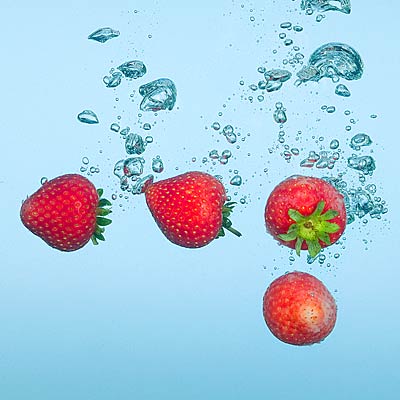
11) Strawberries
Water content: 91.0%

strawberries-hydrating-food

All berries are good foods for hydration, but juicy red strawberries are easily the best of the bunch. Raspberries and blueberries both hover around 85% water, while blackberries are only slightly better at 88.2%.

"I love strawberries blended in a smoothie or mixed with plain nonfat yoghurt—another hydrating food," Gans says. Strawberries add natural sweetness to the yoghurt, she adds, and the combo of carbohydrates, fiber, and protein make a great post-workout recovery snack.

12) Broccoli
Water content: 90.7%

Like its cousin cauliflower, raw broccoli adds a satisfying crunch to a salad. But its nutritional profile—lots of fiber, potassium, vitamin A, and vitamin C—is slightly more impressive. What's more, broccoli is the only cruciferous vegetable (a category that contains cabbage and kale, in addition to cauliflower) with a significant amount of sulforaphane, a potent compound that boosts the body's protective enzymes and flushes out cancer-causing chemicals.

13) Grapefruit
Water content: 90.5%

This juicy, tangy citrus fruit can help lower cholesterol and shrink your waistline, research suggests. In one study, people who ate one grapefruit a day lowered their bad (LDL) cholesterol by 15.5% and their triglycerides by 27%. In another, eating half a grapefruit—roughly 40 calories—before each meal helped dieters lose about three and a half pounds over 12 weeks. Researchers say that compounds in the fruit help fuel fat burn and stabilize blood sugar, therefore helping to reduce cravings.

14) Baby carrots
Water content: 90.4%

A carrot's a carrot, right? Not when it comes to water content. As it turns out, the baby-sized carrots that have become a staple in supermarkets and lunch boxes contain more water than full-size carrots (which are merely 88.3% water).

The ready-to-eat convenience factor is hard to top, as well. Snack on them right out of the bag, dip them in hummus or guacamole, or—for a bit of added crunch and bright orange colour—chop them up and add them to salads or salsas.

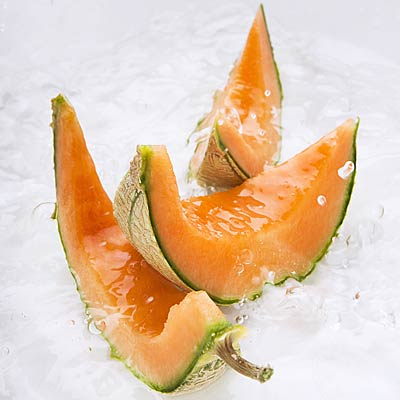
15) Cantaloupe
Water content: 90.2%

cantaloupe-hydrating-food

This succulent melon provides a big nutritional payoff for very few calories. One six-ounce serving—about one-quarter of a melon—contains just 50 calories but delivers a full 100% of your recommended daily intake of vitamins A and C.

"I love cantaloupe as a dessert," Gans says. "If you've got a sweet tooth, it will definitely satisfy." Tired of plain old raw fruit? Blend cantaloupe with yogurt and freeze it into sherbet, or puree it with orange juice and mint to make a refreshing soup.


Enjoy your summer with these "water eating" tips!


Source

15 Foods That Help You Stay Hydrated

These high-water-content foods are refreshing, filled with nutrients, and naturally low in calories.

Eat your water
According to the old rule of thumb, you're supposed to drink eight glasses of water per day (and some experts recommend even more). That can seem like a daunting task on some days, but here's the catch: You don't have to drink all that water. Roughly 20% of our daily H2O intake comes from solid foods, especially fruits and vegetables.

It's still important to drink plenty of water—especially in the summertime—but you can also quench your thirst with these 15 hugely hydrating foods, all of which are at least 90% water by weight.

1) Cucumber
Water content: 96.7%

This summer veggie—which has the highest water content of any solid food—is perfect in salads, or sliced up and served with some hummus, says Keri Gans, RD, author of The Small Change Diet: 10 Steps to a Thinner and Healthier You and a consultant to Mindbloom, a technology company that makes life-improvement apps.

Want to pump up cucumber's hydrating power even more? Try blending it with nonfat yogurt, mint, and ice cubes to make cucumber soup. "Soup is always hydrating, but you may not want to eat something hot in the summertime," Gans says. "Chilled cucumber soup, on the other hand, is so refreshing and delicious any time of year."

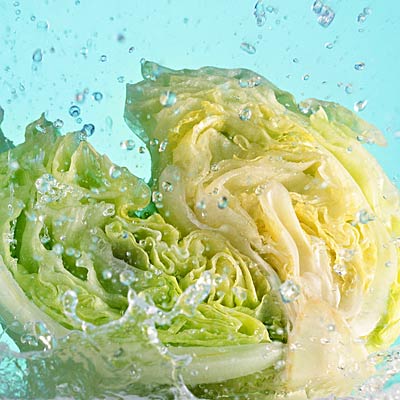
2) Iceberg lettuce
Water content: 95.6%


lettuce-hydrating-food

Iceberg lettuce tends to get a bad rap, nutrition-wise. Health experts often recommend shunning it in favour of darker greens like spinach or romaine lettuce, which contain higher amounts of fiber and nutrients such as folate and vitamin K. It's a different story when it comes to water content, though: Crispy iceberg has the highest of any lettuce, followed by butterhead, green leaf, and romaine varieties.

So when the temperature rises, pile iceberg onto sandwiches or use it as a bed for a healthy chicken salad. Even better: Ditch the tortillas and hamburger buns and use iceberg leaves as a wrap for tacos and burgers.

3) Celery
Water content: 95.4%

That urban legend about celery having negative calories isn't quite true, but it's pretty close. Like all foods that are high in water, celery has very few calories—just 6 calories per stalk. And its one-two punch of fiber and water helps to fill you up and curb your appetite.

This lightweight veggie isn't short on nutrition, however. Celery contains folate and vitamins A, C, and K. And thanks in part to its high water content, celery neutralizes stomach acid and is often recommended as a natural remedy for heartburn and acid reflux.

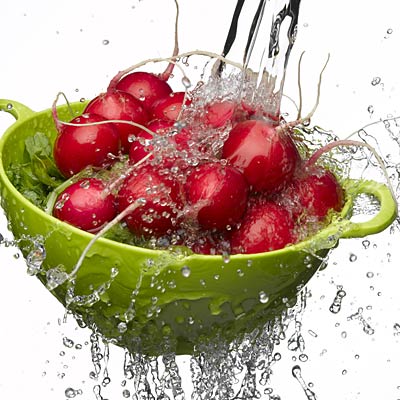
4) Radishes
Water content: 95.3%


radishes-hydrating-food

These refreshing root vegetables should be a fixture in your spring and summer salads. They provide a burst of spicy-sweet flavour—and colour!—in a small package, and more importantly they're filled with antioxidants such as catechin (also found in green tea).

A crunchy texture also makes radishes a perfect addition to healthy summer coleslaw—no mayo required. Slice them up with shredded cabbage and carrots, sliced snow peas, and chopped hazelnuts and parsley, and toss with poppy seeds, lemon juice, olive oil, salt, and pepper.

5) Tomatoes
Water content: 94.5%

Sliced and diced tomatoes will always be a mainstay of salads, sauces, and sandwiches, but don't forget about sweet cherry and grape varieties, which make an excellent hydrating snack, Gans says. "They're great to just pop in your mouth, maybe with some nuts or some low-sodium cheese," she says. "You get this great explosion of flavor when you bite into them."

Having friends over? Skewer grape tomatoes, basil leaves, and small chunks of mozzarella on toothpicks for a quick and easy appetizer.

6) Green peppers
Water content: 93.9%

Bell peppers of all shades have a high water content, but green peppers lead the pack, just edging out the red and yellow varieties (which are about 92% water). And contrary to popular belief, green peppers contain just as many antioxidants as their slightly sweeter siblings.

Peppers are a great pre-dinner or late-night snack, Gans says. "We tell people to munch on veggies when they have a craving, but a lot of people get bored of carrots and celery pretty quickly," she says. "Peppers are great to slice up when you get home from work, while you're making or waiting for dinner."

7) Cauliflower
Water content: 92.1%

Don't let cauliflower's pale complexion fool you: In addition to having lots of water, these unassuming florets are packed with vitamins and phytonutrients that have been shown to help lower cholesterol and fight cancer, including breast cancer. (A 2012 study of breast cancer patients by Vanderbilt University researchers found that eating cruciferous veggies like cauliflower was associated with a lower risk of dying from the disease or seeing a recurrence.)

"Break them up and add them to a salad for a satisfying crunch," Gans suggests. "You can even skip the croutons!"

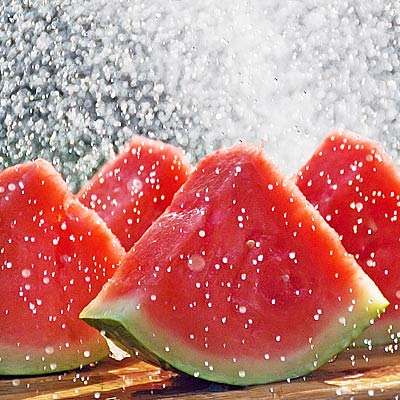
8) Watermelon
Water content: 91.5% water


watermelon-hydrating-food

It's fairly obvious that watermelon is full of, well, water, but this juicy melon is also among the richest sources of lycopene, a cancer-fighting antioxidant found in red fruits and vegetables. In fact, watermelon contains more lycopene than raw tomatoes—about 12 milligrams per wedge, versus 3 milligrams per medium-sized tomato.

Although this melon is plenty hydrating on its own, Gans loves to mix it with water in the summertime. "Keep a water pitcher in the fridge with watermelon cubes in the bottom," she says. "It's really refreshing, and great incentive to drink more water overall."


This is part 1 of  hydration 15 foods, in the next post you find the other 7 foods.

Enjoy!


Source