Showing posts with label Condition yourself to succeed. Show all posts
Showing posts with label Condition yourself to succeed. Show all posts
Tuesday, 15 September 2015
The Prison of Your Mind
The 3 lessen to learn from this video:
1. Never believe a prediction that doesn't empower you
2. You are not your condition
3. Love Yourself

Wednesday, 19 August 2015
How to Take Massive Action and Get Massive Results
Start by getting your free resources here.
Understand "The Success Cycle" from Tony Robbins as mentioned in the video and make it happen! Be certain and decide to take massive action.

Tuesday, 4 August 2015
The way millionaires view money is different from everyone else
By: Steve Siebold
Doesn’t it seem like the rich keep getting richer while the middle class is stuck in the same old spot?
Economic inequality is a hot topic right now, and many people go as far as accusing the wealthy of having some sort of unfair advantage. Those are easy accusations to make, and they resonate well with some people. But the truth is, there are no unfair advantages.
Everyone has the same opportunity to acquire wealth.
The biggest thing holding back most people from striking it big are their thoughts, beliefs and philosophies about money. The differences between how the wealthy and the middle class look at money are as extreme as they are numerous. It’s as if the two groups are living on completely different planets.
So what are the money-making secrets of millionaires?
1. The wealthy focus on earning.
The masses focus on how to protect and hoard their money. The wealthy also know saving is important. But they know earning money is even more important. Most people are more concerned with the modest gains they accumulate from their savings and investments than they are with using their billion-dollar minds to create a fortune. Instead of focusing on clipping coupons and living frugally, the wealthy reject the nickel-and-dime thinking of the masses and focus their mental energy where it belongs: on the big money.
2. The wealthy use leverage.
In the minds of millionaires, leverage is everything. The wealthy strategically focus their efforts on the most profitable areas of their businesses while leveraging their contacts, credibility, and resources to maximize the results of every action they take. The middle class sees hard work as a badge of honor. The wealthy sees success as a more important badge of honor.
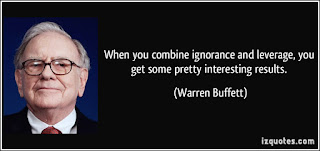
Think about what you were taught about hard work growing up. If you’re not exactly raking in the money, make a decision to let go of any limiting beliefs you have about hard work, and start thinking about how you can use leverage to become more successful.
3. The wealthy think about money in non-linear terms.
The masses trade time for money. This creates the belief that making money is a linear process directly connected to time. The average person believes the only way to earn more money — with the exception of raises and bonuses — is to work more hours.
Millionaires know big money requires thinking about it in non-linear terms. They are masters at generating money through ideas that solve problems. They realize there is no limit to ideas; therefore, there is no limit to how much money they can earn. Fortunes can be created almost overnight with the right idea at the right time, but only if the creator understands this non-linear phenomenon.
4. The wealthy see money through the eyes of logic.
The wealthy see money for what it is and what it’s not, all through the eyes of logic. Unfortunately, few people are able to think about money without clouding the subject with negative emotions, which come from dozens of middle-class beliefs that are ingrained in our minds when we are young. Emotions have a useful place in our lives.
But when it comes to thinking about money, put your emotions on the shelf and let reason be your guide. When you stop thinking about money through the eyes of emotion, you are free of the psychological chains binding you and free to earn all you can. Decide today to use logic to dictate your financial strategies and emotion to motivate yourself to stick to it.
5. The wealthy believe being rich is a right.
The average person believes being rich is a privilege awarded only to lucky people. World-class thinkers know in a capitalist country they have the right to be rich if they’re willing to create massive value for others. They believe if they make life better or easier for others, it’s their right to be rich. They’re always thinking of new ways to build a mousetrap — and are often scorned by the masses for being materialistic, self-absorbed and greedy.

The great ones believe they have the right to be as rich as the value they create. Stop believing self-made millionaires are just lucky. Start believing you are worth every dollar you earn and more.
The most important thing to remember about money is that regardless of your education level, IQ score, or performance in school, you have everything it takes to become a millionaire and earn all your desire. Stop thinking about money in terms of fear and scarcity, and start thinking about it through the eyes of freedom, possibility, opportunity and abundance.
If you’re rich, keep thinking the way you’re thinking. If not, maybe it’s time to change the way you think about money.
Steve Siebold is author of “How Rich People Think” and a self-made multi-millionaire who has interviewed 1,200 of the world’s wealthiest people during the past 30 years.
I hope these insights will help you as much as they did for me and more!
Source
Doesn’t it seem like the rich keep getting richer while the middle class is stuck in the same old spot?
Economic inequality is a hot topic right now, and many people go as far as accusing the wealthy of having some sort of unfair advantage. Those are easy accusations to make, and they resonate well with some people. But the truth is, there are no unfair advantages.
Everyone has the same opportunity to acquire wealth.
The biggest thing holding back most people from striking it big are their thoughts, beliefs and philosophies about money. The differences between how the wealthy and the middle class look at money are as extreme as they are numerous. It’s as if the two groups are living on completely different planets.
So what are the money-making secrets of millionaires?
1. The wealthy focus on earning.
The masses focus on how to protect and hoard their money. The wealthy also know saving is important. But they know earning money is even more important. Most people are more concerned with the modest gains they accumulate from their savings and investments than they are with using their billion-dollar minds to create a fortune. Instead of focusing on clipping coupons and living frugally, the wealthy reject the nickel-and-dime thinking of the masses and focus their mental energy where it belongs: on the big money.
2. The wealthy use leverage.
In the minds of millionaires, leverage is everything. The wealthy strategically focus their efforts on the most profitable areas of their businesses while leveraging their contacts, credibility, and resources to maximize the results of every action they take. The middle class sees hard work as a badge of honor. The wealthy sees success as a more important badge of honor.

Think about what you were taught about hard work growing up. If you’re not exactly raking in the money, make a decision to let go of any limiting beliefs you have about hard work, and start thinking about how you can use leverage to become more successful.
3. The wealthy think about money in non-linear terms.
The masses trade time for money. This creates the belief that making money is a linear process directly connected to time. The average person believes the only way to earn more money — with the exception of raises and bonuses — is to work more hours.
Millionaires know big money requires thinking about it in non-linear terms. They are masters at generating money through ideas that solve problems. They realize there is no limit to ideas; therefore, there is no limit to how much money they can earn. Fortunes can be created almost overnight with the right idea at the right time, but only if the creator understands this non-linear phenomenon.
4. The wealthy see money through the eyes of logic.
The wealthy see money for what it is and what it’s not, all through the eyes of logic. Unfortunately, few people are able to think about money without clouding the subject with negative emotions, which come from dozens of middle-class beliefs that are ingrained in our minds when we are young. Emotions have a useful place in our lives.
But when it comes to thinking about money, put your emotions on the shelf and let reason be your guide. When you stop thinking about money through the eyes of emotion, you are free of the psychological chains binding you and free to earn all you can. Decide today to use logic to dictate your financial strategies and emotion to motivate yourself to stick to it.
5. The wealthy believe being rich is a right.
The average person believes being rich is a privilege awarded only to lucky people. World-class thinkers know in a capitalist country they have the right to be rich if they’re willing to create massive value for others. They believe if they make life better or easier for others, it’s their right to be rich. They’re always thinking of new ways to build a mousetrap — and are often scorned by the masses for being materialistic, self-absorbed and greedy.

The great ones believe they have the right to be as rich as the value they create. Stop believing self-made millionaires are just lucky. Start believing you are worth every dollar you earn and more.
The most important thing to remember about money is that regardless of your education level, IQ score, or performance in school, you have everything it takes to become a millionaire and earn all your desire. Stop thinking about money in terms of fear and scarcity, and start thinking about it through the eyes of freedom, possibility, opportunity and abundance.
If you’re rich, keep thinking the way you’re thinking. If not, maybe it’s time to change the way you think about money.
Steve Siebold is author of “How Rich People Think” and a self-made multi-millionaire who has interviewed 1,200 of the world’s wealthiest people during the past 30 years.
I hope these insights will help you as much as they did for me and more!
Source
Friday, 31 July 2015
The Unlimited (Unknown) Power of Belief
As a mother of 3 children I found this video very inspiring. It shows (scientific proven) ways to change a fixed (static) mindset into a growth (developing) mindset.
Useful when you have children or as a teacher, and an unknown (maybe unlimited) potential for adults who learn to use it.
You can find more on this subject in "The Mindset All Successful People Have in Common" with a video from Carol Dweck herself.
Useful when you have children or as a teacher, and an unknown (maybe unlimited) potential for adults who learn to use it.
You can find more on this subject in "The Mindset All Successful People Have in Common" with a video from Carol Dweck herself.
Tuesday, 14 July 2015
5 Ways To Manifest Your Reality With The Power of Visualization
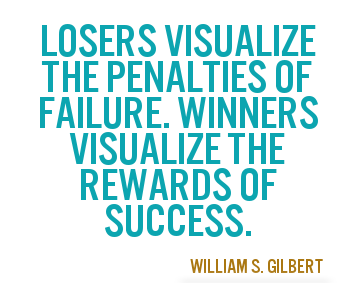
Actor Jim Carrey is famous for parking his car on Mulholland Drive every night before anybody knew about him, and visualizing becoming the Hollywood star that he inevitably became. He even wrote himself a ten million dollar check for a movie deal, and dated it five years from that very day. Can you guess what eventually happened? Not long before that date came along, he secured ten million dollars to star in the movie Dumb and Dumber.
The power of visualization has been instrumental in turning dreams into reality for not only folks like Jim Carrey, but elite and successful people in every field: professional athletes, business CEO’s, speakers, singers, and performers.
Replaying the mental vision and image of where or who you would like to be is the key catalyst in swinging your vision from a mere day-dream into reality!
Remarkably, science has also demonstrated that your brain cannot tell the difference between a visualized image and reality. A Harvard study taught two groups a simple 5-fingered piano melody; one group physically practiced the melody for 2 hours a day over 5 days. The other group merely visualized playing the melody. As you can probably guess, the new neurological wiring that took place were almost identical between the two groups.
Here are 5 ways you can begin to use visualization to start living the dream:
1. When visualizing your dreams, involve all your senses:
Touch, sound, sight, even smell and taste. Involve your emotions, laugh, smile, and celebrate the victory.
2. Take on different perspectives:
See yourself accomplishing your goals beginning with your own 1st person lens, then 2nd and 3rd person, be in the crowd and look upon yourself succeeding in your dream.
3. Begin to live as if you have succeeded in your goal:
Begin to dress, talk, and look like the person you want to be.
4. Use self-talk and affirmations together with your visualizations:
As with taking on the different perspectives with the mental images, likewise in 1st, 2nd, and 3rd person, say the things that would like to be said about you as if you have already achieved your goal.
5. Put together a dream collage:
This can be physical on a cork-board, posted on your desk or wall, or compiled on your computer. Use words that describe the person that you desire to become, pictures of the victories that you desire to experience.
Be sure to look at these images on a daily basis.
Source
The power of visualization has been instrumental in turning dreams into reality for not only folks like Jim Carrey, but elite and successful people in every field: professional athletes, business CEO’s, speakers, singers, and performers.
Replaying the mental vision and image of where or who you would like to be is the key catalyst in swinging your vision from a mere day-dream into reality!
Remarkably, science has also demonstrated that your brain cannot tell the difference between a visualized image and reality. A Harvard study taught two groups a simple 5-fingered piano melody; one group physically practiced the melody for 2 hours a day over 5 days. The other group merely visualized playing the melody. As you can probably guess, the new neurological wiring that took place were almost identical between the two groups.
Here are 5 ways you can begin to use visualization to start living the dream:
1. When visualizing your dreams, involve all your senses:
Touch, sound, sight, even smell and taste. Involve your emotions, laugh, smile, and celebrate the victory.
2. Take on different perspectives:
See yourself accomplishing your goals beginning with your own 1st person lens, then 2nd and 3rd person, be in the crowd and look upon yourself succeeding in your dream.
3. Begin to live as if you have succeeded in your goal:
Begin to dress, talk, and look like the person you want to be.
4. Use self-talk and affirmations together with your visualizations:
As with taking on the different perspectives with the mental images, likewise in 1st, 2nd, and 3rd person, say the things that would like to be said about you as if you have already achieved your goal.
5. Put together a dream collage:
This can be physical on a cork-board, posted on your desk or wall, or compiled on your computer. Use words that describe the person that you desire to become, pictures of the victories that you desire to experience.
Be sure to look at these images on a daily basis.
Source
Thursday, 9 July 2015
Our Personalities Are Constantly Changing, Even if We Think They’re Not
We admit we've changed in the past, but mistakenly believe we'll be the same person in the future.
It’s rare that scientific journals explicitly engage philosophical conundrums, but a paper in this week’s Science magazine begins with the question: “Why do people so often make decisions that their future selves regret?” At age 18, that skull-and-crossbones tattoo seems like an unimpeachably cool idea; at 28, it’s mortifying. You meet the man of your dreams at 25 — except that your dreams have become so different by 35 that you end up divorced.
“Even at 68, people think, Ugh, I'm not the person I was at 58, but I'm sure I’ll be this way at 78,” says one of the Science study authors, Daniel Gilbert, a professor of psychology at Harvard University and author of the book Stumbling on Happiness.
An obvious answer to the question is that people mature — that “change is inevitable,” as British politician Benjamin Disraeli said, that “change is constant.” But after examining the responses of more than 19,000 people gathered over four months in 2011 and 2012, the researchers— Gilbert, Jordi Quoidbach, of the National Fund for Scientific Research in Belgium, and University of Virginia psychologist Timothy Wilson — discovered that even though most people acknowledge that their lives have changed over the past decade, they don’t believe change is constant. Against all evidence, most people seem to believe that who they are now is pretty much who they will be forever.
For example, the average 33-year-old surveyed expected less change over the next decade than the average 43-year-old reported actually had occurred over the past decade. As the paper says, “People, it seems, regard the present as a watershed moment at which they have finally become the person[s] they will be for the rest of their lives.” Although personality and values do tend to become more stable with age, people generally underestimate the extent of future personality shifts. The researchers call this phenomenon “the end of history illusion.”
Proving an illusion is a giant epistemological problem, which is one reason the authors recruited so many participants for their study — although many of the thousands were recruited from a website sponsored by a French reality show, Leurs Secrets du Bonheur (The Secrets of Happiness). Analyzing the answers that the volunteers provided to questions about their favorite music, food, hobbies, as well as about choices concerning friends and vacations, Quoidbach, Gilbert, and Wilson compared people at different stages of life and came to a couple of conclusions:
1. The older you get, the less you believe you have changed or will change. This finding isn’t surprising: for years, researchers have confirmed the common-sense idea that one’s personality and preferences become more stable with age. At 80, your grandfather will likely disparage whichever political party he opposes with more ferocity than he did at 65. As the Science research explains, even young people feel their current qualities are good qualities. They find it hard to imagine their beliefs and values could significantly change — even though most of us actually change our views often as time progresses.
2. In a similar vein, people have a tendency to recognize that their personalities and preferences have changed in the past but misunderstand that personalities and preferences often change in the future. As part of the research, the researchers compared how self-reported personality traits had changed among 3,808 adults recruited not by that French TV show but by the MacArthur Foundation. The participants had completed a personality survey (as part of a larger study called MIDUS, or Midlife Development in the United States) in the mid-1990s and then again in the mid-2000s. Among other things, MIDUS measures what are called the Big Five personality traits: conscientiousness, agreeableness, emotional stability (sometimes called neuroticism), openness to experience and extroversion. (You can test your Big Five here.)
The MIDUS surveys are widely accepted for their reliability, so the scientists assumed that any difference between scores in the mid-1990s and those in the mid-2000s accurately captured changes in how much people are conscientious, agreeable, stable, open and extroverted today vs. 10 years ago. The researchers then asked the participants to estimate how much their MIDUS measures would have changed from 10 years ago and how much they will change in 10 years. Most people were pretty good at estimating the difference in average MIDUS scores over the past decade, but they dramatically underestimated how much MIDUS scores change for most people in the future. In short, people may commit errors of prediction more often than they succumb to errors of memory.
As further insurance that the effect they were tracking was real, the researchers conducted another study with a smaller group of volunteers. In the original experiment, the researchers assigned the participants to either make predictions of how much they would change in the future or how much they had changed in the past — but not both — so the scientists couldn’t be sure that different people were interpreting the personality criteria in the same way. They focused on 613 adults who provided answers about both future change and past change, and the discrepancy between predictive and past change remained. Most of them predicted that they would change less over the next decade than the majority of people who reported they had actually changed. Their predictions fell short, however. In other words, people who thought they “loved” and would always prefer Rice Chex to Corn Chex became less adamant by their 50s. By their late 60s, they seemed not to care so much, which may owe partly to declining mental acuity, but may also reflect a real change in the strength and intensity of personality and preferences.
The paper shows other data: older people are less willing to pay for the same concerts and meals than younger people anticipate they would, and they are less likely to remember the name of their best friend. But that could be because older people are simply bored by familiar pleasures and have worse memories.

Whether people change — can change, do change, actually change — is surely one of the most important questions in psychobiology. The Science paper advances our understanding of the answer incrementally: we understand that we have changed, but we are uncomfortable with the idea that we will change any further. The need to change implies another question: Do we need to correct a flaw? It’s not likely that any amount of science can answer that question.
Source
It’s rare that scientific journals explicitly engage philosophical conundrums, but a paper in this week’s Science magazine begins with the question: “Why do people so often make decisions that their future selves regret?” At age 18, that skull-and-crossbones tattoo seems like an unimpeachably cool idea; at 28, it’s mortifying. You meet the man of your dreams at 25 — except that your dreams have become so different by 35 that you end up divorced.
“Even at 68, people think, Ugh, I'm not the person I was at 58, but I'm sure I’ll be this way at 78,” says one of the Science study authors, Daniel Gilbert, a professor of psychology at Harvard University and author of the book Stumbling on Happiness.
An obvious answer to the question is that people mature — that “change is inevitable,” as British politician Benjamin Disraeli said, that “change is constant.” But after examining the responses of more than 19,000 people gathered over four months in 2011 and 2012, the researchers— Gilbert, Jordi Quoidbach, of the National Fund for Scientific Research in Belgium, and University of Virginia psychologist Timothy Wilson — discovered that even though most people acknowledge that their lives have changed over the past decade, they don’t believe change is constant. Against all evidence, most people seem to believe that who they are now is pretty much who they will be forever.
For example, the average 33-year-old surveyed expected less change over the next decade than the average 43-year-old reported actually had occurred over the past decade. As the paper says, “People, it seems, regard the present as a watershed moment at which they have finally become the person[s] they will be for the rest of their lives.” Although personality and values do tend to become more stable with age, people generally underestimate the extent of future personality shifts. The researchers call this phenomenon “the end of history illusion.”
Proving an illusion is a giant epistemological problem, which is one reason the authors recruited so many participants for their study — although many of the thousands were recruited from a website sponsored by a French reality show, Leurs Secrets du Bonheur (The Secrets of Happiness). Analyzing the answers that the volunteers provided to questions about their favorite music, food, hobbies, as well as about choices concerning friends and vacations, Quoidbach, Gilbert, and Wilson compared people at different stages of life and came to a couple of conclusions:
1. The older you get, the less you believe you have changed or will change. This finding isn’t surprising: for years, researchers have confirmed the common-sense idea that one’s personality and preferences become more stable with age. At 80, your grandfather will likely disparage whichever political party he opposes with more ferocity than he did at 65. As the Science research explains, even young people feel their current qualities are good qualities. They find it hard to imagine their beliefs and values could significantly change — even though most of us actually change our views often as time progresses.
2. In a similar vein, people have a tendency to recognize that their personalities and preferences have changed in the past but misunderstand that personalities and preferences often change in the future. As part of the research, the researchers compared how self-reported personality traits had changed among 3,808 adults recruited not by that French TV show but by the MacArthur Foundation. The participants had completed a personality survey (as part of a larger study called MIDUS, or Midlife Development in the United States) in the mid-1990s and then again in the mid-2000s. Among other things, MIDUS measures what are called the Big Five personality traits: conscientiousness, agreeableness, emotional stability (sometimes called neuroticism), openness to experience and extroversion. (You can test your Big Five here.)
The MIDUS surveys are widely accepted for their reliability, so the scientists assumed that any difference between scores in the mid-1990s and those in the mid-2000s accurately captured changes in how much people are conscientious, agreeable, stable, open and extroverted today vs. 10 years ago. The researchers then asked the participants to estimate how much their MIDUS measures would have changed from 10 years ago and how much they will change in 10 years. Most people were pretty good at estimating the difference in average MIDUS scores over the past decade, but they dramatically underestimated how much MIDUS scores change for most people in the future. In short, people may commit errors of prediction more often than they succumb to errors of memory.
As further insurance that the effect they were tracking was real, the researchers conducted another study with a smaller group of volunteers. In the original experiment, the researchers assigned the participants to either make predictions of how much they would change in the future or how much they had changed in the past — but not both — so the scientists couldn’t be sure that different people were interpreting the personality criteria in the same way. They focused on 613 adults who provided answers about both future change and past change, and the discrepancy between predictive and past change remained. Most of them predicted that they would change less over the next decade than the majority of people who reported they had actually changed. Their predictions fell short, however. In other words, people who thought they “loved” and would always prefer Rice Chex to Corn Chex became less adamant by their 50s. By their late 60s, they seemed not to care so much, which may owe partly to declining mental acuity, but may also reflect a real change in the strength and intensity of personality and preferences.
The paper shows other data: older people are less willing to pay for the same concerts and meals than younger people anticipate they would, and they are less likely to remember the name of their best friend. But that could be because older people are simply bored by familiar pleasures and have worse memories.
Whether people change — can change, do change, actually change — is surely one of the most important questions in psychobiology. The Science paper advances our understanding of the answer incrementally: we understand that we have changed, but we are uncomfortable with the idea that we will change any further. The need to change implies another question: Do we need to correct a flaw? It’s not likely that any amount of science can answer that question.
Source
Friday, 3 July 2015
Tiny Habits
Behaviour scientist BJ Fogg explains a painless strategy to personal growth.
For years, I've aspired to achieve the same simple goal: Floss daily.
It seems so easy. But time and again, after being faithful for a few days, I fall off the flossing wagon. And each failed attempt makes me feel lousier about myself. After all, it’s just flossing! Then earlier this year, while surfing the Internet, I stumbled upon the social scientist who may have found the secrets of human motivation and behaviour.
Professor BJ Fogg, Ph.D., has spent close to two decades founding and directing the Persuasive Technology Lab at Stanford University, studying how human behaviour works. His expertise is in creating systems that change human behaviour—as he calls his work, Behaviour Design. In exploring a few shortcuts to creating positive behaviour, Fogg found a particular method that worked extremely well. He called it Tiny Habits. “I started doing it on my own, and decided to share it with friends and had no idea it would keep going and going,” Fogg says. “It is a way to change your behaviour without relying on willpower.”
Eventually, Fogg launched a week long Tiny Habits test program online, asking participants only to stick to the methods, and offer constructive feedback. The results have been ground breaking. Perform a quick search on Twitter and you’ll find hundreds of #tinyhabits testimonials, an underground stir that earned Fogg a platform at South by Southwest (SXSW) in Austin this year, to present his “life hack.”
Three Baby Steps
Fogg’s research has taught him that human behaviour is systematic. Each of our actions and decisions is fuelled by three components—motivation, ability and triggers. Our behaviour, particularly our habits, comes from an underlying motivation, the ability to complete the particular action and a stimulus that provokes the action.
For example, your morning alarm blares and you immediately turn it off and get out of bed—or you do after a couple rounds of hitting the snooze button. Getting up to start the day is your motivation, locating your alarm clock within arm’s reach creates your ability to fulfil it, and the loud, incessant beeps are the triggers, reminders to your instincts that the next action is to turn off the alarm.
The road to any desired behaviour—say, increasing productivity on the weekends, making more sales calls or eating healthier—can be jump-started with three baby steps:
1. Start small. “Pick a small step toward your goal—a step so tiny, you’ll think it’s ridiculous,” Fogg says. Because it’s radically easy, you’re more likely to actually complete the behaviour, regardless of how much or how little motivation you feel.
2. Find an anchor. Choose an existing routine in your life to act as a trigger for your new behaviour. Parking your car, brushing your teeth or taking a shower are all routines that can act as great anchors to trigger a new habit. “Whether you realize it or not, you have all sorts of routines,” Fogg says. “I call these anchors that you can connect to your tiny behaviour. The key is to pick which routine is the right trigger for your small, simple behaviour.”
The blueprint for your new behaviour should complete the following sentence: After I (routine), I will (tiny behaviour).

“I've created all these tiny habits in my life, from really practical to kind of crazy,” Fogg says. “One practical habit is, as soon as the phone rings, I put on my headset and I start walking. This has grown to lifting kettlebells or doing little one-leg squats while I'm on the phone. The desired behaviour is to be active and working out in these small ways. I'm on the phone two to three hours a day, and now it’s a habit that I probably can’t stop. When I take calls, I'm up and walking around.”
Another habit Fogg has introduced into his life—one that might be considered crazy—is meant to build his upper-body strength. “After I pee, I do push-ups,” Fogg says with a big laugh. “And then I promptly wash my hands. I mostly work from home—I wouldn't do it in a public restroom.”
In the beginning, Fogg would do only two push-ups after using the restroom. Because doing two push-ups was almost effortless, it quickly became a habit for Fogg to hit the floor right after using the restroom. Once two push-ups became too easy, he started doing five. When doing five became really easy, Fogg increased it to eight. Eight push-ups became habitual, and soon he was doing 12 to 15 push-ups every time. Now he effortlessly incorporates north of 100 push-ups into his daily routine.
He’s since transitioned into lifting kettlebells. “My arms have gotten so much stronger,” Fogg says. “Since I focused on these Tiny Habits, I've lost 25 pounds and am back to my college weight. And frankly, it has not been hard. It’s a lot of little teeny things. I'm drinking more water, I'm doing push-ups, and just little by little as you do these things, you start seeing progress.”
Part of good behaviour design is evaluating which existing routines to use as anchors for new habits. Because the average adult uses the restroom seven times a day, it was the perfect anchor for Fogg’s habit of doing push-ups.
Fogg advises that someone like me, who aspires to floss every day, anchor the new habit to its natural trigger, teeth-brushing. Like a seed flourishing under favourable conditions, if you plant your new behaviour in the right spot, it’ll naturally grow without further coaxing. “If you try to start a habit and it hurts, you’re making it too hard. It has to be something that’s not a big deal, where you just think, Oh, it’s just two curls with the kettlebells. And after it’s over, be happy that you did it when you had planned to do it.”
3. Celebrate immediately. In building a habit, it helps to reward yourself in positive ways that are as small as your tiny behaviours themselves—give yourself a thumbs-up, a smile in the mirror, or tell yourself good job! “Notice how often athletes celebrate and when they do it—immediately,” Fogg says.
Not only do small celebrations reinforce desired behaviour, but they design for what Fogg calls “tiny thrills.”
“Our brains are very bad at distinguishing between I did this huge thing and I'm feeling awesome about it and I did this tiny thing and I'm still feeling awesome about it,” Fogg says. “Somehow in our heads we exaggerate, which is a good thing. That’s part of the hack—building success momentum, allowing yourself to feel successful, allowing that success to be larger than it rationally should be, then growing and leveraging that attitude into bigger things.”
Forward Progress
Perhaps more helpful than the tiny habits themselves is the success momentum they build. When participants in Fogg’s Tiny Habits online program were asked whether the strategies affected their confidence in creating good habits in the future, a whopping 91 percent said it increased or greatly increased. When participants were polled on whether the Tiny Habits had rippled out to create other positive changes in their lives during the week of the program, 65 percent said yes.
There’s a snowball effect: When you achieve a goal by integrating simple daily habits into your life, no matter how small, you gain a confidence that helps pave the way to reach bigger goals. The success momentum you gain from creating positive habits is the method’s secret sauce.

“Every time a company convinces you to try its new health platform and you don’t succeed, I believe your ability to change in the future decreases. In other words, they are stealing away from you the ability to change,” Fogg says. “We've all been there and experienced it. If you set somebody up on a path where they’re likely not to succeed, or you set yourself up to ‘run two hours every day, no matter what,’ when you stop, it’s not a neutral event—you come back worse. That’s one of the problems in our culture—we overreach.”
Overreaching and falling short is the antithesis of Fogg’s Tiny Habits method. Unless your environment or social circle drastically changes, it’s almost impossible to implement radical changes or big leaps. The only way to make behavior changes that actually work is through tiny steps, performed patiently and methodically.
“One thing we have to move away from is this idea of big and brittle—I'm going to do this big thing and if I fail once, it’s over,” Fogg says. “It’s not that [high achievers] are necessarily in better condition, it’s their routine that makes the behaviour easier to follow. This is true of virtually all behaviours that are simple. They’re easier the more you do them.”
That’s what I'm finding on my ongoing quest to become a daily flosser. I started by flossing one tooth a day, and now, 2½ weeks later, I'm currently flossing exactly 10 teeth a day.
Yes, of course it felt silly to floss a single tooth for the first week. In and of itself, flossing one tooth probably didn't go a long way in warding off gingivitis. But I haven’t missed a single day of flossing since I began my tiny habit. So I've successfully created an ongoing behaviour, and I have confidence that it’ll continue to work.
“It’s more than a feeling,” Fogg says. “When you [create a habit], you're signalling to yourself, Yes! I can change my behaviour. I'm doing it right now! You’re telling yourself this at least once a day. Just have patience, keep going and don’t give up.”
And really, who doesn't have the patience to floss one tooth?

Fogg-y Thoughts
Almost 20 years ago, before iPhones and way before Google Glass, Stanford professor BJ Fogg coined a term for the potential of computers to influence human behaviour—“captology,” from the acronym Computers As Persuasive Technologies.
When Fogg first posited that computers could shape human behaviour, people thought him preposterous. “When I came to Stanford in ’93 to specifically look at how computers can be designed to influence people, nobody had ever done any systematic work in that area,” Fogg tells success. “That was considered kind of freaky and scary by some people; they just didn't think of computers as that instrumental.”
Indeed, everywhere digital technology touches our lives—purchasing something online, going on Facebook, reading a text message—we are being persuaded to take action. The technology is molding our behaviour. “My bias is that a positive use of technology can bring out good outcomes in the world,” says Fogg, “not to enslave people or to separate people from their money.” Why we need to study captology, Fogg argues, is that “we are creating machines that control humans and human behaviour.” Kind of gives you pause, right?
Fortune has named Fogg, 50, one of the “10 New Gurus You Should Know,” and Forbes states that “no one [else] has perhaps been as influential on the current generation of user experience designers,” the architects of our new interconnected society.
As a professor, he’s never taught the same class twice; there was one that explored how social media can promote world peace and another teaching students how to use online videos to persuade people. Perhaps Fogg’s most famous curriculum, the “Facebook Class,” built apps and, for some students, fortunes. (Among his former pupils is a co-founder of Instagram.)
“I think every good business is about helping people do what they already want to do,” Fogg says. “That’s what we’re figuring out: What do people want to do and how do we make it simple for them to do it? That’s one of the things I teach a lot now to my students—help people do what they already want to do.”
Sounds like the secret to entrepreneurial success.
Source
For years, I've aspired to achieve the same simple goal: Floss daily.
It seems so easy. But time and again, after being faithful for a few days, I fall off the flossing wagon. And each failed attempt makes me feel lousier about myself. After all, it’s just flossing! Then earlier this year, while surfing the Internet, I stumbled upon the social scientist who may have found the secrets of human motivation and behaviour.
Professor BJ Fogg, Ph.D., has spent close to two decades founding and directing the Persuasive Technology Lab at Stanford University, studying how human behaviour works. His expertise is in creating systems that change human behaviour—as he calls his work, Behaviour Design. In exploring a few shortcuts to creating positive behaviour, Fogg found a particular method that worked extremely well. He called it Tiny Habits. “I started doing it on my own, and decided to share it with friends and had no idea it would keep going and going,” Fogg says. “It is a way to change your behaviour without relying on willpower.”
Eventually, Fogg launched a week long Tiny Habits test program online, asking participants only to stick to the methods, and offer constructive feedback. The results have been ground breaking. Perform a quick search on Twitter and you’ll find hundreds of #tinyhabits testimonials, an underground stir that earned Fogg a platform at South by Southwest (SXSW) in Austin this year, to present his “life hack.”
Three Baby Steps
Fogg’s research has taught him that human behaviour is systematic. Each of our actions and decisions is fuelled by three components—motivation, ability and triggers. Our behaviour, particularly our habits, comes from an underlying motivation, the ability to complete the particular action and a stimulus that provokes the action.
For example, your morning alarm blares and you immediately turn it off and get out of bed—or you do after a couple rounds of hitting the snooze button. Getting up to start the day is your motivation, locating your alarm clock within arm’s reach creates your ability to fulfil it, and the loud, incessant beeps are the triggers, reminders to your instincts that the next action is to turn off the alarm.
The road to any desired behaviour—say, increasing productivity on the weekends, making more sales calls or eating healthier—can be jump-started with three baby steps:
1. Start small. “Pick a small step toward your goal—a step so tiny, you’ll think it’s ridiculous,” Fogg says. Because it’s radically easy, you’re more likely to actually complete the behaviour, regardless of how much or how little motivation you feel.
2. Find an anchor. Choose an existing routine in your life to act as a trigger for your new behaviour. Parking your car, brushing your teeth or taking a shower are all routines that can act as great anchors to trigger a new habit. “Whether you realize it or not, you have all sorts of routines,” Fogg says. “I call these anchors that you can connect to your tiny behaviour. The key is to pick which routine is the right trigger for your small, simple behaviour.”
The blueprint for your new behaviour should complete the following sentence: After I (routine), I will (tiny behaviour).
“I've created all these tiny habits in my life, from really practical to kind of crazy,” Fogg says. “One practical habit is, as soon as the phone rings, I put on my headset and I start walking. This has grown to lifting kettlebells or doing little one-leg squats while I'm on the phone. The desired behaviour is to be active and working out in these small ways. I'm on the phone two to three hours a day, and now it’s a habit that I probably can’t stop. When I take calls, I'm up and walking around.”
Another habit Fogg has introduced into his life—one that might be considered crazy—is meant to build his upper-body strength. “After I pee, I do push-ups,” Fogg says with a big laugh. “And then I promptly wash my hands. I mostly work from home—I wouldn't do it in a public restroom.”
In the beginning, Fogg would do only two push-ups after using the restroom. Because doing two push-ups was almost effortless, it quickly became a habit for Fogg to hit the floor right after using the restroom. Once two push-ups became too easy, he started doing five. When doing five became really easy, Fogg increased it to eight. Eight push-ups became habitual, and soon he was doing 12 to 15 push-ups every time. Now he effortlessly incorporates north of 100 push-ups into his daily routine.
He’s since transitioned into lifting kettlebells. “My arms have gotten so much stronger,” Fogg says. “Since I focused on these Tiny Habits, I've lost 25 pounds and am back to my college weight. And frankly, it has not been hard. It’s a lot of little teeny things. I'm drinking more water, I'm doing push-ups, and just little by little as you do these things, you start seeing progress.”
Part of good behaviour design is evaluating which existing routines to use as anchors for new habits. Because the average adult uses the restroom seven times a day, it was the perfect anchor for Fogg’s habit of doing push-ups.
Fogg advises that someone like me, who aspires to floss every day, anchor the new habit to its natural trigger, teeth-brushing. Like a seed flourishing under favourable conditions, if you plant your new behaviour in the right spot, it’ll naturally grow without further coaxing. “If you try to start a habit and it hurts, you’re making it too hard. It has to be something that’s not a big deal, where you just think, Oh, it’s just two curls with the kettlebells. And after it’s over, be happy that you did it when you had planned to do it.”
3. Celebrate immediately. In building a habit, it helps to reward yourself in positive ways that are as small as your tiny behaviours themselves—give yourself a thumbs-up, a smile in the mirror, or tell yourself good job! “Notice how often athletes celebrate and when they do it—immediately,” Fogg says.
Not only do small celebrations reinforce desired behaviour, but they design for what Fogg calls “tiny thrills.”
“Our brains are very bad at distinguishing between I did this huge thing and I'm feeling awesome about it and I did this tiny thing and I'm still feeling awesome about it,” Fogg says. “Somehow in our heads we exaggerate, which is a good thing. That’s part of the hack—building success momentum, allowing yourself to feel successful, allowing that success to be larger than it rationally should be, then growing and leveraging that attitude into bigger things.”
Forward Progress
Perhaps more helpful than the tiny habits themselves is the success momentum they build. When participants in Fogg’s Tiny Habits online program were asked whether the strategies affected their confidence in creating good habits in the future, a whopping 91 percent said it increased or greatly increased. When participants were polled on whether the Tiny Habits had rippled out to create other positive changes in their lives during the week of the program, 65 percent said yes.
There’s a snowball effect: When you achieve a goal by integrating simple daily habits into your life, no matter how small, you gain a confidence that helps pave the way to reach bigger goals. The success momentum you gain from creating positive habits is the method’s secret sauce.
“Every time a company convinces you to try its new health platform and you don’t succeed, I believe your ability to change in the future decreases. In other words, they are stealing away from you the ability to change,” Fogg says. “We've all been there and experienced it. If you set somebody up on a path where they’re likely not to succeed, or you set yourself up to ‘run two hours every day, no matter what,’ when you stop, it’s not a neutral event—you come back worse. That’s one of the problems in our culture—we overreach.”
Overreaching and falling short is the antithesis of Fogg’s Tiny Habits method. Unless your environment or social circle drastically changes, it’s almost impossible to implement radical changes or big leaps. The only way to make behavior changes that actually work is through tiny steps, performed patiently and methodically.
“One thing we have to move away from is this idea of big and brittle—I'm going to do this big thing and if I fail once, it’s over,” Fogg says. “It’s not that [high achievers] are necessarily in better condition, it’s their routine that makes the behaviour easier to follow. This is true of virtually all behaviours that are simple. They’re easier the more you do them.”
That’s what I'm finding on my ongoing quest to become a daily flosser. I started by flossing one tooth a day, and now, 2½ weeks later, I'm currently flossing exactly 10 teeth a day.
Yes, of course it felt silly to floss a single tooth for the first week. In and of itself, flossing one tooth probably didn't go a long way in warding off gingivitis. But I haven’t missed a single day of flossing since I began my tiny habit. So I've successfully created an ongoing behaviour, and I have confidence that it’ll continue to work.
“It’s more than a feeling,” Fogg says. “When you [create a habit], you're signalling to yourself, Yes! I can change my behaviour. I'm doing it right now! You’re telling yourself this at least once a day. Just have patience, keep going and don’t give up.”
And really, who doesn't have the patience to floss one tooth?
Fogg-y Thoughts
Almost 20 years ago, before iPhones and way before Google Glass, Stanford professor BJ Fogg coined a term for the potential of computers to influence human behaviour—“captology,” from the acronym Computers As Persuasive Technologies.
When Fogg first posited that computers could shape human behaviour, people thought him preposterous. “When I came to Stanford in ’93 to specifically look at how computers can be designed to influence people, nobody had ever done any systematic work in that area,” Fogg tells success. “That was considered kind of freaky and scary by some people; they just didn't think of computers as that instrumental.”
Indeed, everywhere digital technology touches our lives—purchasing something online, going on Facebook, reading a text message—we are being persuaded to take action. The technology is molding our behaviour. “My bias is that a positive use of technology can bring out good outcomes in the world,” says Fogg, “not to enslave people or to separate people from their money.” Why we need to study captology, Fogg argues, is that “we are creating machines that control humans and human behaviour.” Kind of gives you pause, right?
Fortune has named Fogg, 50, one of the “10 New Gurus You Should Know,” and Forbes states that “no one [else] has perhaps been as influential on the current generation of user experience designers,” the architects of our new interconnected society.
As a professor, he’s never taught the same class twice; there was one that explored how social media can promote world peace and another teaching students how to use online videos to persuade people. Perhaps Fogg’s most famous curriculum, the “Facebook Class,” built apps and, for some students, fortunes. (Among his former pupils is a co-founder of Instagram.)
“I think every good business is about helping people do what they already want to do,” Fogg says. “That’s what we’re figuring out: What do people want to do and how do we make it simple for them to do it? That’s one of the things I teach a lot now to my students—help people do what they already want to do.”
Sounds like the secret to entrepreneurial success.
Source
Thursday, 2 July 2015
Condition Yourself for Success with Psychological Anchors
Psychological anchors are often used in hypnosis to link seemingly unrelated events. Ever seen that swinging clock? However, hypnotizing clock is not the only anchor in your life. There might be a song that always makes you cry or a smell of perfume that makes you long for someone you loved when you were in college. Some people feel panic every time telephone rings, because at certain point in their life they received a telephone call and… the news were not good.
Anchors can be positive too. Some smells, sounds, fashion styles may bring pleasant memories and put us in a pleasant mood for the rest of the day. Some types of clothes may make us feel strong, sporty, sexy, you name it; and this results in congruent behaviour on our part. You may actually start working out or behave more confident, which will make you truly attractive.
While you might absolutely hate feelings caused by some anchors, the good news is you can actually use anchors to enhance your performance and condition yourself for success. All you need to do is to pick a small gesture or a phrase you will tell to yourself each time you need to perform. It doesn't have to be related to whatever you are doing — remember, as we said earlier, anchors are used to link unrelated events, so a simple gesture will do and it doesn't have to be obvious to others either. Now whenever you perform exceptionally well, make that gesture or say that phrase and make a point to repeat this each time you are happy with your performance. Little by little you will condition yourself to associate this phrase or this gesture with success.

Now you can intentionally use this gesture whenever you want to put yourself to that optimum state when you perform your best. This means you will do that before the act. Your little anchor will help you jump into peak mental or physical state at will whenever you need it.
Source
Wednesday, 1 July 2015
7 Ways to Adjust Your Mindset about Money
Think about the fact that the currency we exchange is nothing more than printed paper. It doesn't really have any value at all except the value that’s been assigned to it. Why would we want to measure our personal worth against printed paper that has no value? And yet, this is the mindset that millions of people have adopted.
Look at the effect money has on the way we view ourselves. To some degree, our sense of self-worth and security tends to rise and fall with our income. And regardless of how we reason on it intellectually, the truth is, we all have an emotional connection with money because we always feel better when finances are not an issue.

Let’s adjust the picture a little
Imagine if the whole value exchange system had been built on something like strips of red ribbon. “Oh, I've got more red ribbon than you so that means that I am a more valuable person.” The whole concept is so absurd, it’s laughable. And yet, in reality, a strip of ribbon is probably worth more than a dollar bill.
A long time ago, currency was intended to represent a commodity like gold or silver, but is that still the case? No! There is no commodity to back it up – they just print up currency and put it into circulation. And because most people still hold a commodity based mindset about money, the whole economic picture is just an illusion. But it’s a picture that we are all involved in, so what can we do?
Obviously, we need some financial security in our lives. Sadly, the way we've been programmed to attract money is probably not the best way to satisfy that need. Let’s go over several false notions about the almighty dollar and its place in our lives, and consider some alternative approaches.
How we are conditioned to think and feel about money
From early childhood we are told that money makes the world go around. As a little kid we might have looked at our parents and said, “Can I have a dollar?” Then, if they asked why we would reply, “I need it to get one of these.” So right away, we learn to recognize that everything we want in life has a price tag on it. From that point on our mindset is that to get anything in life requires money.
As we get older we start to link our worth with our hourly wage. As a result of this emotional link, our sense of personal value gets all wrapped up in what we are able to earn per hour. Notice how this conditioning process unfolded. Initially, money had value because it represented what we could buy with it. But then, it took on a personality of its own.
On an emotional level money is linked to pain and pleasure
We all need money so we can pay the rent and put food on the table. The need is real and without adequate finances things can get very uncomfortable. This adds another dimension to our mindset about money. Now, lack of money equals pain and having money equals pleasure. Is it any wonder that it is almost impossible to avoid forming an emotional attachment with that worthless printed paper?
What happens to our emotional stability when the economy is floundering and personal assets start evaporating? Our sense of security can easily turn into panic and leave us wondering how in the world we are going to cope. That’s a lot of leverage for paper with no intrinsic value.
How can we avoid the emotional roller-coaster?
Independent of the economy or our personal financial status, a balanced perspective can go a long way toward neutralizing the emotional influence of money. Maintaining the right mindset will not only help us to get through tough financial times, it will also help us prosper in the future.
Let’s try looking at this whole monetary issue with a more empowering mindset. We can do this by ignoring the negative press and addressing our personal relationship with money.
7 ways to adjust your mindset about money
1. Don’t entrust your finances to others. Financial management tools are informative, but it is also important to have faith in your own ideas and take control of your financial future. Investments are often not as secure as acting on your own productive ideas. If you come up with a sound business idea, create a business plan and act on it promptly. Don’t allow limiting beliefs about your abilities to create income stifle your creativity.
2. Dare to operate from abundance instead of scarcity. Giving is a powerful way to attract what you need, and generosity opens the flow of abundance. I'm not saying you should give away your last dollar. But a mindset based on hoarding is a sure way to create scarcity. Remember, there are many ways to give outside the realm of finances. Could you give of your time or experience to help others?

3. Don’t put off enjoying your life and your resources. Planning for your retirement is not as powerful as living in the present with an awareness of your future. Putting enjoyment off until a future time is like pushing away your current prosperity. When you delay enjoying your life until your circumstances improve, you actually do yourself a grave disservice. A mindset built on postponement links your emotional happiness to your financial future.
4. Don’t expect money to solve all your problems. Money is not the path to happiness or fulfilment and maintaining this emotional separation is vital for a happy life. Money will not make your life feel more meaningful, or improve your relationships. Always remember that money only solves financial problems!
5. Let go of limiting financial beliefs. A belief such as, “money is the root of all evil” will only block your prosperity. There is no shame in a modest lifestyle, but there is also nothing noble about lacking money or anything else. Holding a mindset that allows you to be respectful of, but emotionally detached from money will help you make better decisions in every area of life.
6. Don’t be afraid to chart your own path. Scarcity is mostly a matter of mindset and so is abundance. Human creativity can solve any financial problem and find ways to profit along the way. If you can block out the negative feedback and learn to think and act differently than the struggling masses, you may be astonished at what you can accomplish.
7. Spend some money on things that make you feel good. Practical spending is valuable and prudent, but you also deserve to enjoy some of the fruits of your labour. When you buy something that helps you feel good, you encourage a positive emotional response to money and feed your abundance mindset. When you feel better about yourself, you naturally tend to be more productive.
Never allow yourself to be a slave to finances
An obsessive view of money can foster unhealthy responses like greed and dishonesty. This can be true whether a person has a lot or a little. When money has that kind of power in a person’s life, they become its slave.
When we have the mindset that money is just a tool, and avoid forming an emotional attachment to it, we are in control. Remember, it’s just printed paper with no intrinsic value whatsoever. You, on the other hand, are extremely valuable. The more you actively share your unique value with the world, the greater your sense of self-worth and abundance will become.
Do you view income as emotionally influential?
Does your sense of self-worth fluctuate with your finances?
The lines are open!
Source
Look at the effect money has on the way we view ourselves. To some degree, our sense of self-worth and security tends to rise and fall with our income. And regardless of how we reason on it intellectually, the truth is, we all have an emotional connection with money because we always feel better when finances are not an issue.
Let’s adjust the picture a little
Imagine if the whole value exchange system had been built on something like strips of red ribbon. “Oh, I've got more red ribbon than you so that means that I am a more valuable person.” The whole concept is so absurd, it’s laughable. And yet, in reality, a strip of ribbon is probably worth more than a dollar bill.
A long time ago, currency was intended to represent a commodity like gold or silver, but is that still the case? No! There is no commodity to back it up – they just print up currency and put it into circulation. And because most people still hold a commodity based mindset about money, the whole economic picture is just an illusion. But it’s a picture that we are all involved in, so what can we do?
Obviously, we need some financial security in our lives. Sadly, the way we've been programmed to attract money is probably not the best way to satisfy that need. Let’s go over several false notions about the almighty dollar and its place in our lives, and consider some alternative approaches.
How we are conditioned to think and feel about money
From early childhood we are told that money makes the world go around. As a little kid we might have looked at our parents and said, “Can I have a dollar?” Then, if they asked why we would reply, “I need it to get one of these.” So right away, we learn to recognize that everything we want in life has a price tag on it. From that point on our mindset is that to get anything in life requires money.
As we get older we start to link our worth with our hourly wage. As a result of this emotional link, our sense of personal value gets all wrapped up in what we are able to earn per hour. Notice how this conditioning process unfolded. Initially, money had value because it represented what we could buy with it. But then, it took on a personality of its own.
On an emotional level money is linked to pain and pleasure
We all need money so we can pay the rent and put food on the table. The need is real and without adequate finances things can get very uncomfortable. This adds another dimension to our mindset about money. Now, lack of money equals pain and having money equals pleasure. Is it any wonder that it is almost impossible to avoid forming an emotional attachment with that worthless printed paper?
What happens to our emotional stability when the economy is floundering and personal assets start evaporating? Our sense of security can easily turn into panic and leave us wondering how in the world we are going to cope. That’s a lot of leverage for paper with no intrinsic value.
How can we avoid the emotional roller-coaster?
Independent of the economy or our personal financial status, a balanced perspective can go a long way toward neutralizing the emotional influence of money. Maintaining the right mindset will not only help us to get through tough financial times, it will also help us prosper in the future.
Let’s try looking at this whole monetary issue with a more empowering mindset. We can do this by ignoring the negative press and addressing our personal relationship with money.
7 ways to adjust your mindset about money
2. Dare to operate from abundance instead of scarcity. Giving is a powerful way to attract what you need, and generosity opens the flow of abundance. I'm not saying you should give away your last dollar. But a mindset based on hoarding is a sure way to create scarcity. Remember, there are many ways to give outside the realm of finances. Could you give of your time or experience to help others?
3. Don’t put off enjoying your life and your resources. Planning for your retirement is not as powerful as living in the present with an awareness of your future. Putting enjoyment off until a future time is like pushing away your current prosperity. When you delay enjoying your life until your circumstances improve, you actually do yourself a grave disservice. A mindset built on postponement links your emotional happiness to your financial future.
4. Don’t expect money to solve all your problems. Money is not the path to happiness or fulfilment and maintaining this emotional separation is vital for a happy life. Money will not make your life feel more meaningful, or improve your relationships. Always remember that money only solves financial problems!
5. Let go of limiting financial beliefs. A belief such as, “money is the root of all evil” will only block your prosperity. There is no shame in a modest lifestyle, but there is also nothing noble about lacking money or anything else. Holding a mindset that allows you to be respectful of, but emotionally detached from money will help you make better decisions in every area of life.
6. Don’t be afraid to chart your own path. Scarcity is mostly a matter of mindset and so is abundance. Human creativity can solve any financial problem and find ways to profit along the way. If you can block out the negative feedback and learn to think and act differently than the struggling masses, you may be astonished at what you can accomplish.
7. Spend some money on things that make you feel good. Practical spending is valuable and prudent, but you also deserve to enjoy some of the fruits of your labour. When you buy something that helps you feel good, you encourage a positive emotional response to money and feed your abundance mindset. When you feel better about yourself, you naturally tend to be more productive.
Never allow yourself to be a slave to finances
An obsessive view of money can foster unhealthy responses like greed and dishonesty. This can be true whether a person has a lot or a little. When money has that kind of power in a person’s life, they become its slave.
When we have the mindset that money is just a tool, and avoid forming an emotional attachment to it, we are in control. Remember, it’s just printed paper with no intrinsic value whatsoever. You, on the other hand, are extremely valuable. The more you actively share your unique value with the world, the greater your sense of self-worth and abundance will become.
Do you view income as emotionally influential?
Does your sense of self-worth fluctuate with your finances?
The lines are open!
Source
Subscribe to:
Posts (Atom)