Working from home is often touted as an optimal solution for new parents seeking to balance their work and family lives. However, I’m learning that working from home is a double-edged sword. With my son just shy of his first birthday, I recently returned to work on a part-time basis outside of the home. The rest of the time, I work from home and he stays with me.
Juggling work demands with our kids’ needs can be a struggle. It’s hard to stay motivated and be productive with work when you’re managing a household, all the while making sure your kids stay out of trouble while you try to make a call, book an appointment or write an article; and even if your kids are in school or daycare, it’s easy to get distracted (or, I admit, lazy) at home, procrastinate and let your motivation wane.
Fortunately, though, there are steps that can be taken to stay motivated and focused when working from home. Here are 6 things that I’ve found helpful:
1. Start Your Day By Doing Something For Yourself.
Although no one day will be the same with a baby or kids on board, do your best to have a morning routine, starting with something for you. Whether it’s working out, reading, taking a bath or going for a brisk morning walk before your kids wake up, do something that you enjoy doing to clear your mind and better prepare for a productive work day. This is your ‘me’ time. When you start your day on the right foot and on a positive note, everything that follows is more likely to fall into place.
2. Ditch the Jammies!
This may seem like a silly and odd thing to say, but there’s something about taking a shower and getting dressed in the morning that resets your brain. When the home and work setting is the same, lines are blurred, which makes it harder to switch your mind from home to work mode. Who wouldn’t love to stay in comfortable PJs and slippers all day? For me, getting dressed psychologically marks the start of a business day.
3. Remember That You Do Have a Full-Time Job.
When people asked me if I worked when my maternity leave was over, I found myself stumbling over my words a bit. “Yes, I work, but I work part-time, but also from home, and I’m also a stay-at-home mom, so… no. I mean sort of, actually, yes.” If anything, I think that working from home, especially if you have kids home with you, is the equivalent of 2 jobs. I often feel more tired when I work from home and have my son with me than when I work outside of the home, which is something many people don’t understand.
4. Get Out of the House Frequently.
When I’m home for days on end or long stretches of time, I tend to go stir-crazy. Like a deflated balloon, I start losing motivation and inspiration. When you reach a mental block and your productivity starts going down the drain, a good way to recharge your batteries is to get out of the house. Take a lunch break and go for a walk. If you work from home with your kids, you have an even bigger reason to get out of the house for a bit; otherwise they’ll likely be bouncing off the walls and preventing you from doing any work. Some fresh air and a change of scenery can do a world of good and give you the mental boost you need to tackle the rest of the day.
5. Make the Most Out of Your Work Time.
It’s so easy to get distracted with other things when you’re working from home, whether it’s household chores, personal phone calls, TV etc. Don’t let your own distractions eat up the precious work time you do have – because once your kids are back from school or daycare, it’s hard to get any real work done. Once you break your focus and chain of concentration, it’s easy to lose your motivation. If you work from home with your kids, make the most out of nap time or quiet time and avoid veering off track during those periods.
6. Set an End Time For Work.
When you have a 9-5 job outside of the home, it’s more obvious when it’s quitting time. One of the challenges of working from home is knowing when to stop. At home, you’re always surrounded by tasks that could or should be done. Try to end your work by a certain time and when it’s that time, shut down your computer, turn off your cellphone and change clothes. Again, this cues your brain to switch back from work to home mode. Personally, having a reasonable time in mind to ‘end the day’ motivates me to be a productive as possible during the day, so that I feel less guilty or stressed about leaving things undone at the end of the day and I can enjoy playing with my little man and unwind a little.
Although there’s no foolproof or one-size-fits-all method to avoid motivation slumps when you work from home, the above tricks have helped me tremendously. You ‘ll eventually come up with your own techniques to keep yourself motivated. No one knows you better than you know yourself. It’s not easy, but it’s definitely doable.
Do you have a hard time keeping focused and staying motivated as a work-at-home mom?
How do you keep yourself stimulated and productive?
Source: http://miastylemama.com/momtivationmonday-6-ways-for-work-at-home-moms-to-stay-motivated/
Showing posts with label Tips to get you started. Show all posts
Showing posts with label Tips to get you started. Show all posts
Monday, 10 November 2014

Thursday, 16 October 2014
Golden Rules of Goal Setting
Five Rules to Set Yourself Up for Success
Have you thought about what you want to be doing in five years' time?
Are you clear about what your main objective at work is at the moment?
Do you know what you want to have achieved by the end of today?
If you want to succeed, you need to set goals. Without goals you lack focus and direction.
Goal setting not only allows you to take control of your life's direction; it also provides you a benchmark for determining whether you are actually succeeding. Think about it: Having a million dollars in the bank is only proof of success if one of your goals is to amass riches. If your goal is to practice acts of charity, then keeping the money for yourself is suddenly contrary to how you would define success.
To accomplish your goals, however, you need to know how to set them. You can't simply say, "I want" and expect it to happen. Goal setting is a process that starts with careful consideration of what you want to achieve, and ends with a lot of hard work to actually do it. In between there are some very well defined steps that transcend the specifics of each goal. Knowing these steps will allow you to formulate goals that you can accomplish.
Here are our five golden rules of goal setting:
The Five Golden Rules
1. Set Goals that Motivate You
When you set goals for yourself, it is important that they motivate you: this means making sure that they are important to you, and that there is value in achieving them. If you have little interest in the outcome, or they are irrelevant given the larger picture, then the chances of you putting in the work to make them happen are slim. Motivation is key to achieving goals.
Set goals that relate to the high priorities in your life. Without this type of focus, you can end up with far too many goals, leaving you too little time to devote to each one. Goal achievement requires commitment, so to maximize the likelihood of success, you need to feel a sense of urgency and have an "I must do this" attitude. When you don't have this, you risk putting off what you need to do to make the goal a reality. This in turn leaves you feeling disappointed and frustrated with yourself, both of which are de-motivating. And you can end up in a very destructive "I can't do anything or be successful at anything" frame of mind.
Tip:
To make sure your goal is motivating, write down why it's valuable and important to you. Ask yourself, "If I were to share my goal with others, what would I tell them to convince them it was a worthwhile goal?" You can use this motivating value statement to help you if you start to doubt yourself or lose confidence in your ability to actually make the goal happen.
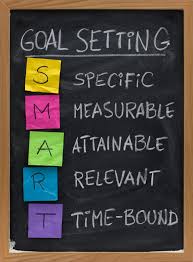
2. Set SMART Goals
You have probably heard of "SMART goals" already. But do you always apply the rule? The simple fact is that for goals to be powerful, they should be designed to be SMART. There are many variations of what SMART stands for, but the essence is this – goals should be:
Set Specific Goals
Your goal must be clear and well defined. Vague or generalized goals are unhelpful because they don't provide sufficient direction. Remember, you need goals to show you the way. Make it as easy as you can to get where you want to go by defining precisely where you want to end up.
Set Measurable Goals
Include precise amounts, dates, and so on in your goals so you can measure your degree of success. If your goal is simply defined as "To reduce expenses" how will you know when you have been successful? In one month's time if you have a 1 percent reduction or in two years' time when you have a 10 percent reduction? Without a way to measure your success you miss out on the celebration that comes with knowing you have actually achieved something.
Set Attainable Goals
Make sure that it's possible to achieve the goals you set. If you set a goal that you have no hope of achieving, you will only demoralize yourself and erode your confidence.
However, resist the urge to set goals that are too easy. Accomplishing a goal that you didn't have to work hard for can be anticlimactic at best, and can also make you fear setting future goals that carry a risk of non-achievement. By setting realistic yet challenging goals, you hit the balance you need. These are the types of goals that require you to "raise the bar" and they bring the greatest personal satisfaction.
Set Relevant Goals
Goals should be relevant to the direction you want your life and career to take. By keeping goals aligned with this, you'll develop the focus you need to get ahead and do what you want. Set widely scattered and inconsistent goals, and you'll fritter your time – and your life – away.
Set Time-Bound Goals
You goals must have a deadline. Again, this means that you know when you can celebrate success. When you are working on a deadline, your sense of urgency increases and achievement will come that much quicker.
3. Set Goals in Writing
The physical act of writing down a goal makes it real and tangible. You have no excuse for forgetting about it. As you write, use the word "will" instead of "would like to" or "might." For example, "I will reduce my operating expenses by 10 percent this year," not "I would like to reduce my operating expenses by 10 percent this year." The first goal statement has power and you can "see" yourself reducing expenses, the second lacks passion and gives you an excuse if you get sidetracked.
Tip 1:
Frame your goal statement positively. If you want to improve your retention rates say, "I will hold on to all existing employees for the next quarter" rather than "I will reduce employee turnover." The first one is motivating; the second one still has a get-out clause "allowing" you to succeed even if some employees leave.
Tip 2:
If you use a To-Do List , make yourself a To-Do List template that has your goals at the top of it. If you use an Action Program , then your goals should be at the top of your Project Catalog.
Post your goals in visible places to remind yourself every day of what it is you intend to do. Put them on your walls, desk, computer monitor, bathroom mirror or refrigerator as a constant reminder.
4. Make an Action Plan
This step is often missed in the process of goal setting. You get so focused on the outcome that you forget to plan all of the steps that are needed along the way. By writing out the individual steps, and then crossing each one off as you complete it, you'll realize that you are making progress towards your ultimate goal. This is especially important if your goal is big and demanding, or long-term. Read our article on Action Plans for more on how to do this.
5. Stick With It!
Remember, goal setting is an ongoing activity not just a means to an end. Build in reminders to keep yourself on track, and make regular time-slots available to review your goals. Your end destination may remain quite similar over the long term, but the action plan you set for yourself along the way can change significantly. Make sure the relevance, value, and necessity remain high.
Key Points
Goal setting is much more than simply saying you want something to happen. Unless you clearly define exactly what you want and understand why you want it the first place, your odds of success are considerably reduced. By following the Five Golden Rules of Goal Setting you can set goals with confidence and enjoy the satisfaction that comes along with knowing you achieved what you set out to do.
So, what will you decide to accomplish today?
Source: http://www.mindtools.com/pages/article/newHTE_90.htm
Source:http://crossfitcphs.files.wordpress.com/2011/08/smart_goals1.jpg
Have you thought about what you want to be doing in five years' time?
Are you clear about what your main objective at work is at the moment?
Do you know what you want to have achieved by the end of today?
If you want to succeed, you need to set goals. Without goals you lack focus and direction.
Goal setting not only allows you to take control of your life's direction; it also provides you a benchmark for determining whether you are actually succeeding. Think about it: Having a million dollars in the bank is only proof of success if one of your goals is to amass riches. If your goal is to practice acts of charity, then keeping the money for yourself is suddenly contrary to how you would define success.
To accomplish your goals, however, you need to know how to set them. You can't simply say, "I want" and expect it to happen. Goal setting is a process that starts with careful consideration of what you want to achieve, and ends with a lot of hard work to actually do it. In between there are some very well defined steps that transcend the specifics of each goal. Knowing these steps will allow you to formulate goals that you can accomplish.
Here are our five golden rules of goal setting:
The Five Golden Rules
1. Set Goals that Motivate You
When you set goals for yourself, it is important that they motivate you: this means making sure that they are important to you, and that there is value in achieving them. If you have little interest in the outcome, or they are irrelevant given the larger picture, then the chances of you putting in the work to make them happen are slim. Motivation is key to achieving goals.
Set goals that relate to the high priorities in your life. Without this type of focus, you can end up with far too many goals, leaving you too little time to devote to each one. Goal achievement requires commitment, so to maximize the likelihood of success, you need to feel a sense of urgency and have an "I must do this" attitude. When you don't have this, you risk putting off what you need to do to make the goal a reality. This in turn leaves you feeling disappointed and frustrated with yourself, both of which are de-motivating. And you can end up in a very destructive "I can't do anything or be successful at anything" frame of mind.
Tip:
To make sure your goal is motivating, write down why it's valuable and important to you. Ask yourself, "If I were to share my goal with others, what would I tell them to convince them it was a worthwhile goal?" You can use this motivating value statement to help you if you start to doubt yourself or lose confidence in your ability to actually make the goal happen.
2. Set SMART Goals
You have probably heard of "SMART goals" already. But do you always apply the rule? The simple fact is that for goals to be powerful, they should be designed to be SMART. There are many variations of what SMART stands for, but the essence is this – goals should be:
- Specific
- Measurable
- Attainable
- Relevant
- Time Bound
Your goal must be clear and well defined. Vague or generalized goals are unhelpful because they don't provide sufficient direction. Remember, you need goals to show you the way. Make it as easy as you can to get where you want to go by defining precisely where you want to end up.
Set Measurable Goals
Include precise amounts, dates, and so on in your goals so you can measure your degree of success. If your goal is simply defined as "To reduce expenses" how will you know when you have been successful? In one month's time if you have a 1 percent reduction or in two years' time when you have a 10 percent reduction? Without a way to measure your success you miss out on the celebration that comes with knowing you have actually achieved something.
Set Attainable Goals
Make sure that it's possible to achieve the goals you set. If you set a goal that you have no hope of achieving, you will only demoralize yourself and erode your confidence.
However, resist the urge to set goals that are too easy. Accomplishing a goal that you didn't have to work hard for can be anticlimactic at best, and can also make you fear setting future goals that carry a risk of non-achievement. By setting realistic yet challenging goals, you hit the balance you need. These are the types of goals that require you to "raise the bar" and they bring the greatest personal satisfaction.
Set Relevant Goals
Goals should be relevant to the direction you want your life and career to take. By keeping goals aligned with this, you'll develop the focus you need to get ahead and do what you want. Set widely scattered and inconsistent goals, and you'll fritter your time – and your life – away.
Set Time-Bound Goals
You goals must have a deadline. Again, this means that you know when you can celebrate success. When you are working on a deadline, your sense of urgency increases and achievement will come that much quicker.
3. Set Goals in Writing
The physical act of writing down a goal makes it real and tangible. You have no excuse for forgetting about it. As you write, use the word "will" instead of "would like to" or "might." For example, "I will reduce my operating expenses by 10 percent this year," not "I would like to reduce my operating expenses by 10 percent this year." The first goal statement has power and you can "see" yourself reducing expenses, the second lacks passion and gives you an excuse if you get sidetracked.
Tip 1:
Frame your goal statement positively. If you want to improve your retention rates say, "I will hold on to all existing employees for the next quarter" rather than "I will reduce employee turnover." The first one is motivating; the second one still has a get-out clause "allowing" you to succeed even if some employees leave.
Tip 2:
If you use a To-Do List , make yourself a To-Do List template that has your goals at the top of it. If you use an Action Program , then your goals should be at the top of your Project Catalog.
Post your goals in visible places to remind yourself every day of what it is you intend to do. Put them on your walls, desk, computer monitor, bathroom mirror or refrigerator as a constant reminder.
4. Make an Action Plan
This step is often missed in the process of goal setting. You get so focused on the outcome that you forget to plan all of the steps that are needed along the way. By writing out the individual steps, and then crossing each one off as you complete it, you'll realize that you are making progress towards your ultimate goal. This is especially important if your goal is big and demanding, or long-term. Read our article on Action Plans for more on how to do this.
5. Stick With It!
Remember, goal setting is an ongoing activity not just a means to an end. Build in reminders to keep yourself on track, and make regular time-slots available to review your goals. Your end destination may remain quite similar over the long term, but the action plan you set for yourself along the way can change significantly. Make sure the relevance, value, and necessity remain high.
Key Points
Goal setting is much more than simply saying you want something to happen. Unless you clearly define exactly what you want and understand why you want it the first place, your odds of success are considerably reduced. By following the Five Golden Rules of Goal Setting you can set goals with confidence and enjoy the satisfaction that comes along with knowing you achieved what you set out to do.
So, what will you decide to accomplish today?
Source: http://www.mindtools.com/pages/article/newHTE_90.htm
Source:http://crossfitcphs.files.wordpress.com/2011/08/smart_goals1.jpg
Subscribe to:
Posts (Atom)