Showing posts with label Mindset. Show all posts
Showing posts with label Mindset. Show all posts
Tuesday, 15 September 2015
The Prison of Your Mind
The 3 lessen to learn from this video:
1. Never believe a prediction that doesn't empower you
2. You are not your condition
3. Love Yourself

Wednesday, 19 August 2015
How to Take Massive Action and Get Massive Results
Start by getting your free resources here.
Understand "The Success Cycle" from Tony Robbins as mentioned in the video and make it happen! Be certain and decide to take massive action.

Thursday, 13 August 2015
Fail Your Way to Success by Changing your Mindset
One of the reasons Magic Johnston did so well after failure, may have been because he had a growth mindset. People who have a growth mind-set believe that, while everyone may differ in their level of intelligence or ability, fundamentally we can increase this level through hard work.
Magic had a natural sporting ability and by working hard he increased this. If he had possessed a fixed mind-set, which is to believe that one is born with a certain level of intelligence and ability that cannot be changed, then learning from failure would not have been an option.
For example, if you believe that intelligence cannot be increased then failure is going to make you feel hopeless and depressed because there is not much you can do to increase it. Studies have shown that people who are told that intelligence can be raised through hard work and effort do better than those who have been told that intelligence is "fixed".

Do you have a growth mindset or a fixed mindset?
If you have a fixed mind-set take time to think about your view of intelligence? Do you feel anxious and depressed after failing? Do you avoid tasks because of fear of failure? Do you put less effort into tasks because you feel hopeless about making progress? Do you find that when you are carrying out a task you are worried about how good you look at it, rather than what you are learning from it? Do you miss learning opportunities because of fear of failure? If you answered "yes" to some of these questions then you probably do possess the belief that intelligence is fixed.
There is hope. Studies have shown that we can change our mind-set. Reading and thinking about the growth mindset can activate a change in our views of intelligence. Next time you fail, pay attention to how you respond to this. What can you learn from the failure? How can you improve your performance through this setback?
(Dweck, 2000. Self-theories: Essays in Social Psychology. See also evidence section. )
Read more about a successful mindset and view one of Carol Dweck's presentations about "the growth mindset" in this article.
Source
Magic had a natural sporting ability and by working hard he increased this. If he had possessed a fixed mind-set, which is to believe that one is born with a certain level of intelligence and ability that cannot be changed, then learning from failure would not have been an option.
For example, if you believe that intelligence cannot be increased then failure is going to make you feel hopeless and depressed because there is not much you can do to increase it. Studies have shown that people who are told that intelligence can be raised through hard work and effort do better than those who have been told that intelligence is "fixed".

Do you have a growth mindset or a fixed mindset?
If you have a fixed mind-set take time to think about your view of intelligence? Do you feel anxious and depressed after failing? Do you avoid tasks because of fear of failure? Do you put less effort into tasks because you feel hopeless about making progress? Do you find that when you are carrying out a task you are worried about how good you look at it, rather than what you are learning from it? Do you miss learning opportunities because of fear of failure? If you answered "yes" to some of these questions then you probably do possess the belief that intelligence is fixed.
There is hope. Studies have shown that we can change our mind-set. Reading and thinking about the growth mindset can activate a change in our views of intelligence. Next time you fail, pay attention to how you respond to this. What can you learn from the failure? How can you improve your performance through this setback?
(Dweck, 2000. Self-theories: Essays in Social Psychology. See also evidence section. )
Read more about a successful mindset and view one of Carol Dweck's presentations about "the growth mindset" in this article.
Source
Tuesday, 4 August 2015
The way millionaires view money is different from everyone else
By: Steve Siebold
Doesn’t it seem like the rich keep getting richer while the middle class is stuck in the same old spot?
Economic inequality is a hot topic right now, and many people go as far as accusing the wealthy of having some sort of unfair advantage. Those are easy accusations to make, and they resonate well with some people. But the truth is, there are no unfair advantages.
Everyone has the same opportunity to acquire wealth.
The biggest thing holding back most people from striking it big are their thoughts, beliefs and philosophies about money. The differences between how the wealthy and the middle class look at money are as extreme as they are numerous. It’s as if the two groups are living on completely different planets.
So what are the money-making secrets of millionaires?
1. The wealthy focus on earning.
The masses focus on how to protect and hoard their money. The wealthy also know saving is important. But they know earning money is even more important. Most people are more concerned with the modest gains they accumulate from their savings and investments than they are with using their billion-dollar minds to create a fortune. Instead of focusing on clipping coupons and living frugally, the wealthy reject the nickel-and-dime thinking of the masses and focus their mental energy where it belongs: on the big money.
2. The wealthy use leverage.
In the minds of millionaires, leverage is everything. The wealthy strategically focus their efforts on the most profitable areas of their businesses while leveraging their contacts, credibility, and resources to maximize the results of every action they take. The middle class sees hard work as a badge of honor. The wealthy sees success as a more important badge of honor.
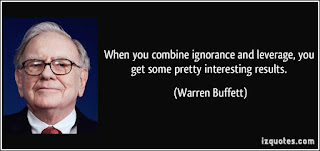
Think about what you were taught about hard work growing up. If you’re not exactly raking in the money, make a decision to let go of any limiting beliefs you have about hard work, and start thinking about how you can use leverage to become more successful.
3. The wealthy think about money in non-linear terms.
The masses trade time for money. This creates the belief that making money is a linear process directly connected to time. The average person believes the only way to earn more money — with the exception of raises and bonuses — is to work more hours.
Millionaires know big money requires thinking about it in non-linear terms. They are masters at generating money through ideas that solve problems. They realize there is no limit to ideas; therefore, there is no limit to how much money they can earn. Fortunes can be created almost overnight with the right idea at the right time, but only if the creator understands this non-linear phenomenon.
4. The wealthy see money through the eyes of logic.
The wealthy see money for what it is and what it’s not, all through the eyes of logic. Unfortunately, few people are able to think about money without clouding the subject with negative emotions, which come from dozens of middle-class beliefs that are ingrained in our minds when we are young. Emotions have a useful place in our lives.
But when it comes to thinking about money, put your emotions on the shelf and let reason be your guide. When you stop thinking about money through the eyes of emotion, you are free of the psychological chains binding you and free to earn all you can. Decide today to use logic to dictate your financial strategies and emotion to motivate yourself to stick to it.
5. The wealthy believe being rich is a right.
The average person believes being rich is a privilege awarded only to lucky people. World-class thinkers know in a capitalist country they have the right to be rich if they’re willing to create massive value for others. They believe if they make life better or easier for others, it’s their right to be rich. They’re always thinking of new ways to build a mousetrap — and are often scorned by the masses for being materialistic, self-absorbed and greedy.

The great ones believe they have the right to be as rich as the value they create. Stop believing self-made millionaires are just lucky. Start believing you are worth every dollar you earn and more.
The most important thing to remember about money is that regardless of your education level, IQ score, or performance in school, you have everything it takes to become a millionaire and earn all your desire. Stop thinking about money in terms of fear and scarcity, and start thinking about it through the eyes of freedom, possibility, opportunity and abundance.
If you’re rich, keep thinking the way you’re thinking. If not, maybe it’s time to change the way you think about money.
Steve Siebold is author of “How Rich People Think” and a self-made multi-millionaire who has interviewed 1,200 of the world’s wealthiest people during the past 30 years.
I hope these insights will help you as much as they did for me and more!
Source
Doesn’t it seem like the rich keep getting richer while the middle class is stuck in the same old spot?
Economic inequality is a hot topic right now, and many people go as far as accusing the wealthy of having some sort of unfair advantage. Those are easy accusations to make, and they resonate well with some people. But the truth is, there are no unfair advantages.
Everyone has the same opportunity to acquire wealth.
The biggest thing holding back most people from striking it big are their thoughts, beliefs and philosophies about money. The differences between how the wealthy and the middle class look at money are as extreme as they are numerous. It’s as if the two groups are living on completely different planets.
So what are the money-making secrets of millionaires?
1. The wealthy focus on earning.
The masses focus on how to protect and hoard their money. The wealthy also know saving is important. But they know earning money is even more important. Most people are more concerned with the modest gains they accumulate from their savings and investments than they are with using their billion-dollar minds to create a fortune. Instead of focusing on clipping coupons and living frugally, the wealthy reject the nickel-and-dime thinking of the masses and focus their mental energy where it belongs: on the big money.
2. The wealthy use leverage.
In the minds of millionaires, leverage is everything. The wealthy strategically focus their efforts on the most profitable areas of their businesses while leveraging their contacts, credibility, and resources to maximize the results of every action they take. The middle class sees hard work as a badge of honor. The wealthy sees success as a more important badge of honor.

Think about what you were taught about hard work growing up. If you’re not exactly raking in the money, make a decision to let go of any limiting beliefs you have about hard work, and start thinking about how you can use leverage to become more successful.
3. The wealthy think about money in non-linear terms.
The masses trade time for money. This creates the belief that making money is a linear process directly connected to time. The average person believes the only way to earn more money — with the exception of raises and bonuses — is to work more hours.
Millionaires know big money requires thinking about it in non-linear terms. They are masters at generating money through ideas that solve problems. They realize there is no limit to ideas; therefore, there is no limit to how much money they can earn. Fortunes can be created almost overnight with the right idea at the right time, but only if the creator understands this non-linear phenomenon.
4. The wealthy see money through the eyes of logic.
The wealthy see money for what it is and what it’s not, all through the eyes of logic. Unfortunately, few people are able to think about money without clouding the subject with negative emotions, which come from dozens of middle-class beliefs that are ingrained in our minds when we are young. Emotions have a useful place in our lives.
But when it comes to thinking about money, put your emotions on the shelf and let reason be your guide. When you stop thinking about money through the eyes of emotion, you are free of the psychological chains binding you and free to earn all you can. Decide today to use logic to dictate your financial strategies and emotion to motivate yourself to stick to it.
5. The wealthy believe being rich is a right.
The average person believes being rich is a privilege awarded only to lucky people. World-class thinkers know in a capitalist country they have the right to be rich if they’re willing to create massive value for others. They believe if they make life better or easier for others, it’s their right to be rich. They’re always thinking of new ways to build a mousetrap — and are often scorned by the masses for being materialistic, self-absorbed and greedy.

The great ones believe they have the right to be as rich as the value they create. Stop believing self-made millionaires are just lucky. Start believing you are worth every dollar you earn and more.
The most important thing to remember about money is that regardless of your education level, IQ score, or performance in school, you have everything it takes to become a millionaire and earn all your desire. Stop thinking about money in terms of fear and scarcity, and start thinking about it through the eyes of freedom, possibility, opportunity and abundance.
If you’re rich, keep thinking the way you’re thinking. If not, maybe it’s time to change the way you think about money.
Steve Siebold is author of “How Rich People Think” and a self-made multi-millionaire who has interviewed 1,200 of the world’s wealthiest people during the past 30 years.
I hope these insights will help you as much as they did for me and more!
Source
Friday, 31 July 2015
The Unlimited (Unknown) Power of Belief
As a mother of 3 children I found this video very inspiring. It shows (scientific proven) ways to change a fixed (static) mindset into a growth (developing) mindset.
Useful when you have children or as a teacher, and an unknown (maybe unlimited) potential for adults who learn to use it.
You can find more on this subject in "The Mindset All Successful People Have in Common" with a video from Carol Dweck herself.
Useful when you have children or as a teacher, and an unknown (maybe unlimited) potential for adults who learn to use it.
You can find more on this subject in "The Mindset All Successful People Have in Common" with a video from Carol Dweck herself.
Wednesday, 29 July 2015
How To Stay Focused: The Four Basic Requirements

And what purpose has distraction traditionally served? What result does it accomplish?
Escapism. Let’s escape from the reality of life, escape from the self-responsibility to pursue dreams, and escape from anything challenging. Distraction is the drug of choice of the 21st century, and supply is endless.
You may not be an alcoholic, but how much of your dissatisfaction is drowned with the web, Facebook, TV, text messaging, or video games? These things are not supposed to be core life activities, but enjoyable side trips. And they are much more fun as side trips.
Distraction Is The Plague, And Focus The Cure
Focus is power. It’s the ability to say I’m doing THIS and nothing else, and nobody is going to stop me. A focused mind is difficult to stop from doing exactly what it plans. In a free country like America, nobody wants to stop you anyways.
Who wants you to keep on the weight? Who wants your business to fail? Who wants you to be miserable? Who wants your dreams to go to waste? If there were positive answers for those, those people are your mortal enemies and I’m sure you avoid them anyways. Typical people won’t care, because we are all self-centered by nature. I care about getting my six-pack of beer.
There are certain subconscious thoughts and ideas you have that can make focusing extremely difficult, so what we need to do is pull those subconscious thoughts into the spotlight and address them.

There are four basic requirements for staying focused.
1. Accept that you may not succeed with the task at hand
Think about it. When you focus on something, you’re pouring all of your energy into it. Your brain will automatically label it as important. Focus is typically split up between several different tasks, ideas, and thoughts. So when you focus on a single cohesive idea, thought, or task, the brain says, “Whoa now, this task is getting special treatment. It must be important.”
It’s healthy to face failure and learn from it, rather than to bury it in other distractions, but it places more pressure on you to perform when you focus. Juggle six tasks at once, fail at one, and what happens? You keep going with your other five. Focus on one task and fail, and you have to face that failure. There’s nothing else to look at.
Sometimes, I hesitate to write. Before writing a story, I’ll consider how it might not turn out well or that I’m not as skilled as some of my favorite authors. The discomfort in potential failure pushes me back to burning time on Facebook, because there’s no pressure there. It’s easy, and fun, and a waste of my time.
To focus, give yourself a free pass on failing at the task. Make it ok to write a boring story, exercise with low energy, screw up your business launch, and embarrass yourself. If you only attempt things you’re 100% sure will end in success, you won’t do anything of significance.
2. Accept that you will not make progress in ALL other areas of your life (for the chosen time)
You have 50 areas of your life you know could be better, don’t you? And you want them done now! ALL OF THEM! Or you know that your reward if you succeed would be delayed significantly from the work (like writing a book).
The decision to focus is almost always slightly uncomfortable. Focus is commitment to a single task, and it can be very unsettling to commit to read your C++ book for your career when you know you need to get in shape too.
This is where Facebook rears its ugly blue and white head. “Hey, you don’t need to read your book or go to the gym, you have a new notification. Let’s just think about that in the background while we check this exciting, immediately rewarding message.”
I like to combat this tempting thought with another thought – whatever I do today is a projection for the rest of my life. If I spend 2 hours on Facebook today, I’m setting that standard for the rest of my days. But if I write 2,000 words today, I’ll have written more than 700,000 words per year at that pace. Did you know that the average novel length is 64,000 words? That means I could write TEN full books in a year! Even if I cut my pace in half to 1,000 words per day, it’s FIVE full books. It really hits home for me when I think about how much time it’d take me to write 1-2 thousand words – about two hours. So my choice is between trifling conversation on facebook and writing five books? Hmm…
This decision is what you need to make, and the next requirement is how you can make it.
3. Believe that your current task is worthy of #1 and #2
When a task is appealing enough that you’re willing to risk failure, and you’re willing to forego everything else for a time, it’s worthy of your full, unbroken attention.
Take a long-term view of your life to understand what is worth this honor. I would be so excited to have written one full-length book (five is fine, too), and that could easily happen with focused writing. What down-the-road reward makes you smile when you think about it? Is it your fit body in the mirror or on the beach? Is it having written a book? Is it having a clean house or going minimalist?
There are a number of different paths you can choose, and as I alluded to in this post, it is not about picking the BEST one. You could spend a lifetime trying to figure out whether to spend your time reading excellent books, working out, writing, volunteering, or anything else. Move forward and make progress in areas that matter to you. When you look at your six-pack, you’re not going to think, “I should have been learning Italian.” You’re going to think, “Wow, I have a six-pack… Maybe I’ll learn Italian now.”
4. Battle against distractions using weapons of time, location, and mindset
Once you have picked your task to focus on, get strategic with it. What time is best to read/write/exercise/learn karate? Where should you do it that will allow you to fully concentrate? What distractions could arise in this time and how will you react to them? Will you turn off your iDistractYou device or put it on silent?
Focus is inherently simple, but difficult too. Its simplicity can trick people into thinking it’s easy, but it takes strategy, dedication, and a commitment to see one thing through to the end at the cost of all other possibilities. The benefits, though, are among the most rewarding I have ever experienced.
The more rigid you are with your rules of focusing, the more skilled you will become at it. Sometimes people act like the world’s distractions are their boss. But remember, the world distracts you because it is not tuned in to you. Telemarketers don’t know you’re eating dinner (RIGHT?!). When your friend calls, she doesn’t know that you’re in the middle of something very important in your life. Call her back when you’re not in the zone.
Instant notifications are drugs that train you for a life of distraction.
Let people know that your focused time is important to you and your well-being, and any reasonable person will understand. Starting out, you can set aside just one hour per day to focus on a key area of your choice. If you say you don’t have time, I will punch your nose four times. You have time for the things that matter to you.
Source
Friday, 24 July 2015
Drawing Your Dreams into Reality
Amazing how our brains works and how we can use our creative right side of the brain to make our dreams real.
Enjoy with Patti Dobrowolski's TedxRainier video!
Enjoy with Patti Dobrowolski's TedxRainier video!
Tuesday, 21 July 2015
The Mindset All Successful People Have in Common
More than any habit or talent, this particular way of thinking about the world will help you achieve your dreams.

What sets truly successful people apart from those who never realize their dreams? Is it a particular set of habits? An increased appetite for risk? Skill at networking? Plain old smarts? No doubt each of these factors plays a part in some people’s achievements, but perhaps underlying all of these differences is a particular and profoundly powerful mindset.
That’s the gist of several fascinating articles out recently; they argue the fundamental difference between the wildly successful and the merely mediocre is not any inborn characteristic or individual learned behaviour but how we think about skills and learning in general.
Can People Really Change?
Some folks, it seems, think that, basically, when it comes to skills and abilities, you get the hand you’re dealt, and that’s that. You are however smart you are, however hard working, and there’s little to nothing you can do to change these fundamental characteristics of your personality. That’s called a fixed mindset.
Other people know differently. Those with the opposite view, called a growth mindset, believe that with effort and perseverance, you can expand your intellect, broaden your skills, improve your character, and overcome obstacles. They see the key to getting ahead not as inherited talent or skill but good, old-fashioned hard work. Any guesses as to who ends up more successful?
If you haven’t guessed yet, achievers generally have a growth mindset, a fact proven in large part by the research of renowned Stanford psychologist Carol Dweck. In a lengthy and fascinating article, PolicyMic recently delved into her findings in depth, but the basic takeaway is short and sweet: "It's all about your mindset. Successful people tend to focus on growth, solving problems, and self-improvement, while unsuccessful people think of their abilities as fixed assets and avoid challenges."
How to Get a Growth Mindset
Dweck may be a pioneer in this line of research, but she’s not the only scientist studying the profound effects of our mindset on success. Another recent study built on her work by polling high school students about their attitudes. Some students told the research team that they believed people fell into particular categories--some were geeks, for instance, others jocks--and that in general they’re unlikely to change over time. Others told the scientists that people generally adapt and grow.
What effect did the belief that people can change have on students? Though Dweck’s work suggests those with a growth mindset will be more successful in the long term, this recent study also found big effects in the short term. In short, those with a growth mindset had less stress and anxiety and more self-esteem, and they were in generally better physical health.
That’s even more compelling evidence you should strive for a growth mindset. But is it possible to change your outlook if you’ve previously been more of a believer that abilities are fixed? Yup, according to the same research team’s follow-up experiment. Simply telling the high school students in a single session that evidence shows people can change had large positive effects both physically and psychologically a year later, with no other follow-up.
"Our research shows that adolescents can learn to tell themselves a different story, a story in which people have the potential to change," the authors conclude.
If they can do it, so can you. You’ll be more successful for it.
If you like to know more about Carol Dwecks work, then have a look at her bestselling book: "Mindset: How You Can Fulfil Your Potential"
Source
What sets truly successful people apart from those who never realize their dreams? Is it a particular set of habits? An increased appetite for risk? Skill at networking? Plain old smarts? No doubt each of these factors plays a part in some people’s achievements, but perhaps underlying all of these differences is a particular and profoundly powerful mindset.
That’s the gist of several fascinating articles out recently; they argue the fundamental difference between the wildly successful and the merely mediocre is not any inborn characteristic or individual learned behaviour but how we think about skills and learning in general.
Can People Really Change?
Some folks, it seems, think that, basically, when it comes to skills and abilities, you get the hand you’re dealt, and that’s that. You are however smart you are, however hard working, and there’s little to nothing you can do to change these fundamental characteristics of your personality. That’s called a fixed mindset.
Other people know differently. Those with the opposite view, called a growth mindset, believe that with effort and perseverance, you can expand your intellect, broaden your skills, improve your character, and overcome obstacles. They see the key to getting ahead not as inherited talent or skill but good, old-fashioned hard work. Any guesses as to who ends up more successful?
If you haven’t guessed yet, achievers generally have a growth mindset, a fact proven in large part by the research of renowned Stanford psychologist Carol Dweck. In a lengthy and fascinating article, PolicyMic recently delved into her findings in depth, but the basic takeaway is short and sweet: "It's all about your mindset. Successful people tend to focus on growth, solving problems, and self-improvement, while unsuccessful people think of their abilities as fixed assets and avoid challenges."
How to Get a Growth Mindset
Dweck may be a pioneer in this line of research, but she’s not the only scientist studying the profound effects of our mindset on success. Another recent study built on her work by polling high school students about their attitudes. Some students told the research team that they believed people fell into particular categories--some were geeks, for instance, others jocks--and that in general they’re unlikely to change over time. Others told the scientists that people generally adapt and grow.
What effect did the belief that people can change have on students? Though Dweck’s work suggests those with a growth mindset will be more successful in the long term, this recent study also found big effects in the short term. In short, those with a growth mindset had less stress and anxiety and more self-esteem, and they were in generally better physical health.
That’s even more compelling evidence you should strive for a growth mindset. But is it possible to change your outlook if you’ve previously been more of a believer that abilities are fixed? Yup, according to the same research team’s follow-up experiment. Simply telling the high school students in a single session that evidence shows people can change had large positive effects both physically and psychologically a year later, with no other follow-up.
"Our research shows that adolescents can learn to tell themselves a different story, a story in which people have the potential to change," the authors conclude.
If they can do it, so can you. You’ll be more successful for it.
If you like to know more about Carol Dwecks work, then have a look at her bestselling book: "Mindset: How You Can Fulfil Your Potential"
Source
Wednesday, 1 July 2015
7 Ways to Adjust Your Mindset about Money
Think about the fact that the currency we exchange is nothing more than printed paper. It doesn't really have any value at all except the value that’s been assigned to it. Why would we want to measure our personal worth against printed paper that has no value? And yet, this is the mindset that millions of people have adopted.
Look at the effect money has on the way we view ourselves. To some degree, our sense of self-worth and security tends to rise and fall with our income. And regardless of how we reason on it intellectually, the truth is, we all have an emotional connection with money because we always feel better when finances are not an issue.

Let’s adjust the picture a little
Imagine if the whole value exchange system had been built on something like strips of red ribbon. “Oh, I've got more red ribbon than you so that means that I am a more valuable person.” The whole concept is so absurd, it’s laughable. And yet, in reality, a strip of ribbon is probably worth more than a dollar bill.
A long time ago, currency was intended to represent a commodity like gold or silver, but is that still the case? No! There is no commodity to back it up – they just print up currency and put it into circulation. And because most people still hold a commodity based mindset about money, the whole economic picture is just an illusion. But it’s a picture that we are all involved in, so what can we do?
Obviously, we need some financial security in our lives. Sadly, the way we've been programmed to attract money is probably not the best way to satisfy that need. Let’s go over several false notions about the almighty dollar and its place in our lives, and consider some alternative approaches.
How we are conditioned to think and feel about money
From early childhood we are told that money makes the world go around. As a little kid we might have looked at our parents and said, “Can I have a dollar?” Then, if they asked why we would reply, “I need it to get one of these.” So right away, we learn to recognize that everything we want in life has a price tag on it. From that point on our mindset is that to get anything in life requires money.
As we get older we start to link our worth with our hourly wage. As a result of this emotional link, our sense of personal value gets all wrapped up in what we are able to earn per hour. Notice how this conditioning process unfolded. Initially, money had value because it represented what we could buy with it. But then, it took on a personality of its own.
On an emotional level money is linked to pain and pleasure
We all need money so we can pay the rent and put food on the table. The need is real and without adequate finances things can get very uncomfortable. This adds another dimension to our mindset about money. Now, lack of money equals pain and having money equals pleasure. Is it any wonder that it is almost impossible to avoid forming an emotional attachment with that worthless printed paper?
What happens to our emotional stability when the economy is floundering and personal assets start evaporating? Our sense of security can easily turn into panic and leave us wondering how in the world we are going to cope. That’s a lot of leverage for paper with no intrinsic value.
How can we avoid the emotional roller-coaster?
Independent of the economy or our personal financial status, a balanced perspective can go a long way toward neutralizing the emotional influence of money. Maintaining the right mindset will not only help us to get through tough financial times, it will also help us prosper in the future.
Let’s try looking at this whole monetary issue with a more empowering mindset. We can do this by ignoring the negative press and addressing our personal relationship with money.
7 ways to adjust your mindset about money
1. Don’t entrust your finances to others. Financial management tools are informative, but it is also important to have faith in your own ideas and take control of your financial future. Investments are often not as secure as acting on your own productive ideas. If you come up with a sound business idea, create a business plan and act on it promptly. Don’t allow limiting beliefs about your abilities to create income stifle your creativity.
2. Dare to operate from abundance instead of scarcity. Giving is a powerful way to attract what you need, and generosity opens the flow of abundance. I'm not saying you should give away your last dollar. But a mindset based on hoarding is a sure way to create scarcity. Remember, there are many ways to give outside the realm of finances. Could you give of your time or experience to help others?

3. Don’t put off enjoying your life and your resources. Planning for your retirement is not as powerful as living in the present with an awareness of your future. Putting enjoyment off until a future time is like pushing away your current prosperity. When you delay enjoying your life until your circumstances improve, you actually do yourself a grave disservice. A mindset built on postponement links your emotional happiness to your financial future.
4. Don’t expect money to solve all your problems. Money is not the path to happiness or fulfilment and maintaining this emotional separation is vital for a happy life. Money will not make your life feel more meaningful, or improve your relationships. Always remember that money only solves financial problems!
5. Let go of limiting financial beliefs. A belief such as, “money is the root of all evil” will only block your prosperity. There is no shame in a modest lifestyle, but there is also nothing noble about lacking money or anything else. Holding a mindset that allows you to be respectful of, but emotionally detached from money will help you make better decisions in every area of life.
6. Don’t be afraid to chart your own path. Scarcity is mostly a matter of mindset and so is abundance. Human creativity can solve any financial problem and find ways to profit along the way. If you can block out the negative feedback and learn to think and act differently than the struggling masses, you may be astonished at what you can accomplish.
7. Spend some money on things that make you feel good. Practical spending is valuable and prudent, but you also deserve to enjoy some of the fruits of your labour. When you buy something that helps you feel good, you encourage a positive emotional response to money and feed your abundance mindset. When you feel better about yourself, you naturally tend to be more productive.
Never allow yourself to be a slave to finances
An obsessive view of money can foster unhealthy responses like greed and dishonesty. This can be true whether a person has a lot or a little. When money has that kind of power in a person’s life, they become its slave.
When we have the mindset that money is just a tool, and avoid forming an emotional attachment to it, we are in control. Remember, it’s just printed paper with no intrinsic value whatsoever. You, on the other hand, are extremely valuable. The more you actively share your unique value with the world, the greater your sense of self-worth and abundance will become.
Do you view income as emotionally influential?
Does your sense of self-worth fluctuate with your finances?
The lines are open!
Source
Look at the effect money has on the way we view ourselves. To some degree, our sense of self-worth and security tends to rise and fall with our income. And regardless of how we reason on it intellectually, the truth is, we all have an emotional connection with money because we always feel better when finances are not an issue.
Let’s adjust the picture a little
Imagine if the whole value exchange system had been built on something like strips of red ribbon. “Oh, I've got more red ribbon than you so that means that I am a more valuable person.” The whole concept is so absurd, it’s laughable. And yet, in reality, a strip of ribbon is probably worth more than a dollar bill.
A long time ago, currency was intended to represent a commodity like gold or silver, but is that still the case? No! There is no commodity to back it up – they just print up currency and put it into circulation. And because most people still hold a commodity based mindset about money, the whole economic picture is just an illusion. But it’s a picture that we are all involved in, so what can we do?
Obviously, we need some financial security in our lives. Sadly, the way we've been programmed to attract money is probably not the best way to satisfy that need. Let’s go over several false notions about the almighty dollar and its place in our lives, and consider some alternative approaches.
How we are conditioned to think and feel about money
From early childhood we are told that money makes the world go around. As a little kid we might have looked at our parents and said, “Can I have a dollar?” Then, if they asked why we would reply, “I need it to get one of these.” So right away, we learn to recognize that everything we want in life has a price tag on it. From that point on our mindset is that to get anything in life requires money.
As we get older we start to link our worth with our hourly wage. As a result of this emotional link, our sense of personal value gets all wrapped up in what we are able to earn per hour. Notice how this conditioning process unfolded. Initially, money had value because it represented what we could buy with it. But then, it took on a personality of its own.
On an emotional level money is linked to pain and pleasure
We all need money so we can pay the rent and put food on the table. The need is real and without adequate finances things can get very uncomfortable. This adds another dimension to our mindset about money. Now, lack of money equals pain and having money equals pleasure. Is it any wonder that it is almost impossible to avoid forming an emotional attachment with that worthless printed paper?
What happens to our emotional stability when the economy is floundering and personal assets start evaporating? Our sense of security can easily turn into panic and leave us wondering how in the world we are going to cope. That’s a lot of leverage for paper with no intrinsic value.
How can we avoid the emotional roller-coaster?
Independent of the economy or our personal financial status, a balanced perspective can go a long way toward neutralizing the emotional influence of money. Maintaining the right mindset will not only help us to get through tough financial times, it will also help us prosper in the future.
Let’s try looking at this whole monetary issue with a more empowering mindset. We can do this by ignoring the negative press and addressing our personal relationship with money.
7 ways to adjust your mindset about money
2. Dare to operate from abundance instead of scarcity. Giving is a powerful way to attract what you need, and generosity opens the flow of abundance. I'm not saying you should give away your last dollar. But a mindset based on hoarding is a sure way to create scarcity. Remember, there are many ways to give outside the realm of finances. Could you give of your time or experience to help others?
3. Don’t put off enjoying your life and your resources. Planning for your retirement is not as powerful as living in the present with an awareness of your future. Putting enjoyment off until a future time is like pushing away your current prosperity. When you delay enjoying your life until your circumstances improve, you actually do yourself a grave disservice. A mindset built on postponement links your emotional happiness to your financial future.
4. Don’t expect money to solve all your problems. Money is not the path to happiness or fulfilment and maintaining this emotional separation is vital for a happy life. Money will not make your life feel more meaningful, or improve your relationships. Always remember that money only solves financial problems!
5. Let go of limiting financial beliefs. A belief such as, “money is the root of all evil” will only block your prosperity. There is no shame in a modest lifestyle, but there is also nothing noble about lacking money or anything else. Holding a mindset that allows you to be respectful of, but emotionally detached from money will help you make better decisions in every area of life.
6. Don’t be afraid to chart your own path. Scarcity is mostly a matter of mindset and so is abundance. Human creativity can solve any financial problem and find ways to profit along the way. If you can block out the negative feedback and learn to think and act differently than the struggling masses, you may be astonished at what you can accomplish.
7. Spend some money on things that make you feel good. Practical spending is valuable and prudent, but you also deserve to enjoy some of the fruits of your labour. When you buy something that helps you feel good, you encourage a positive emotional response to money and feed your abundance mindset. When you feel better about yourself, you naturally tend to be more productive.
Never allow yourself to be a slave to finances
An obsessive view of money can foster unhealthy responses like greed and dishonesty. This can be true whether a person has a lot or a little. When money has that kind of power in a person’s life, they become its slave.
When we have the mindset that money is just a tool, and avoid forming an emotional attachment to it, we are in control. Remember, it’s just printed paper with no intrinsic value whatsoever. You, on the other hand, are extremely valuable. The more you actively share your unique value with the world, the greater your sense of self-worth and abundance will become.
Do you view income as emotionally influential?
Does your sense of self-worth fluctuate with your finances?
The lines are open!
Source
Subscribe to:
Posts (Atom)