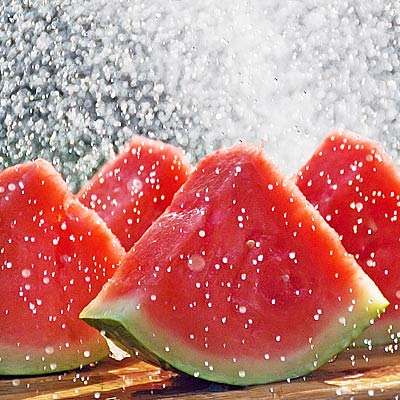
I just want to go outside and enjoy the weather..... writing is for later!
Tuesday, 30 June 2015
Monday, 29 June 2015
15 Foods That Help You Stay Hydrated
These high-water-content foods are refreshing, filled with nutrients, and naturally low in calories. (part 2)
9) Spinach
Water content: 91.4% water
Iceberg lettuce may have a higher water content, but spinach is usually a better bet overall. Piling raw spinach leaves on your sandwich or salad provides nearly as much built-in hydration, with an added nutritional punch.
Spinach is rich in lutein, potassium, fiber, and brain-boosting folate, and just one cup of raw leaves contains 15% of your daily intake of vitamin E—an important antioxidant for fighting off the damaging molecules known as free radicals.
10) Star fruit
Water content: 91.4% water
This tropical fruit, also known as carambola, comes in sweet and tart varieties and has a juicy texture similar to pineapple. Its eye-catching shape looks great in a fruit salad or as an edible garnish on the rim of a summer cocktail, and as an added bonus it's rich in antioxidants, especially epicatechin—a heart-healthy compound also found in red wine, dark chocolate, and green tea.
One note of caution: People with kidney problems should avoid star fruit because of its high levels of oxalic acid.
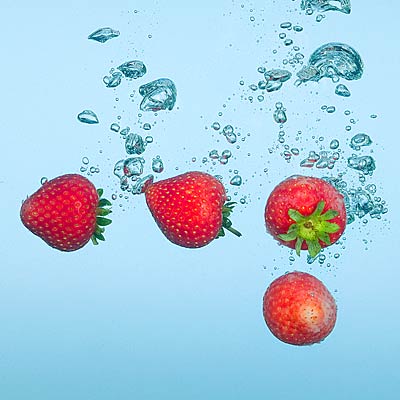
11) Strawberries
Water content: 91.0%
All berries are good foods for hydration, but juicy red strawberries are easily the best of the bunch. Raspberries and blueberries both hover around 85% water, while blackberries are only slightly better at 88.2%.
"I love strawberries blended in a smoothie or mixed with plain nonfat yoghurt—another hydrating food," Gans says. Strawberries add natural sweetness to the yoghurt, she adds, and the combo of carbohydrates, fiber, and protein make a great post-workout recovery snack.
12) Broccoli
Water content: 90.7%
Like its cousin cauliflower, raw broccoli adds a satisfying crunch to a salad. But its nutritional profile—lots of fiber, potassium, vitamin A, and vitamin C—is slightly more impressive. What's more, broccoli is the only cruciferous vegetable (a category that contains cabbage and kale, in addition to cauliflower) with a significant amount of sulforaphane, a potent compound that boosts the body's protective enzymes and flushes out cancer-causing chemicals.
13) Grapefruit
Water content: 90.5%
This juicy, tangy citrus fruit can help lower cholesterol and shrink your waistline, research suggests. In one study, people who ate one grapefruit a day lowered their bad (LDL) cholesterol by 15.5% and their triglycerides by 27%. In another, eating half a grapefruit—roughly 40 calories—before each meal helped dieters lose about three and a half pounds over 12 weeks. Researchers say that compounds in the fruit help fuel fat burn and stabilize blood sugar, therefore helping to reduce cravings.
14) Baby carrots
Water content: 90.4%
A carrot's a carrot, right? Not when it comes to water content. As it turns out, the baby-sized carrots that have become a staple in supermarkets and lunch boxes contain more water than full-size carrots (which are merely 88.3% water).
The ready-to-eat convenience factor is hard to top, as well. Snack on them right out of the bag, dip them in hummus or guacamole, or—for a bit of added crunch and bright orange colour—chop them up and add them to salads or salsas.
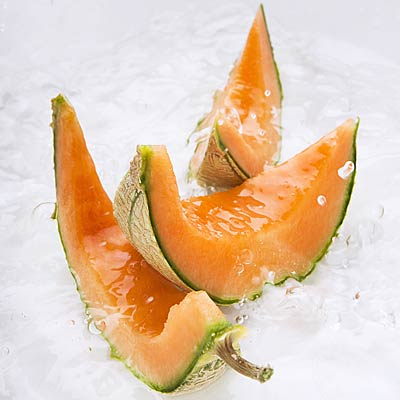
15) Cantaloupe
Water content: 90.2%
This succulent melon provides a big nutritional payoff for very few calories. One six-ounce serving—about one-quarter of a melon—contains just 50 calories but delivers a full 100% of your recommended daily intake of vitamins A and C.
"I love cantaloupe as a dessert," Gans says. "If you've got a sweet tooth, it will definitely satisfy." Tired of plain old raw fruit? Blend cantaloupe with yogurt and freeze it into sherbet, or puree it with orange juice and mint to make a refreshing soup.
Enjoy your summer with these "water eating" tips!
Source
9) Spinach
Water content: 91.4% water
Iceberg lettuce may have a higher water content, but spinach is usually a better bet overall. Piling raw spinach leaves on your sandwich or salad provides nearly as much built-in hydration, with an added nutritional punch.
Spinach is rich in lutein, potassium, fiber, and brain-boosting folate, and just one cup of raw leaves contains 15% of your daily intake of vitamin E—an important antioxidant for fighting off the damaging molecules known as free radicals.
10) Star fruit
Water content: 91.4% water
This tropical fruit, also known as carambola, comes in sweet and tart varieties and has a juicy texture similar to pineapple. Its eye-catching shape looks great in a fruit salad or as an edible garnish on the rim of a summer cocktail, and as an added bonus it's rich in antioxidants, especially epicatechin—a heart-healthy compound also found in red wine, dark chocolate, and green tea.
One note of caution: People with kidney problems should avoid star fruit because of its high levels of oxalic acid.
11) Strawberries
Water content: 91.0%

All berries are good foods for hydration, but juicy red strawberries are easily the best of the bunch. Raspberries and blueberries both hover around 85% water, while blackberries are only slightly better at 88.2%.
"I love strawberries blended in a smoothie or mixed with plain nonfat yoghurt—another hydrating food," Gans says. Strawberries add natural sweetness to the yoghurt, she adds, and the combo of carbohydrates, fiber, and protein make a great post-workout recovery snack.
12) Broccoli
Water content: 90.7%
Like its cousin cauliflower, raw broccoli adds a satisfying crunch to a salad. But its nutritional profile—lots of fiber, potassium, vitamin A, and vitamin C—is slightly more impressive. What's more, broccoli is the only cruciferous vegetable (a category that contains cabbage and kale, in addition to cauliflower) with a significant amount of sulforaphane, a potent compound that boosts the body's protective enzymes and flushes out cancer-causing chemicals.
13) Grapefruit
Water content: 90.5%
This juicy, tangy citrus fruit can help lower cholesterol and shrink your waistline, research suggests. In one study, people who ate one grapefruit a day lowered their bad (LDL) cholesterol by 15.5% and their triglycerides by 27%. In another, eating half a grapefruit—roughly 40 calories—before each meal helped dieters lose about three and a half pounds over 12 weeks. Researchers say that compounds in the fruit help fuel fat burn and stabilize blood sugar, therefore helping to reduce cravings.
14) Baby carrots
Water content: 90.4%
A carrot's a carrot, right? Not when it comes to water content. As it turns out, the baby-sized carrots that have become a staple in supermarkets and lunch boxes contain more water than full-size carrots (which are merely 88.3% water).
The ready-to-eat convenience factor is hard to top, as well. Snack on them right out of the bag, dip them in hummus or guacamole, or—for a bit of added crunch and bright orange colour—chop them up and add them to salads or salsas.
15) Cantaloupe
Water content: 90.2%

This succulent melon provides a big nutritional payoff for very few calories. One six-ounce serving—about one-quarter of a melon—contains just 50 calories but delivers a full 100% of your recommended daily intake of vitamins A and C.
"I love cantaloupe as a dessert," Gans says. "If you've got a sweet tooth, it will definitely satisfy." Tired of plain old raw fruit? Blend cantaloupe with yogurt and freeze it into sherbet, or puree it with orange juice and mint to make a refreshing soup.
Enjoy your summer with these "water eating" tips!
Source
15 Foods That Help You Stay Hydrated
These high-water-content foods are refreshing, filled with nutrients, and naturally low in calories.
Eat your water
According to the old rule of thumb, you're supposed to drink eight glasses of water per day (and some experts recommend even more). That can seem like a daunting task on some days, but here's the catch: You don't have to drink all that water. Roughly 20% of our daily H2O intake comes from solid foods, especially fruits and vegetables.
It's still important to drink plenty of water—especially in the summertime—but you can also quench your thirst with these 15 hugely hydrating foods, all of which are at least 90% water by weight.
1) Cucumber
Water content: 96.7%
This summer veggie—which has the highest water content of any solid food—is perfect in salads, or sliced up and served with some hummus, says Keri Gans, RD, author of The Small Change Diet: 10 Steps to a Thinner and Healthier You and a consultant to Mindbloom, a technology company that makes life-improvement apps.
Want to pump up cucumber's hydrating power even more? Try blending it with nonfat yogurt, mint, and ice cubes to make cucumber soup. "Soup is always hydrating, but you may not want to eat something hot in the summertime," Gans says. "Chilled cucumber soup, on the other hand, is so refreshing and delicious any time of year."
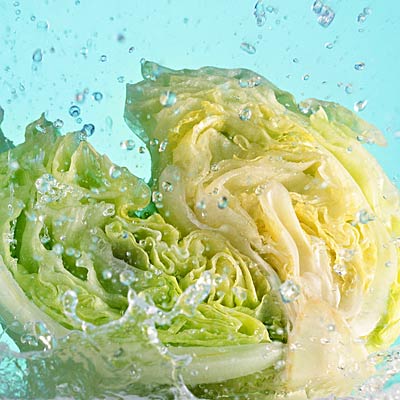
2) Iceberg lettuce
Water content: 95.6%
Iceberg lettuce tends to get a bad rap, nutrition-wise. Health experts often recommend shunning it in favour of darker greens like spinach or romaine lettuce, which contain higher amounts of fiber and nutrients such as folate and vitamin K. It's a different story when it comes to water content, though: Crispy iceberg has the highest of any lettuce, followed by butterhead, green leaf, and romaine varieties.
So when the temperature rises, pile iceberg onto sandwiches or use it as a bed for a healthy chicken salad. Even better: Ditch the tortillas and hamburger buns and use iceberg leaves as a wrap for tacos and burgers.
3) Celery
Water content: 95.4%
That urban legend about celery having negative calories isn't quite true, but it's pretty close. Like all foods that are high in water, celery has very few calories—just 6 calories per stalk. And its one-two punch of fiber and water helps to fill you up and curb your appetite.
This lightweight veggie isn't short on nutrition, however. Celery contains folate and vitamins A, C, and K. And thanks in part to its high water content, celery neutralizes stomach acid and is often recommended as a natural remedy for heartburn and acid reflux.
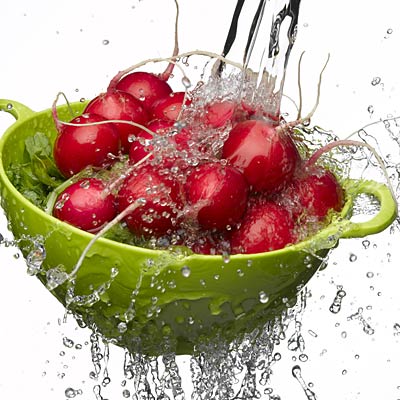
4) Radishes
Water content: 95.3%
These refreshing root vegetables should be a fixture in your spring and summer salads. They provide a burst of spicy-sweet flavour—and colour!—in a small package, and more importantly they're filled with antioxidants such as catechin (also found in green tea).
A crunchy texture also makes radishes a perfect addition to healthy summer coleslaw—no mayo required. Slice them up with shredded cabbage and carrots, sliced snow peas, and chopped hazelnuts and parsley, and toss with poppy seeds, lemon juice, olive oil, salt, and pepper.
5) Tomatoes
Water content: 94.5%
Sliced and diced tomatoes will always be a mainstay of salads, sauces, and sandwiches, but don't forget about sweet cherry and grape varieties, which make an excellent hydrating snack, Gans says. "They're great to just pop in your mouth, maybe with some nuts or some low-sodium cheese," she says. "You get this great explosion of flavor when you bite into them."
Having friends over? Skewer grape tomatoes, basil leaves, and small chunks of mozzarella on toothpicks for a quick and easy appetizer.
6) Green peppers
Water content: 93.9%
Bell peppers of all shades have a high water content, but green peppers lead the pack, just edging out the red and yellow varieties (which are about 92% water). And contrary to popular belief, green peppers contain just as many antioxidants as their slightly sweeter siblings.
Peppers are a great pre-dinner or late-night snack, Gans says. "We tell people to munch on veggies when they have a craving, but a lot of people get bored of carrots and celery pretty quickly," she says. "Peppers are great to slice up when you get home from work, while you're making or waiting for dinner."
7) Cauliflower
Water content: 92.1%
Don't let cauliflower's pale complexion fool you: In addition to having lots of water, these unassuming florets are packed with vitamins and phytonutrients that have been shown to help lower cholesterol and fight cancer, including breast cancer. (A 2012 study of breast cancer patients by Vanderbilt University researchers found that eating cruciferous veggies like cauliflower was associated with a lower risk of dying from the disease or seeing a recurrence.)
"Break them up and add them to a salad for a satisfying crunch," Gans suggests. "You can even skip the croutons!"
8) Watermelon
Water content: 91.5% water
It's fairly obvious that watermelon is full of, well, water, but this juicy melon is also among the richest sources of lycopene, a cancer-fighting antioxidant found in red fruits and vegetables. In fact, watermelon contains more lycopene than raw tomatoes—about 12 milligrams per wedge, versus 3 milligrams per medium-sized tomato.
Although this melon is plenty hydrating on its own, Gans loves to mix it with water in the summertime. "Keep a water pitcher in the fridge with watermelon cubes in the bottom," she says. "It's really refreshing, and great incentive to drink more water overall."
This is part 1 of hydration 15 foods, in the next post you find the other 7 foods.
Enjoy!
Source
Eat your water
According to the old rule of thumb, you're supposed to drink eight glasses of water per day (and some experts recommend even more). That can seem like a daunting task on some days, but here's the catch: You don't have to drink all that water. Roughly 20% of our daily H2O intake comes from solid foods, especially fruits and vegetables.
It's still important to drink plenty of water—especially in the summertime—but you can also quench your thirst with these 15 hugely hydrating foods, all of which are at least 90% water by weight.
1) Cucumber
Water content: 96.7%
This summer veggie—which has the highest water content of any solid food—is perfect in salads, or sliced up and served with some hummus, says Keri Gans, RD, author of The Small Change Diet: 10 Steps to a Thinner and Healthier You and a consultant to Mindbloom, a technology company that makes life-improvement apps.
Want to pump up cucumber's hydrating power even more? Try blending it with nonfat yogurt, mint, and ice cubes to make cucumber soup. "Soup is always hydrating, but you may not want to eat something hot in the summertime," Gans says. "Chilled cucumber soup, on the other hand, is so refreshing and delicious any time of year."
2) Iceberg lettuce
Water content: 95.6%

Iceberg lettuce tends to get a bad rap, nutrition-wise. Health experts often recommend shunning it in favour of darker greens like spinach or romaine lettuce, which contain higher amounts of fiber and nutrients such as folate and vitamin K. It's a different story when it comes to water content, though: Crispy iceberg has the highest of any lettuce, followed by butterhead, green leaf, and romaine varieties.
So when the temperature rises, pile iceberg onto sandwiches or use it as a bed for a healthy chicken salad. Even better: Ditch the tortillas and hamburger buns and use iceberg leaves as a wrap for tacos and burgers.
3) Celery
Water content: 95.4%
That urban legend about celery having negative calories isn't quite true, but it's pretty close. Like all foods that are high in water, celery has very few calories—just 6 calories per stalk. And its one-two punch of fiber and water helps to fill you up and curb your appetite.
This lightweight veggie isn't short on nutrition, however. Celery contains folate and vitamins A, C, and K. And thanks in part to its high water content, celery neutralizes stomach acid and is often recommended as a natural remedy for heartburn and acid reflux.
4) Radishes
Water content: 95.3%

These refreshing root vegetables should be a fixture in your spring and summer salads. They provide a burst of spicy-sweet flavour—and colour!—in a small package, and more importantly they're filled with antioxidants such as catechin (also found in green tea).
A crunchy texture also makes radishes a perfect addition to healthy summer coleslaw—no mayo required. Slice them up with shredded cabbage and carrots, sliced snow peas, and chopped hazelnuts and parsley, and toss with poppy seeds, lemon juice, olive oil, salt, and pepper.
5) Tomatoes
Water content: 94.5%
Sliced and diced tomatoes will always be a mainstay of salads, sauces, and sandwiches, but don't forget about sweet cherry and grape varieties, which make an excellent hydrating snack, Gans says. "They're great to just pop in your mouth, maybe with some nuts or some low-sodium cheese," she says. "You get this great explosion of flavor when you bite into them."
Having friends over? Skewer grape tomatoes, basil leaves, and small chunks of mozzarella on toothpicks for a quick and easy appetizer.
6) Green peppers
Water content: 93.9%
Bell peppers of all shades have a high water content, but green peppers lead the pack, just edging out the red and yellow varieties (which are about 92% water). And contrary to popular belief, green peppers contain just as many antioxidants as their slightly sweeter siblings.
Peppers are a great pre-dinner or late-night snack, Gans says. "We tell people to munch on veggies when they have a craving, but a lot of people get bored of carrots and celery pretty quickly," she says. "Peppers are great to slice up when you get home from work, while you're making or waiting for dinner."
7) Cauliflower
Water content: 92.1%
Don't let cauliflower's pale complexion fool you: In addition to having lots of water, these unassuming florets are packed with vitamins and phytonutrients that have been shown to help lower cholesterol and fight cancer, including breast cancer. (A 2012 study of breast cancer patients by Vanderbilt University researchers found that eating cruciferous veggies like cauliflower was associated with a lower risk of dying from the disease or seeing a recurrence.)
"Break them up and add them to a salad for a satisfying crunch," Gans suggests. "You can even skip the croutons!"
8) Watermelon
Water content: 91.5% water

It's fairly obvious that watermelon is full of, well, water, but this juicy melon is also among the richest sources of lycopene, a cancer-fighting antioxidant found in red fruits and vegetables. In fact, watermelon contains more lycopene than raw tomatoes—about 12 milligrams per wedge, versus 3 milligrams per medium-sized tomato.
Although this melon is plenty hydrating on its own, Gans loves to mix it with water in the summertime. "Keep a water pitcher in the fridge with watermelon cubes in the bottom," she says. "It's really refreshing, and great incentive to drink more water overall."
This is part 1 of hydration 15 foods, in the next post you find the other 7 foods.
Enjoy!
Source
Friday, 26 June 2015
Want To Be Happier? 10 Questions To Ask Yourself Right Now
How to boost your mood, STAT.
Think fast: Are you happy? If not, there’s some good news: According to Elizabeth R. Lombardo PhD, happiness—just like a new sport—is a skill that can be mastered. The author of Better Than Perfect: 7 Strategies to Crush Your Inner Critic and Create a Life You Love and TEDxTalk presenter shares her 10 (quick!) check-ins that can help you flex your happiness muscle. Ask yourself these questions today and walk away with long-lasting, mood-boosting strategies and a new POV, just in time for the weekend. (Good timing, no?)
What do I admire in others?
What you admire in others is an indication of what you value in yourself. When you apply your values into your life, the result is greater happiness.
How can I move more?
Exercise reduces stress hormones. And here’s the good news: There’s no need to go to the gym for an hour a day; any type of movement is beneficial. For an even greater mood boost, exercise outdoors in the fresh air.
Who do I care about?
So often, we put our relationships on the back burner so we can focus on work, but spending time with people (especially happy people) can help us experience more joy.
What do I appreciate?
Gratitude is one of the quickest and most effective ways of boosting your happiness. Take time to identify who and what you appreciate.
Do I want to be right or happy?
When you interact with others, do you focus more on being right or enjoying your time together? The latter will help you be happier.
Am I more motivated by fear or passion?
Fear entails judgement, focusing on what’s wrong, resentment, anger, guilt and shame. Passion, on the other hand, is based on optimism, empowerment, gratitude and a deep desire to focus on what you want to create to make things even better. Try to start each day and task from a place of passion rather than fear.
Am I a perfectionist?
Being a perfectionist can significantly deplete your happiness. While the motivation behind your mindset is positive (to achieve excellence), perfectionism is riddled with harsh judgment for yourself and others.
Do I positively impact others?
When you volunteer, or even just hold the door open for someone, you feel a sense of connection and contribution. The key is not to go overboard by focusing only on other people’s needs and failing to address your own.
How can I incorporate more quality down time?
An important part of being happy is taking time to decompress. And this doesn’t mean you spend an hour each night on Facebook. Meditation is a great way to calm your mind as is getting quality sleep.
Where am I directing my focus?
So often, we are focusing on the past in a state of regret or worrying about the future, both of which can deplete our happiness levels. Try being more present. And when you do think about the past, forgive what took place and use tough experiences as learning opportunities. When thinking about the future, focus on what you want to have happen.
Source
Thursday, 25 June 2015
Shift Your Focus - The Power of Questions
Tony Robbins shows in a few minutes how you can use questions to shift you focus. It's worth it!
How to Stop Self-Sabotage Behaviour
5 tips to get you out of your own way
A talkative mouse, a rat, and a small shrew were trapped in a flood, desperately clinging to the side of a lily pad - and sinking fast! A helpful owl came to their rescue, first telling the rat to clamp its teeth onto its talons as the owl flew to safety and then returning for the shrew, who received similar instructions. Finally, as the tides rose ever higher, the owl came back for our talkative mouse.
"You are rescued and will live!" said the owl. "But I've noticed you talk a lot. Promise me you'll keep your mouth closed around my legs and on no account open it, or you'll fall to your fate!"
"Of course!" said the mouse, who proceeded to clamp his mouth onto his feathered rescuer's landing gear.
They took off and flew across the floods. The owl was about to land on some high ground, but the mouse decided he wanted to alight some other place to get dry.
"Not there..." shouted the mouse, but those were the last words he ever spoke as he fell into the swirling waters below.
We can all laugh at such a silly tale because we never behave in such self-destructive ways, do we? Of course we do - although perhaps not as obviously - but why?
The main reasons for self-sabotaging behaviour
Okay, the mouse's behaviour came from ignorance and heedlessness; he just didn't think. But we mess things up for ourselves in other ways, too - and for other reasons, which include:
But surely if people know they are doing this, they wouldn't do it!
So is sabotaging ourselves an unconscious affliction?
People seldom mean to sabotage themselves. It's not generally a conscious decision to spoil things - and that's a problem. We can be left with the feeling: "Why did I do that?!" Many of our emotional drivers remain unconscious, which is why chronic self-saboteurs will often use conscious justification (or what seem like excuses) to explain why they had to:
Yell at their professor and get kicked off the course.
Break off contact with a friend who was about to offer them a great job.
End a promising relationship.
Early learning - or should I say mis-learning - can create the habit of self-sabotage and 'things going right' may seem like a scary and foreign country. If you feel you are prone to this sort of behaviour, then these tips may well help you (as long as you let them).
1) Observe yourself
Forget justifying why you did (or didn't do) this or that; just watch yourself. The adage "don't listen to what people say, but watch what they do" to see what they're really like can be applied to yourself equally well. Imagine you're someone else whose behaviour you're watching. Ask yourself: "What did I do there?" and "What was driving it?" Was it fear, spite, the need to be in control (even if that control is related to making things fail), the need for excitement through conflict, or the desire for attention through sympathy?
One client who did this realized that he had been unconsciously reluctant to earn more than his (bullying) father had done when he was alive: "As if I couldn't betray him by being better off than he had been." This realization helped him overcome this limiting belief once he had observed it operating within himself. He decided to actually ignore it until the old compulsion not to succeed became a faint whisper, then died away all together.
What do you sabotage and how? Get to 'know the machine'. Seeing your own behaviour more clearly has nothing to do with over-applied self-blame, but rather being more objective.
2) Remember that success isn't black or white
Strongly imagine (and get into the habit of strongly imagining) what true success will be like, because it may be different from what you'd been unconsciously assuming. Successful relationships, for example, don't work well all of the time; earning good money doesn't solve all problems. Success isn't black or white; it's all relative. So remember that becoming successful (in whatever way) won't feel so strange when it happens, because it is a natural part of being human - but the idea of success may feel strange.
3) Don't throw the baby out with the bathwater
People often self-sabotage because of perfectionism - if it isn't perfect, then what's the point? You may have heard about recent research (1) which showed that people on strict diets, trying to lose weight, will more likely overeat if they feel they have veered off their diet even slightly: "What the hell, I've blown it now. I might as well completely binge!" People not on diets don't do this so much. So if you have a little setback or mini-failure, consciously stop yourself from throwing it all away and seeing the 'whole thing as just ruined' and then really ruining it.
4) Think beyond yourself
Most of us don't like to consider ourselves as selfish, but it is also true to say (not from a judgemental perspective; more of an observational one) that self-sabotage ruins stuff for others and is therefore a selfish behaviour. People so often deny they are behaving selfishly because they don't intend to be selfish. But behaviour is behaviour.
So the lover who feels compelled to end a great relationship hurts another, the co-worker who sabotages a project scuppers it for everyone else, the father who sabotages financial opportunities spoils the chance of a better standard of living for his family, and so on. Once we get into the habit of seeing the needs of the wider group rather than just our own emotional impulses, it actually becomes harder to sabotage situations.
5) Explore life
All of life is an exploration. Imagine if Cinderella had decided she really couldn't go to the ball, even when she had the opportunity; or if the ugly duckling had concluded it wasn't 'good enough' to fly high with the swans. Being open to life means seeing where certain experiences will take you and accepting openly the good as well as the bad. Of course, if something really isn't working or it genuinely isn't for you, that's fine; but if it's really a reluctance to explore life and to experience the good and healthy, then it is an area that needs some self-work.
The mouse in our story failed to observe the bigger picture when he felt compelled to talk, but you're not a mouse (I'm presuming) - so you shouldn't live like one.
1)Research by Janet Polivy and colleagues at the University of Toronto (Polivy et al., 2010) found that in experiments, it turned out that those who were on a diet and thought they'd blown their limit ate more cookies than those who weren't on a diet. In fact, over 50% more! This is an example of self-sabotage as a result of perceived 'failure', which hadn't been that bad anyway.
Source
"Self-sabotage is when we say we want something and then go about making sure it doesn't happen."
~ Alyce P. Cornyn-Selby
A talkative mouse, a rat, and a small shrew were trapped in a flood, desperately clinging to the side of a lily pad - and sinking fast! A helpful owl came to their rescue, first telling the rat to clamp its teeth onto its talons as the owl flew to safety and then returning for the shrew, who received similar instructions. Finally, as the tides rose ever higher, the owl came back for our talkative mouse.
"You are rescued and will live!" said the owl. "But I've noticed you talk a lot. Promise me you'll keep your mouth closed around my legs and on no account open it, or you'll fall to your fate!"
"Of course!" said the mouse, who proceeded to clamp his mouth onto his feathered rescuer's landing gear.
They took off and flew across the floods. The owl was about to land on some high ground, but the mouse decided he wanted to alight some other place to get dry.
"Not there..." shouted the mouse, but those were the last words he ever spoke as he fell into the swirling waters below.
We can all laugh at such a silly tale because we never behave in such self-destructive ways, do we? Of course we do - although perhaps not as obviously - but why?
The main reasons for self-sabotaging behaviour
Okay, the mouse's behaviour came from ignorance and heedlessness; he just didn't think. But we mess things up for ourselves in other ways, too - and for other reasons, which include:
- The familiarity of 'failure'. Maybe we're so used to situations not working out or to being around 'dysfunctional people' that it feels easier to 'put a spanner in the works' by behaving in some way that either worsens or destroys something promising - a kind of 'better the devil you know'.
- An unconscious need to be in control. If we feel something is bound to fail because it's 'too good to last', we might engineer its failure somehow so as to maintain a sense that we are still in control (because we caused it to fail).
- Feeling unworthy. Low self-esteem may drive people to feel they 'don't deserve' success or happiness.
- Bad habits such as excessive drinking, smoking, or uncontrolled anger.
- Need for excitement. It might be an otherwise perfect sunny afternoon and seemingly out of the blue, Joe picks a fight, goes into a silent mood, or drags up some unrelated contentious issue from the past. Suddenly, the afternoon turns into a battleground. The desire for 'excitement' can take different forms, not all of them constructive.
But surely if people know they are doing this, they wouldn't do it!
So is sabotaging ourselves an unconscious affliction?
People seldom mean to sabotage themselves. It's not generally a conscious decision to spoil things - and that's a problem. We can be left with the feeling: "Why did I do that?!" Many of our emotional drivers remain unconscious, which is why chronic self-saboteurs will often use conscious justification (or what seem like excuses) to explain why they had to:
Yell at their professor and get kicked off the course.
Break off contact with a friend who was about to offer them a great job.
End a promising relationship.
Early learning - or should I say mis-learning - can create the habit of self-sabotage and 'things going right' may seem like a scary and foreign country. If you feel you are prone to this sort of behaviour, then these tips may well help you (as long as you let them).
1) Observe yourself
Forget justifying why you did (or didn't do) this or that; just watch yourself. The adage "don't listen to what people say, but watch what they do" to see what they're really like can be applied to yourself equally well. Imagine you're someone else whose behaviour you're watching. Ask yourself: "What did I do there?" and "What was driving it?" Was it fear, spite, the need to be in control (even if that control is related to making things fail), the need for excitement through conflict, or the desire for attention through sympathy?
One client who did this realized that he had been unconsciously reluctant to earn more than his (bullying) father had done when he was alive: "As if I couldn't betray him by being better off than he had been." This realization helped him overcome this limiting belief once he had observed it operating within himself. He decided to actually ignore it until the old compulsion not to succeed became a faint whisper, then died away all together.
What do you sabotage and how? Get to 'know the machine'. Seeing your own behaviour more clearly has nothing to do with over-applied self-blame, but rather being more objective.
2) Remember that success isn't black or white
Strongly imagine (and get into the habit of strongly imagining) what true success will be like, because it may be different from what you'd been unconsciously assuming. Successful relationships, for example, don't work well all of the time; earning good money doesn't solve all problems. Success isn't black or white; it's all relative. So remember that becoming successful (in whatever way) won't feel so strange when it happens, because it is a natural part of being human - but the idea of success may feel strange.
3) Don't throw the baby out with the bathwater
People often self-sabotage because of perfectionism - if it isn't perfect, then what's the point? You may have heard about recent research (1) which showed that people on strict diets, trying to lose weight, will more likely overeat if they feel they have veered off their diet even slightly: "What the hell, I've blown it now. I might as well completely binge!" People not on diets don't do this so much. So if you have a little setback or mini-failure, consciously stop yourself from throwing it all away and seeing the 'whole thing as just ruined' and then really ruining it.
4) Think beyond yourself
Most of us don't like to consider ourselves as selfish, but it is also true to say (not from a judgemental perspective; more of an observational one) that self-sabotage ruins stuff for others and is therefore a selfish behaviour. People so often deny they are behaving selfishly because they don't intend to be selfish. But behaviour is behaviour.
So the lover who feels compelled to end a great relationship hurts another, the co-worker who sabotages a project scuppers it for everyone else, the father who sabotages financial opportunities spoils the chance of a better standard of living for his family, and so on. Once we get into the habit of seeing the needs of the wider group rather than just our own emotional impulses, it actually becomes harder to sabotage situations.
5) Explore life
All of life is an exploration. Imagine if Cinderella had decided she really couldn't go to the ball, even when she had the opportunity; or if the ugly duckling had concluded it wasn't 'good enough' to fly high with the swans. Being open to life means seeing where certain experiences will take you and accepting openly the good as well as the bad. Of course, if something really isn't working or it genuinely isn't for you, that's fine; but if it's really a reluctance to explore life and to experience the good and healthy, then it is an area that needs some self-work.
The mouse in our story failed to observe the bigger picture when he felt compelled to talk, but you're not a mouse (I'm presuming) - so you shouldn't live like one.
1)Research by Janet Polivy and colleagues at the University of Toronto (Polivy et al., 2010) found that in experiments, it turned out that those who were on a diet and thought they'd blown their limit ate more cookies than those who weren't on a diet. In fact, over 50% more! This is an example of self-sabotage as a result of perceived 'failure', which hadn't been that bad anyway.
Source
Wednesday, 24 June 2015
5 Life Skills to Help You Focus on Success
When you first set a goal it’s pretty easy to stay on track. You've got a plan, you’re working the plan and your motivation is strong.
As time goes on, however, it’s not uncommon to start losing your motivation and getting off course. In order to develop the momentum and stamina required to achieve success, there are several life skills you’ll need to focus on.
5 of my favourite life skills to help you focus on success
1) Believe you will succeed. For success to become a reality, it is absolutely crucial that you believe in what you’re doing. This is easy at the beginning because you’re focused on what you stand to gain from achieving your goal. As time goes on, you may gradually forget how excited you were and start to lose that inner fire.
To avoid this possibility, be sure to keep your vision strong and clear in your mind. Visualization, when done right, is among the most powerful of all life skills. Write it out in full detail, or create a visual reminder like a vision board with drawings, paintings or magazine photos that represent your goals. Revisit and focus on these reminders frequently.
2) Have confidence in your abilities. Your confidence may be strong at the start but it can quickly fade when you encounter obstacles or setbacks. If this happens, remember that you once believed that you had the ability to achieve success. Remind yourself why you felt that way.
In fact, you will find it helpful to write these reasons down when you first set a goal, and then keep reading them back to yourself when you feel your confidence starting to fade. Keep in mind that any obstacles or setbacks are temporary and part of the learning curve. Strong confidence in your abilities is enough to propel you through to success.
3) Determination. Believing in your eventual success and your ability to achieve it is a great start, but you also have to be determined to make it happen!
Keep your determination strong by refusing to be held back by obstacles, and reminding yourself daily why your goals are important to you. Determination is like an ember that burns in your belly, refusing to let you give up no matter how rough the going gets. Sometimes determination end up being the key life skill leading to success.
4) Motivation. Staying motivated can also be a challenge, especially once the newness and excitement of your goals have worn off and it’s beginning to feel like “work.”
Nine times out of ten, motivation requires a simple decision to remain optimistic and inspired. Find ways to keep your motivation high if your goal is truly important. Read books by people who have achieved impressive results. Talk to other successful people who have demonstrated tenacity and gone on to achieve amazing results. The more you pump yourself up, the stronger your motivation will stay. Being your own cheerleader is a success life skill.
5) Awareness. Finally, stay on the lookout for any signs of self-sabotaging behaviour or vanishing interest. If you notice that you’re acting in ways that don’t further your goals or support your success, get to the root of the problem quickly so you can get back on track. Be alert to any tendency to undermine your resolve or give up, and deal with it swiftly.
Trust that you can accomplish amazing things
You are capable of success in every area of your life. It’s not about talent, circumstances, or luck. It’s about learning and applying certain life skills and then monitoring your results and making little adjustments in your approach.
Setting goals is something we do naturally. The trouble is, most of us tend to do it almost unconsciously without taking the time to perfect the process. Then, when things don’t turn out the way we had hoped we internalize our disappointment in a way that creates doubt in our own abilities.
Become an advanced student in the school of life
Many people think that qualities like confidence, communication, creativity, motivation, focus, courage, and determination are something you are born with. I believe those qualities are learned life skills that anyone can master if they are willing to apply themselves. These are advanced life skills and the better you become at them, the more successful your life will be.
When we were in school, much of what we learned was difficult to focus on because it had very little practical value. But the kind of life skills we are talking about here have enormous practical value because they can literally transform the quality of your life. Find Your TRUE SELF is a concise guide to learning and applying these specialized life skills.
If you really want to ramp up your level of success, ask yourself this question: Have I made up my mind to become an advanced student in the school of life? If you haven’t yet made that personal commitment then perhaps now would be a good time!
Source
As time goes on, however, it’s not uncommon to start losing your motivation and getting off course. In order to develop the momentum and stamina required to achieve success, there are several life skills you’ll need to focus on.
5 of my favourite life skills to help you focus on success
1) Believe you will succeed. For success to become a reality, it is absolutely crucial that you believe in what you’re doing. This is easy at the beginning because you’re focused on what you stand to gain from achieving your goal. As time goes on, you may gradually forget how excited you were and start to lose that inner fire.
To avoid this possibility, be sure to keep your vision strong and clear in your mind. Visualization, when done right, is among the most powerful of all life skills. Write it out in full detail, or create a visual reminder like a vision board with drawings, paintings or magazine photos that represent your goals. Revisit and focus on these reminders frequently.
2) Have confidence in your abilities. Your confidence may be strong at the start but it can quickly fade when you encounter obstacles or setbacks. If this happens, remember that you once believed that you had the ability to achieve success. Remind yourself why you felt that way.
In fact, you will find it helpful to write these reasons down when you first set a goal, and then keep reading them back to yourself when you feel your confidence starting to fade. Keep in mind that any obstacles or setbacks are temporary and part of the learning curve. Strong confidence in your abilities is enough to propel you through to success.
3) Determination. Believing in your eventual success and your ability to achieve it is a great start, but you also have to be determined to make it happen!

Keep your determination strong by refusing to be held back by obstacles, and reminding yourself daily why your goals are important to you. Determination is like an ember that burns in your belly, refusing to let you give up no matter how rough the going gets. Sometimes determination end up being the key life skill leading to success.
4) Motivation. Staying motivated can also be a challenge, especially once the newness and excitement of your goals have worn off and it’s beginning to feel like “work.”
Nine times out of ten, motivation requires a simple decision to remain optimistic and inspired. Find ways to keep your motivation high if your goal is truly important. Read books by people who have achieved impressive results. Talk to other successful people who have demonstrated tenacity and gone on to achieve amazing results. The more you pump yourself up, the stronger your motivation will stay. Being your own cheerleader is a success life skill.
5) Awareness. Finally, stay on the lookout for any signs of self-sabotaging behaviour or vanishing interest. If you notice that you’re acting in ways that don’t further your goals or support your success, get to the root of the problem quickly so you can get back on track. Be alert to any tendency to undermine your resolve or give up, and deal with it swiftly.
Trust that you can accomplish amazing things
You are capable of success in every area of your life. It’s not about talent, circumstances, or luck. It’s about learning and applying certain life skills and then monitoring your results and making little adjustments in your approach.
Setting goals is something we do naturally. The trouble is, most of us tend to do it almost unconsciously without taking the time to perfect the process. Then, when things don’t turn out the way we had hoped we internalize our disappointment in a way that creates doubt in our own abilities.
Become an advanced student in the school of life
Many people think that qualities like confidence, communication, creativity, motivation, focus, courage, and determination are something you are born with. I believe those qualities are learned life skills that anyone can master if they are willing to apply themselves. These are advanced life skills and the better you become at them, the more successful your life will be.
When we were in school, much of what we learned was difficult to focus on because it had very little practical value. But the kind of life skills we are talking about here have enormous practical value because they can literally transform the quality of your life. Find Your TRUE SELF is a concise guide to learning and applying these specialized life skills.
If you really want to ramp up your level of success, ask yourself this question: Have I made up my mind to become an advanced student in the school of life? If you haven’t yet made that personal commitment then perhaps now would be a good time!
Source
Subscribe to:
Posts (Atom)